
A power transformer stands as one of the most indispensable pieces of equipment in modern alternating current (AC) power systems, engineered primarily to modify voltage magnitudes for efficient electricity delivery across extensive networks. It serves as the backbone of power transmission and distribution infrastructure, enabling the seamless transfer of electrical energy between different voltage levels, minimizing energy loss during long-distance transportation, and sustaining the stability and reliability of the entire power grid. For electrical engineers, maintenance technicians, industry professionals, and stakeholders involved in power system operations, gaining an in-depth comprehension of the internal structure of a power transformer is not merely beneficial but essential. This knowledge underpins the ability to diagnose operational anomalies, optimize performance, implement effective maintenance protocols, and ensure the safe and efficient operation of power facilities.
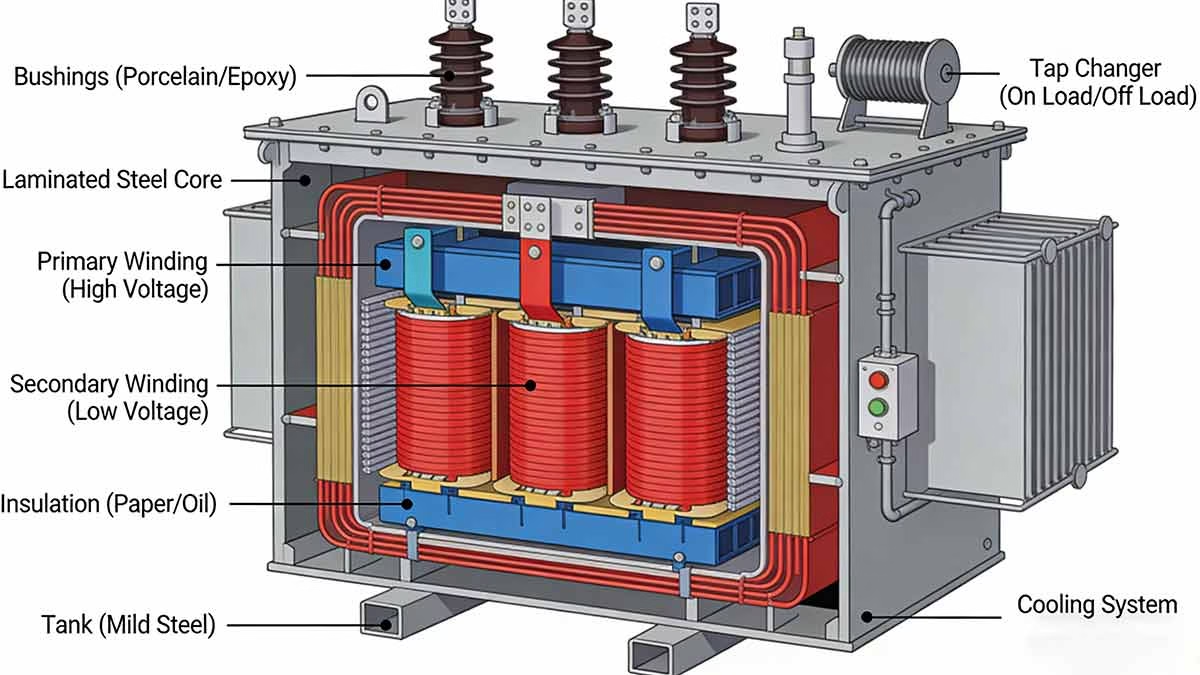
This comprehensive article delves deeply into the sophisticated internal architecture of power transformers, dissecting each core component, elucidating its unique functionalities, explaining the synergistic interactions between different parts, and clarifying how these elements collectively enable voltage transformation and efficient power delivery. By examining the design, material selection, and operational mechanisms of each internal part, readers will develop a holistic understanding of what makes power transformers reliable, efficient, and vital to global power systems.
Contents
hide
Fundamental Overview of Power Transformer Internal Architecture
Power transformers are precision-engineered electrical devices that operate on the foundational principle of electromagnetic induction, facilitating the transfer of electrical energy between two or more electrically isolated circuits without a direct physical connection. Their internal structure is a meticulously integrated assembly of specialized components, each crafted to fulfill distinct yet interdependent roles, working in unison to achieve safe, efficient, and consistent voltage regulation. Unlike simpler electrical components, power transformers feature a complex internal layout designed to withstand high electrical stresses, thermal loads, and environmental challenges over prolonged operational lifespans.
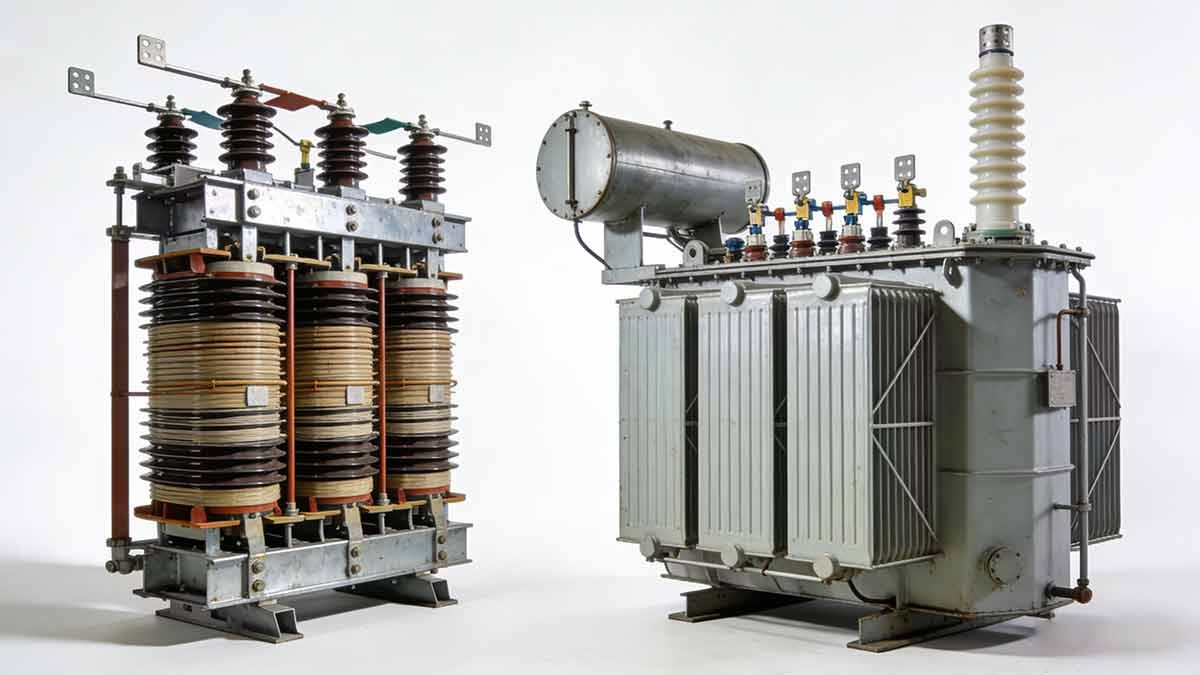
At its core, the internal framework of a power transformer encompasses several primary components that form the basis of its functionality: the magnetic core, primary and secondary windings, insulating systems, cooling oil assemblies, tap changing mechanisms, and a suite of auxiliary components including bushings, conservator tanks, breathers, and pressure relief devices. Each of these elements is designed with stringent material specifications and structural precision, as even minor flaws in component design or material quality can compromise the transformer’s efficiency, safety, and service life.
The internal configuration of a power transformer is engineered to prioritize three core objectives: maximizing the efficiency of energy transfer via electromagnetic induction, providing robust electrical insulation to prevent short circuits and breakdowns, and effectively managing thermal energy generated during operation. These objectives dictate the material choices, structural designs, and spatial arrangements of all internal components, ensuring that the transformer can operate reliably under varying load conditions, voltage fluctuations, and environmental factors.
The Magnetic Core: The Foundation of Electromagnetic Energy Transfer
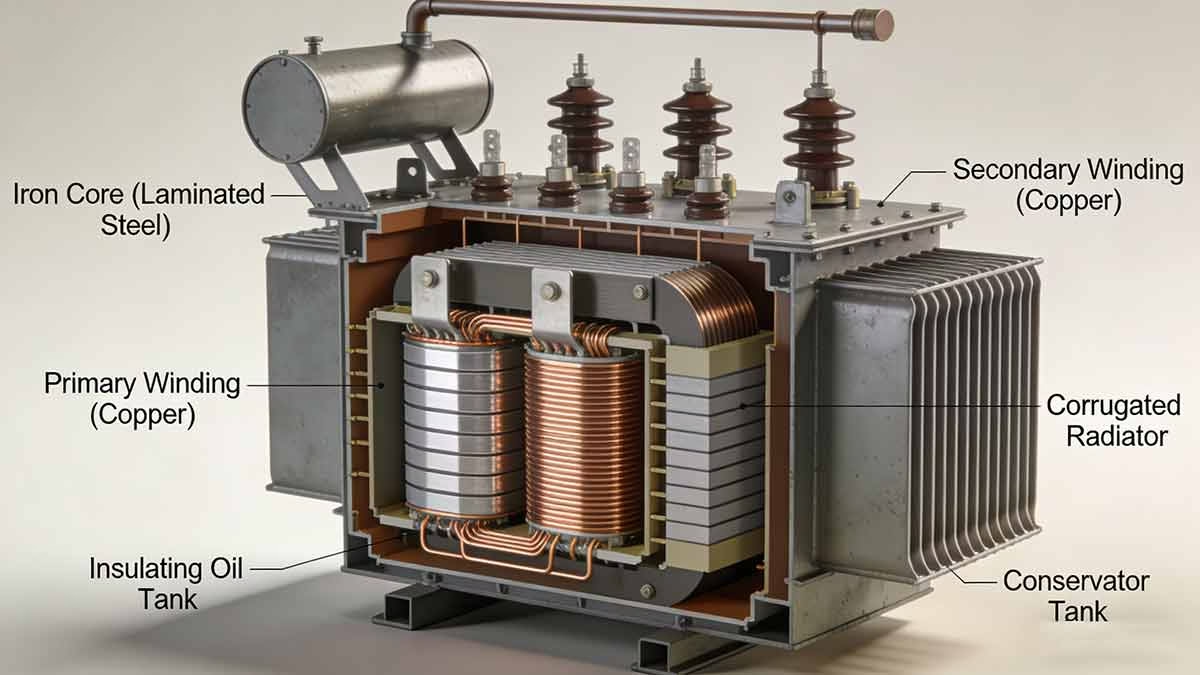
The magnetic core represents the central structural and functional element of a power transformer, acting as the dedicated pathway for magnetic flux that enables the fundamental process of voltage transformation. Without a high-performance magnetic core, the efficient transfer of energy between the primary and secondary windings would be impossible, resulting in prohibitive energy losses and ineffective voltage regulation.
Material Composition and Structural Design
Modern power transformer cores are predominantly constructed from laminated sheets of high-grade silicon steel, also referred to as electrical steel, a material specifically formulated for exceptional magnetic properties. The inclusion of silicon in the steel alloy enhances its electrical resistivity, significantly reducing the occurrence of eddy currents, while its high magnetic permeability ensures minimal reluctance for magnetic flux flow. These laminations are typically manufactured with thicknesses ranging from 0.23mm to 0.35mm, and each sheet is coated with a thin insulating layer to prevent electrical conductivity between adjacent layers. This lamination technique is a critical design choice, as it effectively breaks up the conductive paths within the core, drastically diminishing eddy current losses that would otherwise generate excessive heat and reduce overall transformer efficiency.
In terms of structural configuration, power transformer cores are predominantly designed in closed-loop formations, with the most common designs being the core-type and shell-type configurations. Core-type transformers feature a vertical magnetic core with windings wrapped around the two vertical legs, creating a simple, efficient magnetic path. Shell-type transformers, by contrast, feature a magnetic core that surrounds the windings on multiple sides, offering enhanced mechanical stability and reduced magnetic flux leakage. Both designs prioritize the creation of a continuous, low-reluctance path for magnetic flux, ensuring that the maximum possible amount of flux generated by the primary winding links with the secondary winding.
Operational Mechanism and Energy Loss Mitigation
The operational principle of the transformer core is intrinsically tied to Faraday’s Law of Electromagnetic Induction. When alternating current flows through the primary winding, it generates a time-varying magnetic field that propagates through the magnetic core. This core concentrates and directs the magnetic flux, ensuring it efficiently permeates the secondary winding, inducing an alternating voltage proportional to the turns ratio between the two windings. The core’s high permeability allows it to channel this flux with minimal resistance, making the energy transfer process highly efficient.
Despite optimal design, transformer cores inevitably experience two primary forms of energy loss: eddy current losses and hysteresis losses. Eddy current losses, as previously mentioned, are mitigated through the lamination of silicon steel sheets, which restricts the formation of large circulating currents within the core material. Hysteresis losses, stemming from the repeated magnetization and demagnetization of the core’s magnetic domains with each AC cycle, are minimized through the use of high-quality, low-hysteresis silicon steel alloys. Advanced manufacturing processes further refine the grain orientation of the steel, creating grain-oriented electrical steel (GOES) that offers significantly lower hysteresis loss compared to conventional non-oriented steel. For ultra-high-efficiency transformers, amorphous metal cores are increasingly utilized, as their non-crystalline atomic structure delivers substantially lower core losses than traditional silicon steel, making them ideal for energy-efficient power distribution applications.
Transformer Windings: The Conductive Pathways for Voltage Transformation
Transformer windings are the conductive coils that carry electrical current and facilitate the generation and induction of magnetic flux, serving as the primary electrical circuits of the transformer. The design, material, and arrangement of these windings directly determine the transformer’s voltage transformation ratio, current-carrying capacity, efficiency, and thermal performance.
Material Selection and Winding Configurations
Transformer windings are typically fabricated from either high-purity copper or aluminum, each selected based on specific application requirements, cost considerations, and performance priorities. Copper is the preferred material for high-performance transformers due to its superior electrical conductivity, lower resistivity, and excellent thermal conductivity, which reduces resistive heat generation and enhances heat dissipation. These properties make copper windings ideal for large power transformers and applications where efficiency and compact design are prioritized. Aluminum, while possessing slightly lower conductivity than copper, offers distinct advantages in terms of lighter weight and lower material cost, making it a common choice for medium and large distribution transformers where weight and cost efficiency are important factors.
Windings are categorized into two primary groups: primary windings and secondary windings. The primary winding is connected to the input power source, receiving the incoming AC voltage and generating the magnetic flux that initiates the transformation process. The secondary winding, conversely, receives the induced voltage from the magnetic flux and delivers the transformed output voltage to the connected load. The voltage transformation ratio is precisely defined by the ratio of the number of turns in the secondary winding to the number of turns in the primary winding. A step-up transformer features a secondary winding with more turns than the primary, elevating the output voltage for long-distance transmission, while a step-down transformer has a secondary winding with fewer turns, reducing the voltage to levels suitable for industrial, commercial, or residential use.
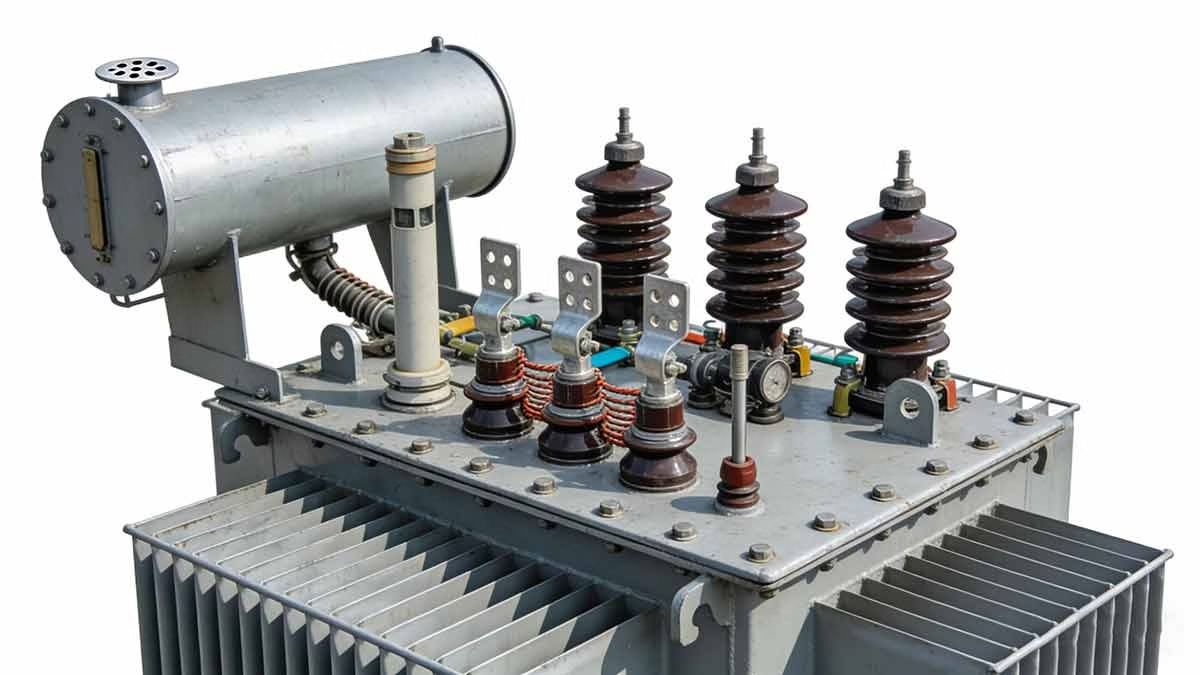
Two primary winding arrangements are commonly employed in power transformers: concentric windings and sandwich windings. Concentric windings, the most prevalent design for core-type transformers, position the primary and secondary windings as concentric cylinders around the core legs, typically with the low-voltage winding placed closer to the core to simplify insulation requirements. Sandwich windings, commonly used in shell-type transformers, alternate layers of primary and secondary windings, creating a more uniform magnetic flux distribution and reducing leakage reactance. Both designs are engineered to maximize magnetic coupling between the windings while maintaining adequate insulation and thermal management capabilities.
Insulation and Performance Optimization
Effective insulation is an integral aspect of transformer winding design, essential for preventing electrical breakdown, short circuits, and current leakage between windings, between winding layers, and between the windings and the core. Winding insulation systems employ a combination of solid and liquid insulating materials to ensure reliable electrical isolation. Solid insulation materials, including cellulose paper, pressboard, and synthetic resins, are used to physically separate winding conductors and layers, providing mechanical support and dielectric protection. These materials are selected for their high dielectric strength, thermal stability, and compatibility with transformer oil.
In addition to solid insulation, the windings are immersed in insulating transformer oil, which serves as both a liquid dielectric and a cooling medium. The oil fills all air gaps within the winding assembly, enhancing the overall insulation system and improving heat transfer from the windings to the surrounding environment. The insulation system must be engineered to withstand not only normal operating voltages but also transient overvoltages caused by lightning strikes, switching operations, or system faults, ensuring the transformer’s long-term reliability and safety.
Windings are also designed to manage resistive losses, commonly referred to as copper losses, which occur as electrical current flows through the conductive material. These losses, calculated by the formula I²R, generate heat that must be effectively dissipated to prevent insulation degradation and component failure. To minimize these losses, windings are designed with appropriate conductor cross-sectional areas to match current-carrying requirements, reducing resistance and subsequent heat generation. Proper winding spacing and arrangement also promote efficient cooling, allowing the insulating oil to circulate freely and carry away thermal energy.
The Transformer Oil System: Dual Role in Cooling and Insulation
The oil system is an indispensable internal component of most power transformers, serving dual critical functions as a high-performance insulating medium and a highly efficient cooling agent. Specially formulated transformer oil, typically a highly refined mineral oil with excellent dielectric and thermal properties, permeates the entire internal structure of the transformer, supporting its safe and efficient operation.
Cooling Functionality and Thermal Management
During operation, power transformers generate significant thermal energy from core losses, winding resistive losses, and other minor losses. If left unmanaged, this heat accumulation would rapidly degrade insulation materials, compromise component integrity, and ultimately lead to transformer failure. The transformer oil system addresses this challenge through active and passive thermal management mechanisms.
Transformer oil operates as a heat transfer fluid, absorbing thermal energy from the hot core and windings through conduction. As the oil heats up, it undergoes natural convection, with warmer, less dense oil rising to the upper regions of the transformer tank, while cooler, denser oil descends to replace it, creating a continuous circulation pattern. This natural circulation (known as Oil Natural Air Natural, or ONAN, cooling) is sufficient for smaller distribution transformers operating under moderate loads. For larger power transformers with higher heat generation, forced cooling systems are implemented, including Oil Natural Air Forced (ONAF) cooling, which uses fans to enhance heat dissipation from external radiators, and Oil Forced Air Forced (OFAF) cooling, which incorporates oil pumps to accelerate circulation alongside forced air cooling. In some high-capacity utility transformers, oil-to-water heat exchangers are employed to achieve superior cooling efficiency in demanding operating conditions.
By maintaining the transformer’s internal temperature within optimal operational ranges, the oil system prevents thermal degradation of insulation, extends the service life of critical components, and allows the transformer to operate at its rated capacity without overheating.
Insulating Properties and Contaminant Control
Beyond thermal management, transformer oil provides essential electrical insulation, complementing the solid insulation systems to prevent electrical arcing, short circuits, and current leakage. The oil possesses exceptional dielectric strength, enabling it to withstand high electrical stresses without experiencing dielectric breakdown. It fills microscopic gaps between windings, core laminations, and other internal components, creating a uniform insulating medium that enhances the overall dielectric performance of the transformer.
The oil system also plays a vital role in protecting the transformer’s internal components from environmental contaminants, particularly moisture and oxygen. Moisture is extremely detrimental to transformer insulation, as it reduces dielectric strength, accelerates insulation degradation, and promotes the formation of harmful byproducts. The oil system forms a protective barrier, preventing atmospheric moisture from infiltrating sensitive internal components. Additionally, the oil minimizes contact between oxygen and internal metal parts, reducing the risk of oxidation and corrosion that could compromise structural integrity and performance.
To preserve the oil’s insulating and cooling properties, regular maintenance, including filtration, dehydration, and chemical analysis, is essential. Over time, transformer oil can degrade due to thermal stress, electrical stress, and contamination, leading to the formation of acids, sludge, and dissolved gases. Advanced monitoring techniques, such as dissolved gas analysis (DGA), are employed to assess oil condition and detect early signs of internal faults, allowing for proactive maintenance and preventing catastrophic failures.
Tap Changers: Precision Voltage Regulation for Dynamic Grid Conditions
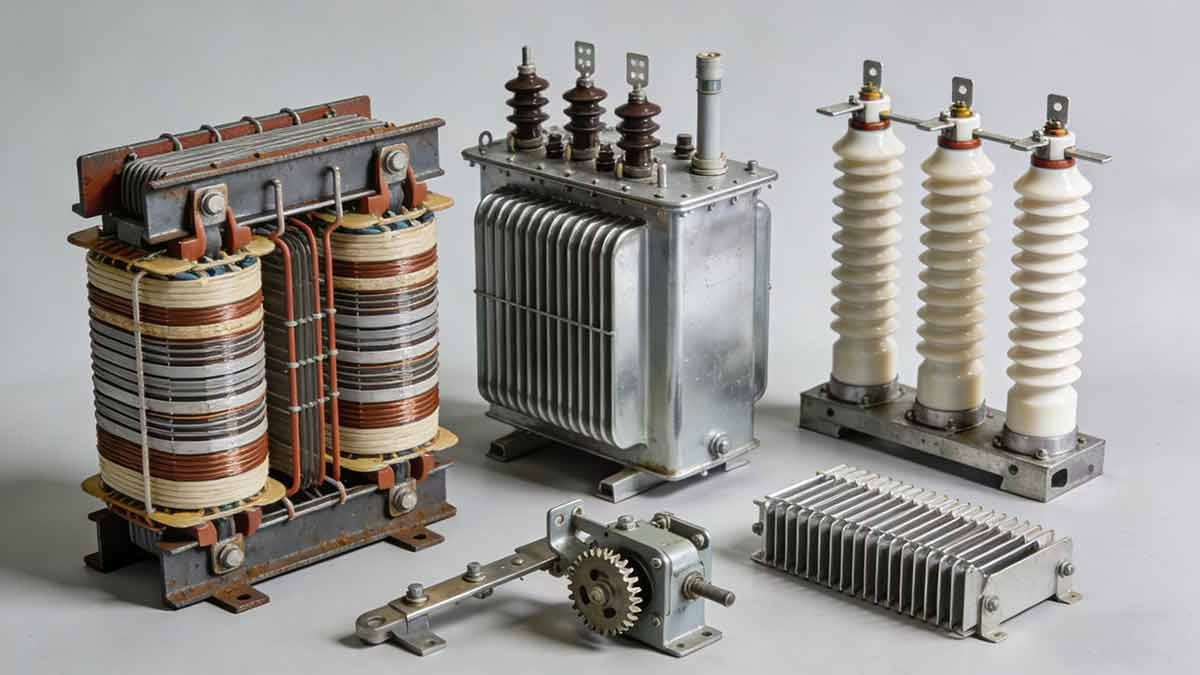
Voltage stability is a critical requirement in power systems, as fluctuations in supply voltage or load demand can lead to inefficient operation, equipment damage, and disruptions to power delivery. Tap changers are specialized internal components that enable precise adjustment of a transformer’s voltage ratio, ensuring consistent output voltage despite variations in input voltage and load conditions.
Operational Principles and Voltage Regulation Mechanism
Tap changers function by modifying the effective turns ratio of the transformer windings, adjusting the output voltage by selecting different connection points, or “taps,” along the winding. Each tap corresponds to a specific number of winding turns, allowing operators to increase or decrease the secondary voltage in precise increments. This capability is essential for compensating for voltage drops during periods of high load, counteracting overvoltage conditions during low load periods, and maintaining voltage within the narrow tolerance ranges required by modern power systems.
The voltage regulation process is straightforward: when the input voltage decreases or the load increases, causing a drop in output voltage, the tap changer is adjusted to select a tap with a higher number of secondary turns, increasing the output voltage. Conversely, when the input voltage rises or the load decreases, leading to overvoltage, the tap changer switches to a tap with fewer secondary turns, reducing the output voltage to the desired level. This dynamic adjustment ensures that connected electrical equipment receives a stable, consistent voltage supply, optimizing performance and preventing damage.
Classification of Tap Changers
Tap changers are classified into two primary categories based on their operational capabilities: off-load tap changers (also known as de-energized tap changers) and on-load tap changers (OLTC).
Off-load tap changers are designed for adjustments made only when the transformer is completely disconnected from the power supply and de-energized. These tap changers feature a simpler, more cost-effective design with fewer moving parts, making them suitable for transformers installed in applications where voltage conditions are relatively stable and frequent adjustments are unnecessary. They are commonly used in small distribution transformers, industrial transformers with fixed load profiles, and other scenarios where manual, infrequent voltage adjustment is sufficient.
On-load tap changers represent a more advanced solution, engineered to perform voltage adjustments while the transformer remains energized and carrying full load. This capability is critical for large power transformers in transmission and distribution networks, where continuous operation is essential, and voltage conditions fluctuate continuously. Modern OLTCs are often integrated with automatic voltage control systems, which monitor output voltage in real time and initiate tap changes automatically to maintain precise voltage regulation. This automated functionality ensures seamless voltage stability, even under rapidly changing grid conditions, making OLTC-equipped transformers indispensable for modern smart grid infrastructure.
Auxiliary Internal Components: Supporting Reliable and Safe Operation
In addition to the core functional components, power transformers incorporate a suite of auxiliary internal and semi-internal parts that provide essential support functions, enhancing operational safety, monitoring capabilities, and long-term reliability. These components, while often overlooked, are critical to preventing failures, managing operational stresses, and maintaining optimal performance.
Bushings
Bushings are insulated electrical fittings that provide a safe, controlled pathway for electrical conductors to pass through the transformer’s metallic tank, connecting the internal windings to external power lines. Constructed from high-dielectric materials such as porcelain, epoxy resin, or polymer composites, bushings are designed to withstand extreme electrical stresses, prevent current leakage to the grounded tank, and resist environmental factors including moisture, pollution, and temperature variations. Each bushing is engineered to match the transformer’s voltage class, ensuring adequate insulation clearance and dielectric strength for safe operation. High-voltage bushings often incorporate capacitive grading layers to evenly distribute electrical stress, further enhancing their reliability and preventing corona discharge and electrical breakdown.
Conservator Tanks
Conservator tanks are auxiliary reservoirs connected to the main transformer tank, designed to accommodate the thermal expansion and contraction of transformer oil as temperature changes during operation. As the transformer heats up under load, the oil expands, and excess oil flows into the conservator tank; as the transformer cools, the oil contracts, and oil flows back into the main tank from the conservator. This system maintains a consistent oil level in the main tank, prevents pressurization or vacuum formation, and minimizes the contact between the oil and atmospheric air. Most modern conservators feature a flexible rubber diaphragm or bladder that separates the oil from the air inside the conservator, preventing moisture absorption and oxidation, preserving the oil’s dielectric and thermal properties.
Breather Assemblies
Breather units are installed in conjunction with conservator tanks to regulate air exchange within the transformer while preventing moisture and particulate contamination. As the oil level fluctuates, air enters and exits the conservator tank, and the breather filters this air to remove harmful contaminants. Typically filled with silica gel, a highly effective desiccant that adsorbs moisture, the breather ensures that only dry, clean air enters the transformer system. Many breathers feature a color-changing indicator that shows the saturation level of the silica gel, alerting maintenance personnel when replacement is necessary to maintain effective moisture control.
Pressure Relief Devices
Pressure relief valves are safety components installed on the transformer tank to prevent the buildup of excessive internal pressure caused by thermal expansion, internal faults, or electrical arcing. In the event of a severe internal fault, rapid gas generation can cause a dangerous pressure spike within the tank, potentially leading to structural failure or explosion. The pressure relief valve is calibrated to open automatically at a predetermined pressure threshold, releasing excess pressure safely into the atmosphere and protecting the transformer’s structural integrity. Once the pressure returns to a safe level, the valve reseals, maintaining the integrity of the oil system.
Temperature Monitoring Sensors
Embedded temperature sensors, such as resistance temperature detectors (RTDs) and thermocouples, are installed within critical internal components, including windings and the oil tank, to continuously monitor operating temperatures. These sensors transmit real-time temperature data to external monitoring systems, allowing operators to track thermal conditions, detect abnormal heating patterns indicative of internal faults, and initiate protective measures before temperature levels reach critical thresholds. Temperature monitoring is a key aspect of predictive maintenance, enabling proactive intervention to prevent transformer failures and extend service life.
Conclusion
The internal structure of a power transformer represents a masterpiece of electrical engineering, a precisely integrated assembly of specialized components each designed to fulfill critical, complementary roles in the process of voltage transformation and power delivery. From the magnetic core that channels magnetic flux, to the windings that conduct and induce electrical energy, the oil system that cools and insulates, the tap changer that regulates voltage, and the auxiliary components that ensure safety and reliability, every element works in perfect synergy to enable the efficient, stable transmission and distribution of electrical power.
Understanding the intricacies of the internal structure of a power transformer is essential for anyone involved in the design, manufacturing, operation, maintenance, or management of power systems. This knowledge not only facilitates the optimal use and maintenance of transformers but also supports the development of more efficient, sustainable, and reliable power infrastructure. As global demand for electricity continues to rise and power systems evolve towards greater smart grid integration and renewable energy adoption, the role of high-performance power transformers with robust, well-engineered internal structures will only become more critical, ensuring the world’s power grids remain resilient, efficient, and capable of meeting future energy challenges.
FAQ About the Internal Structure of a Power Transformer
What are the primary components that form the internal structure of a power transformer?
The core internal components of a power transformer include the magnetic core (typically laminated silicon steel), primary and secondary windings (copper or aluminum), insulating systems (solid materials and transformer oil), tap changers for voltage regulation, and auxiliary components such as bushings, conservator tanks, breathers, and pressure relief devices.
Why is silicon steel used for transformer cores, and why are the cores laminated?
Silicon steel is chosen for transformer cores due to its high magnetic permeability, which enables efficient magnetic flux conduction, and its high electrical resistivity, which reduces eddy current formation. Lamination of the core into thin, insulated sheets further breaks up eddy current paths, minimizing energy loss and heat generation, thus enhancing overall transformer efficiency.
What is the difference between primary and secondary transformer windings?
The primary winding is connected to the input power source, carrying the incoming alternating current and generating the time-varying magnetic field that initiates energy transfer. The secondary winding receives the induced voltage from the magnetic flux and delivers the transformed output voltage to the connected load. The voltage ratio between the two windings is determined by their respective number of turns.
How does transformer oil contribute to the device’s functionality?
Transformer oil serves two primary purposes: it acts as a high-dielectric insulating medium, preventing electrical short circuits and breakdowns between internal components, and it functions as a cooling fluid, absorbing heat from the core and windings and dissipating it to the environment to maintain safe operating temperatures.
What is the purpose of an on-load tap changer in a power transformer?
An on-load tap changer allows for precise adjustment of a transformer’s output voltage while the unit remains energized and operating under load. It modifies the effective turns ratio of the windings to compensate for fluctuations in input voltage and load demand, ensuring a stable, consistent output voltage essential for reliable power system operation.