
Distribution transformer losses exert a direct influence on energy utilization efficiency, operational expenditure, and the prolonged performance of equipment assets. As time elapses, a variety of factors, including component deterioration, inappropriate load distribution, substandard maintenance practices, and the degradation of core and insulation materials, can collectively cause these losses to escalate. For power utilities and industrial users striving to enhance operational efficiency, system reliability, and environmental sustainability, gaining a comprehensive understanding of the mechanisms behind transformer loss generation and mastering strategies to cut down such losses throughout the transformer’s service life is absolutely indispensable.
Contents
hide
What Types of Losses Arise in Distribution Transformers?
Distribution transformers are engineered to function with exceptional levels of efficiency, yet absolute loss-free operation remains an unattainable goal in practical scenarios. Even seemingly negligible losses, when accumulated over years of non-stop operation, can lead to substantial energy wastage, elevated operational costs, and heightened thermal stress on the equipment. Grasping the origins of these losses is a fundamental prerequisite for making informed choices in transformer selection, operation, and upkeep.
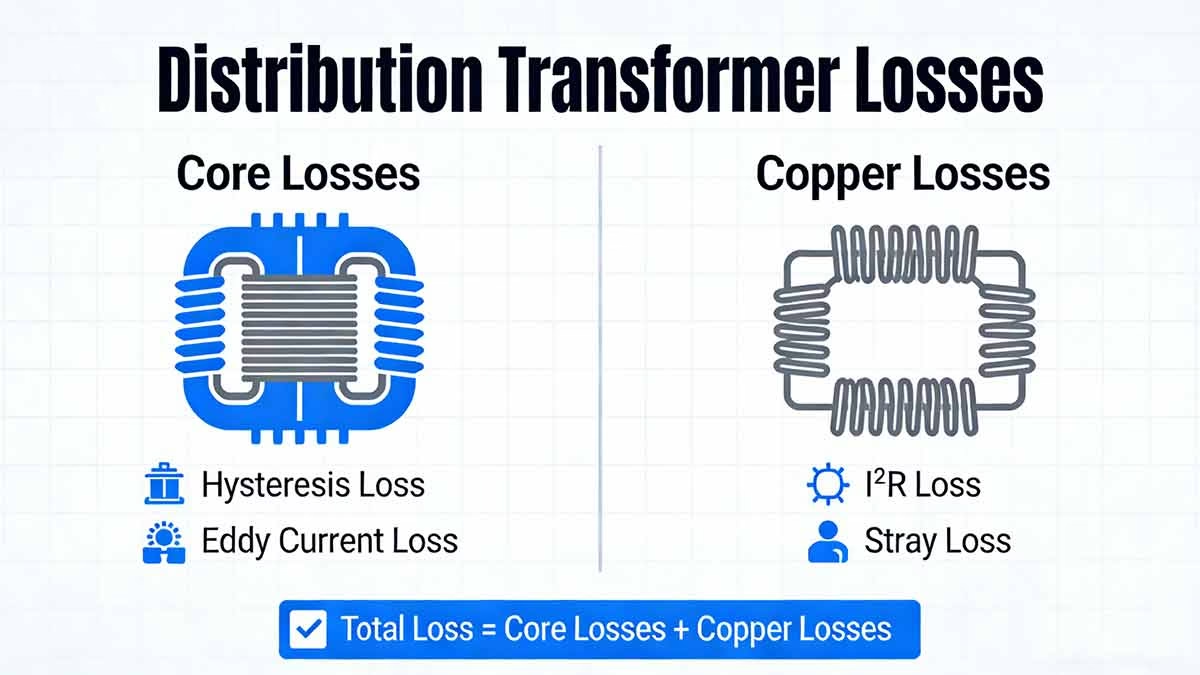
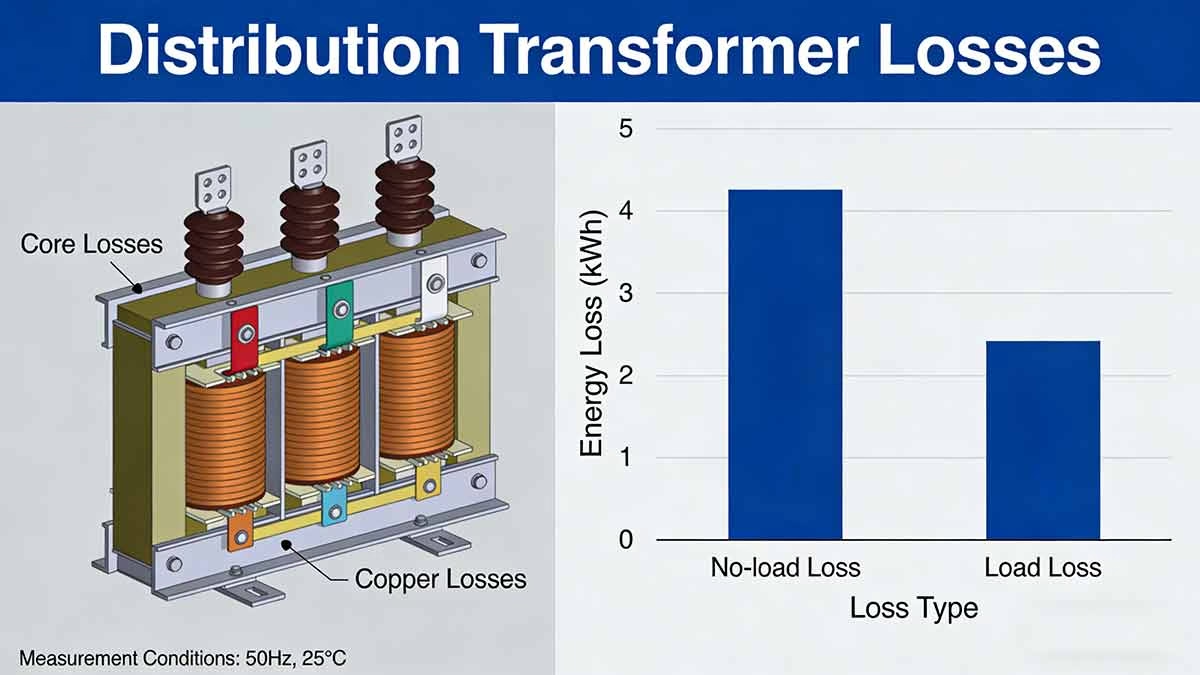
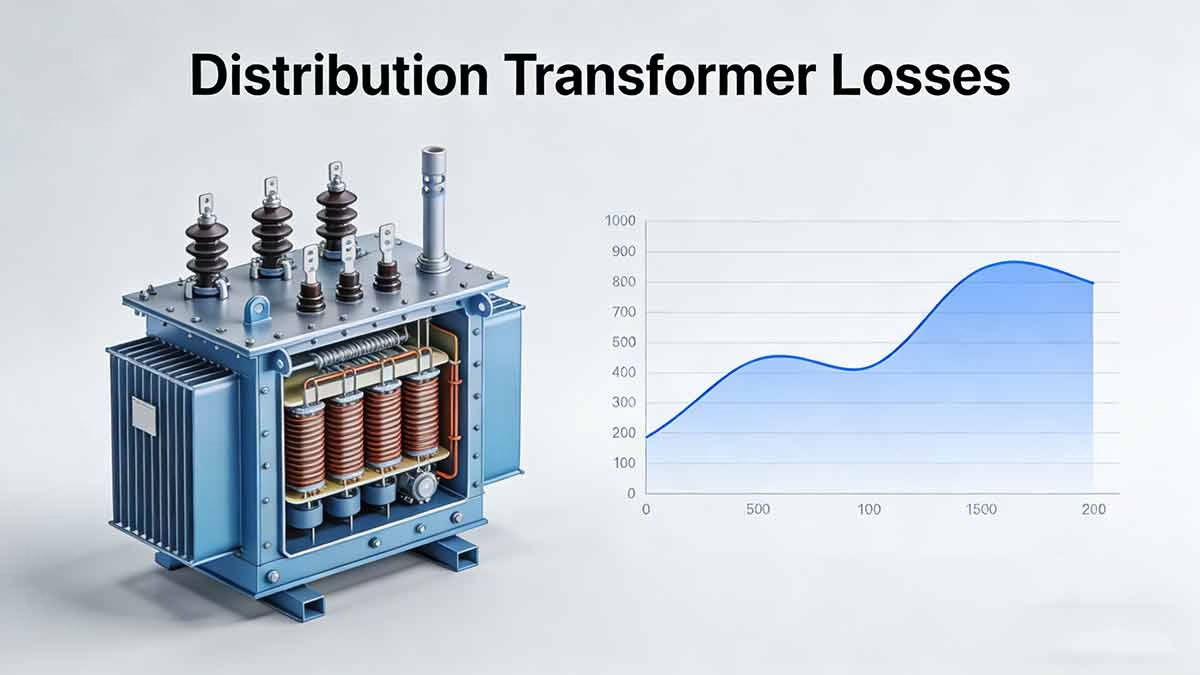
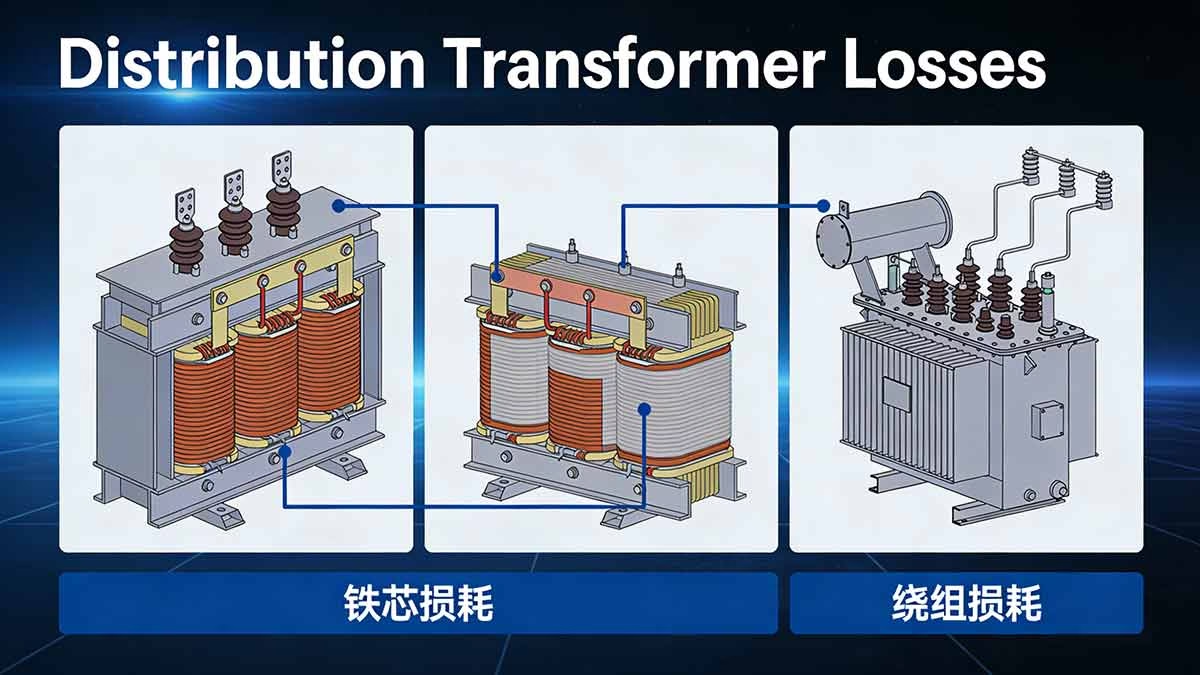
The main categories of losses in distribution transformers encompass no-load core losses, load-dependent winding losses, stray magnetic losses, and dielectric insulation losses. Each type stems from distinct physical processes occurring during the transformer’s operational phase. It is important to note that these losses are inherent to the transformer’s design and operation, as they are closely tied to the properties of magnetic, electrical, and insulation materials used in the unit. Even with the adoption of cutting-edge materials and sophisticated design methodologies, phenomena such as magnetic hysteresis, electrical resistance, and dielectric polarization will inevitably result in a certain degree of energy dissipation.
No-Load Core Losses
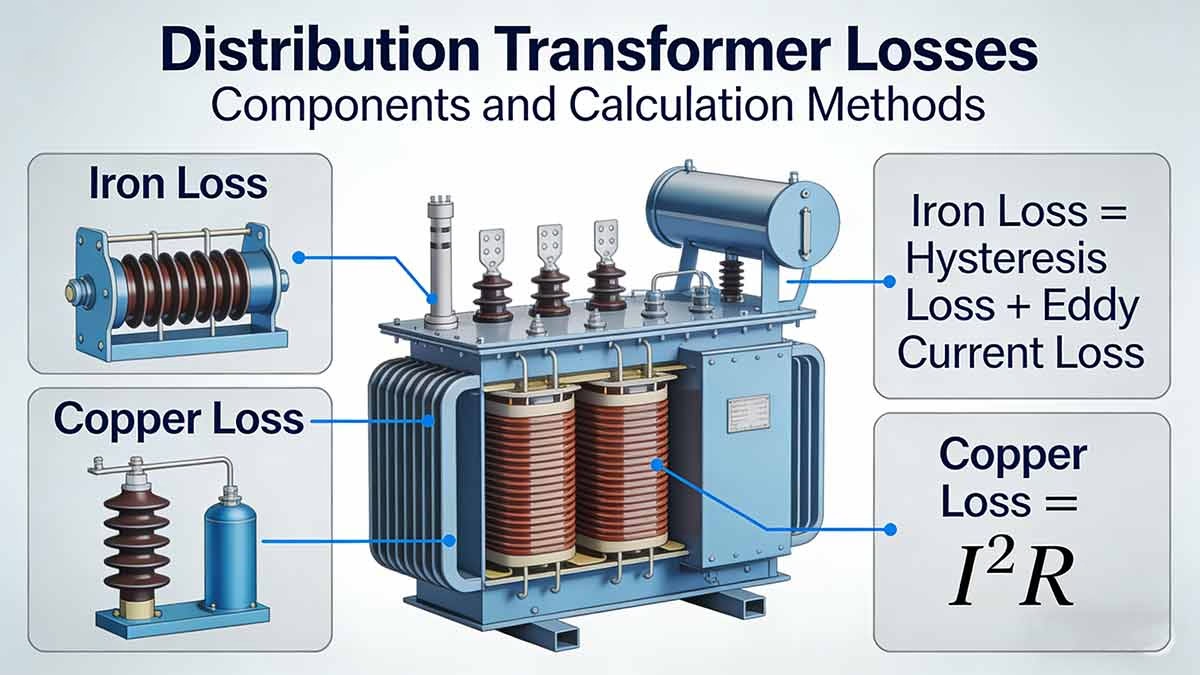
Core losses take place as soon as the transformer is connected to the power supply, irrespective of the load magnitude it is carrying. These losses are primarily composed of two key components: hysteresis losses and eddy current losses.
Hysteresis losses are generated by the repeated magnetization and demagnetization cycles of the transformer’s ferromagnetic core material as the alternating current (AC) supply voltage changes direction. Each cycle of magnetic reversal requires a specific amount of energy to overcome the internal friction within the magnetic domains of the core material. On the other hand, eddy current losses are induced by the alternating magnetic flux in the core, which generates circulating currents, known as eddy currents, within the conductive core laminations. These circulating currents dissipate energy in the form of heat due to the electrical resistance of the core material.
The magnitude of core losses is influenced by several critical factors: the quality and composition of the core material, the level of magnetic flux density within the core, and the frequency and amplitude of the supply voltage. In general, core losses remain relatively stable under varying load conditions and become the dominant source of energy loss when the transformer is operating at light load or no-load states.
Load-Dependent Winding Losses
Also commonly referred to as copper losses, winding losses are triggered by the electrical resistance present in the transformer’s primary and secondary windings. Unlike core losses, these losses exhibit a direct relationship with the square of the load current, following the well-known Joule’s law (P=I²R). This means that as the load current increases, winding losses rise exponentially.
Several factors impact the magnitude of winding losses: the type of conductor material used (such as high-purity copper or aluminum alloys), the cross-sectional area of the conductor (which determines the current density), and the operating temperature of the windings. As the transformer operates and generates heat, the electrical resistance of the winding conductors increases, which in turn further amplifies the winding losses. This creates a cumulative effect where higher loads lead to more heat generation, higher resistance, and even greater energy dissipation.
Stray Magnetic Losses
Stray losses occur outside the main magnetic circuit formed by the transformer’s core and windings. These losses are a result of leakage magnetic flux that does not link with both the primary and secondary windings. This leakage flux induces eddy currents in various structural components of the transformer, including the tank walls, clamping bolts, magnetic shields, and other metallic parts. Additionally, circulating currents that form in parallel conductors within the windings can also contribute to stray losses.
Although stray losses are typically smaller in magnitude compared to core and winding losses in medium-sized distribution transformers, they become a more significant concern in large-capacity, high-voltage transformers. In such units, the high magnetic flux levels and complex winding configurations can lead to substantial stray loss generation, which may cause localized overheating and affect the transformer’s overall efficiency.
Dielectric Insulation Losses
Dielectric losses occur within the transformer’s insulation system when it is subjected to alternating electric fields. The insulation materials, which are designed to be electrical insulators, exhibit a certain degree of dielectric polarization under the influence of the AC voltage. This polarization process involves the movement of charge carriers within the material, which dissipates energy in the form of heat.
The factors that influence dielectric losses include the inherent properties of the insulation material (such as its dielectric constant and dissipation factor), the moisture content and degree of aging of the insulation, and the operating voltage and temperature of the transformer. While dielectric losses are generally minimal in well-maintained transformers, they can increase significantly as the insulation material degrades over time due to factors like moisture ingress, thermal stress, and chemical contamination.
Auxiliary System Losses
Beyond the core electromagnetic losses, auxiliary losses are associated with the supporting equipment that ensures the transformer’s stable operation, rather than the transformer’s core function of voltage transformation. Examples of such auxiliary equipment include cooling fans, oil circulation pumps (in oil-immersed transformers), and control and monitoring systems.
These auxiliary losses contribute to the overall energy consumption of the transformer system, especially in large distribution transformers equipped with forced cooling systems. In such units, the continuous operation of cooling fans and pumps can account for a notable portion of the total energy expenditure, particularly during periods of high load when cooling demands are at their peak.
Loss Distribution Variations Across Different Load Conditions
The dominance of different loss types shifts as the transformer’s load level changes, which directly impacts the unit’s overall efficiency. The following breakdown illustrates this relationship:
| Load Condition | Dominant Loss Category |
|---|---|
| No-load / Light load | No-load core losses |
| Medium load | Balanced core and winding losses |
| High load | Winding and stray magnetic losses |
This distribution pattern explains why distribution transformers achieve their peak efficiency when operating within a specific load range, typically around 60–80% of their rated capacity. Operating the transformer outside this optimal range—either at excessively light or heavy loads—will result in reduced efficiency and higher energy loss per unit of output power.
How Does Precise Transformer Sizing Cut Down Losses Over Time?
Incorrect transformer sizing stands out as one of the most prevalent and costly errors in power system design and deployment. An undersized transformer is forced to operate under chronic overloading conditions, which leads to excessive heat generation, accelerated component aging, and a sharp increase in winding losses. Conversely, an oversized transformer spends the majority of its service life operating at light load, where core losses—being relatively constant—account for a large proportion of the total energy loss, resulting in significant long-term energy waste. Both scenarios lead to elevated operational costs, increased thermal stress, and a higher risk of premature equipment failure throughout the transformer’s lifespan.
Precise transformer sizing plays a crucial role in minimizing long-term losses by achieving a balance between no-load core losses and load-dependent winding losses, ensuring the unit operates within its optimal efficiency range, and reducing thermal stress that contributes to performance degradation and insulation breakdown. A well-sized transformer maintains its designed loss characteristics for a longer period, delivering consistent efficiency and reliability.
The key to loss minimization through proper sizing lies in aligning the transformer’s rated capacity with the actual load requirements of the application. This ensures that the unit operates close to its peak efficiency point for the majority of its service life, where the combined core and winding losses are minimized.
Aligning Rated Capacity with Actual Load Profiles
Transformer efficiency is not a fixed value; it varies dynamically with changes in load level. To achieve optimal sizing, engineers must take into account several critical load-related factors, rather than relying solely on peak demand figures:
- Average operating load: The typical load level the transformer will carry during normal operation, which is often much lower than the peak load.
- Daily and seasonal load fluctuations: Variations in load demand that occur over a 24-hour period and across different seasons, which can significantly impact the transformer’s loss profile.
- Future load growth projections: Reasonable estimates of load increases over the transformer’s service life, to avoid oversizing while ensuring the unit can accommodate future expansion without the need for premature replacement.
By sizing the transformer to operate at 60–80% of its rated capacity during normal conditions, power system operators can minimize the total energy loss over the unit’s lifespan, balancing the trade-off between core losses (dominant at light load) and winding losses (dominant at high load).
Eliminating Excessive Core Losses in Oversized Units
Oversized transformers operate far below their rated load for extended periods, leading to a disproportionate amount of energy being wasted on core losses. Unlike winding losses, core losses are not affected by load level—they remain constant as long as the transformer is energized. This means that an oversized transformer will consume a significant amount of energy even when it is not delivering a corresponding amount of output power.
Over the course of several decades of operation, these seemingly small daily core losses accumulate into substantial energy waste, resulting in higher electricity bills and a larger carbon footprint. Proper sizing eliminates this inefficiency by ensuring that the transformer’s core loss is proportional to the actual load demand, rather than being oversized for infrequent peak load events.
Preventing Catastrophic Winding Losses in Undersized Units
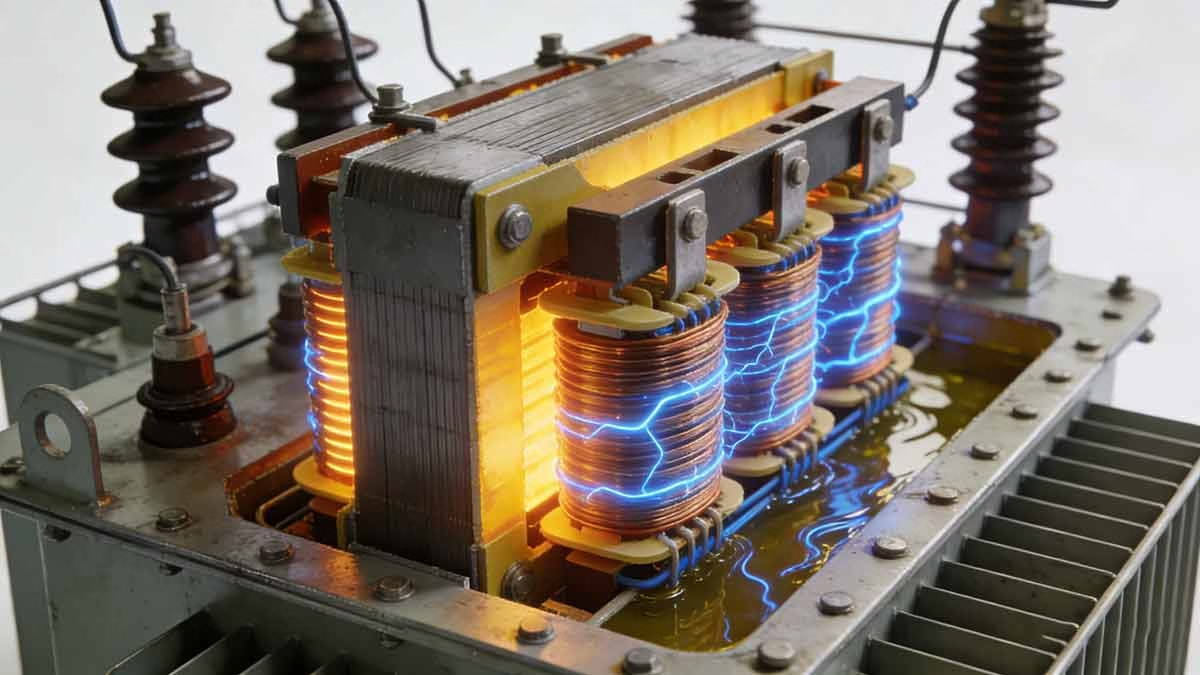
Undersized transformers are forced to operate at or above their rated current levels to meet the load demand, which triggers a sharp increase in winding losses due to the I²R relationship. This not only leads to higher energy consumption but also causes excessive heat generation, which further increases the winding resistance and exacerbates loss levels.
Chronic overloading also leads to the formation of hot spots within the windings, which accelerates insulation degradation and increases the risk of dielectric breakdown. In severe cases, this can result in transformer failure and costly downtime for power utilities and industrial users. Precise sizing prevents these issues by ensuring the transformer operates within its rated current limits, keeping winding losses and temperature rise within acceptable ranges.
Limiting Thermal Stress and Slowing Down Component Aging
Temperature is a critical factor that drives the increase in transformer losses over time. High operating temperatures accelerate the aging of core materials, insulation systems, and winding conductors, leading to a gradual deterioration in the transformer’s loss characteristics.
Proper sizing ensures that the transformer’s winding and core temperatures remain within the design limits specified by industry standards. This prevents the increase in winding resistance caused by overheating and slows down the degradation of core laminations and insulation materials. By maintaining lower operating temperatures, the transformer retains its original loss performance for a longer period, reducing the need for premature maintenance or replacement.
Optimizing Cooling System Performance
Transformer cooling systems are designed to handle specific thermal loads, corresponding to the unit’s rated capacity. Incorrect sizing disrupts this balance: oversized transformers lead to underutilization of cooling systems, resulting in unnecessary auxiliary losses from fans and pumps operating when they are not needed; undersized transformers force cooling systems to operate continuously at maximum capacity, increasing auxiliary energy consumption and wear and tear on cooling equipment.
Precise sizing ensures that the cooling system operates in its optimal efficiency range, with fan and pump operation directly proportional to the actual thermal load. This reduces auxiliary losses and improves the overall energy efficiency of the transformer system, while also extending the lifespan of cooling equipment.
Enhancing Voltage Regulation and Power Quality
Incorrect transformer sizing can have a negative impact on voltage regulation and power quality, which in turn increases losses in both the transformer and downstream electrical equipment. An undersized transformer operating under heavy load will experience significant voltage drops, leading to reduced efficiency in motors, lighting systems, and other connected devices. An oversized transformer operating at light load may produce excessive voltage levels, which can cause overheating and premature failure of sensitive electronic equipment.
Proper sizing ensures stable voltage output across a wide range of load conditions, reducing voltage drops at high load and preventing overvoltage at light load. This not only improves the efficiency of the transformer itself but also minimizes energy losses in the entire distribution network, leading to overall system-wide efficiency gains.
Extending Service Life and Delaying Replacement Costs
As transformers age, their loss levels tend to increase due to component degradation and insulation breakdown. Well-sized transformers experience slower rates of aging, as they operate within their design limits and are not subjected to the thermal stress that accelerates component deterioration. This allows the transformer to maintain its efficient performance for several additional years, delaying the need for costly replacement and reducing the total cost of ownership over the unit’s lifespan.
Why Is Strategic Load Management Vital for Loss Mitigation?
In real-world power distribution systems, transformers rarely operate under a stable, constant load. Daily demand peaks, seasonal variations in energy consumption, and unexpected overload events all have a significant impact on transformer efficiency. Without effective load management strategies in place, even the most well-designed and properly sized transformer can suffer from excessive energy losses, overheating, and premature aging, leading to rising operational costs year after year.
Strategic load management is critical for loss mitigation because it ensures that transformers operate within their optimal efficiency range, limits excessive winding losses, controls temperature rise, and prevents long-term component degradation that leads to escalating loss levels over time. By actively managing load conditions, power system operators can unlock significant efficiency gains and extend the service life of transformer assets.
The primary way that poor load management increases transformer losses is by elevating current-dependent winding losses. Since winding losses are proportional to the square of the load current, even a small increase in peak load can lead to a disproportionate rise in total energy loss, making load management a cost-effective way to improve transformer efficiency.
Controlling Current-Driven Winding Losses
Winding losses are the most load-sensitive component of total transformer losses, making their control a top priority for loss mitigation. Effective load management strategies focus on avoiding sustained operation at or above the transformer’s rated current, which is the main cause of excessive winding losses.
By implementing load shedding during peak demand periods, redistributing load across multiple transformers in parallel, and avoiding unnecessary overloads, operators can reduce the peak current flowing through transformer windings. Even a modest 10% reduction in peak load current can lead to a 20% reduction in winding losses, resulting in substantial energy savings over time. Additionally, load management helps prevent sudden thermal spikes during peak demand events, which can cause temporary increases in winding resistance and loss levels.
Maintaining Operation Near the Optimal Efficiency Point
Every distribution transformer has a specific load range where its total energy loss is minimized—the optimal efficiency point. This range, typically 60–80% of rated capacity, represents the balance between core losses and winding losses. Operating the transformer outside this range leads to reduced efficiency and higher energy waste.
Strategic load management helps keep the transformer operating within this optimal range by:
- Maintaining the average load level within the designed efficiency zone, avoiding prolonged periods of light or heavy loading.
- Balancing the load evenly across multiple transformers operating in parallel, ensuring that no single unit is overloaded while others operate at light load.
- Implementing demand response programs to shift non-critical loads away from peak demand periods reduces the need for transformers to operate at high load levels.
By keeping the transformer near its optimal efficiency point, operators can minimize the combined impact of core and winding losses, maximizing energy efficiency and reducing operational costs.
Reducing Thermal Stress and Preventing Loss Escalation
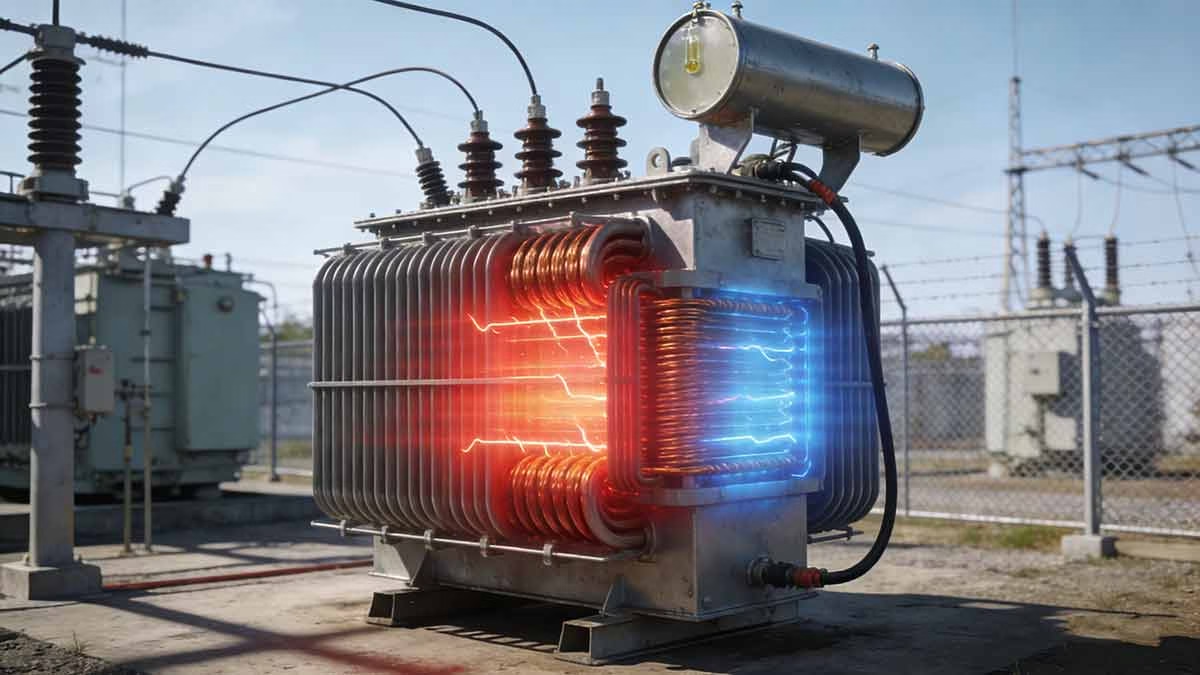
Temperature has a direct impact on transformer loss characteristics, as higher operating temperatures increase winding resistance and accelerate component degradation. Poor load management leads to frequent overloads and thermal spikes, which cause winding temperatures to rise beyond design limits and trigger a cycle of increasing losses and heat generation.
Effective load management controls load levels to keep winding temperatures within acceptable ranges, preventing the increase in resistance that leads to higher winding losses. By limiting temperature rise, load management also reduces additional losses such as stray magnetic losses and dielectric losses, which are exacerbated by high operating temperatures. This helps maintain the transformer’s original loss performance over a longer period, delaying the onset of efficiency degradation due to thermal stress.
Preventing Accelerated Insulation Aging
The aging rate of transformer insulation materials is strongly dependent on operating temperature, with higher temperatures leading to faster degradation. Insulation aging is a major contributor to increasing transformer losses over time, as degraded insulation exhibits higher dielectric losses and is more prone to moisture ingress and partial discharge.
Strategic load management keeps hot-spot temperatures within the transformer’s design limits, slowing down the aging process of insulation materials. This reduces the risk of moisture accumulation and partial discharge, which not only minimizes dielectric losses but also prevents the localized heating that contributes to overall loss escalation. By preserving insulation integrity, load management helps maintain the transformer’s efficiency and reliability for its intended service life.
Minimizing Auxiliary and Cooling System Losses
Cooling systems are a significant source of auxiliary losses in distribution transformers, especially in units equipped with forced air or oil cooling. The operation of cooling fans and pumps is directly tied to the transformer’s thermal load, with higher loads requiring more intensive cooling.
Poor load management leads to frequent overloads, which force cooling systems to operate continuously at maximum capacity, increasing auxiliary energy consumption and equipment wear. Strategic load management reduces the need for excessive cooling by keeping load levels within optimal limits, allowing cooling systems to operate in their efficient range. This not only lowers auxiliary losses but also extends the lifespan of cooling equipment, reducing maintenance and replacement costs over time.
Enhancing Voltage Regulation and System Stability
Unmanaged load fluctuations can lead to poor voltage regulation, which increases energy losses in both the transformer and downstream electrical equipment. High load levels cause voltage drops, which reduce the efficiency of motors, pumps, and other inductive loads, while light load levels can lead to overvoltage, which wastes energy in resistive loads such as lighting systems.
Effective load control helps stabilize voltage levels by reducing excessive voltage drops at high load and preventing overvoltage at light load. This improves voltage regulation across the distribution network, minimizing energy losses in connected equipment and enhancing overall system stability. Additionally, load management helps limit the formation of circulating currents and harmonic distortions, which are additional sources of energy loss in power systems.
Supporting Long-Term Asset Optimization
Load management is not just a tactical tool for reducing immediate losses; it is also a strategic asset management strategy that maximizes the value of transformer investments over the long term. By optimizing load conditions, operators can defer costly transformer upgrades or replacements, as well-maintained transformers operating within their design limits can deliver reliable service for many years beyond their initial expected lifespan.
Load management also enables better utilization of installed transformer capacity, allowing power utilities to meet growing energy demand without investing in additional equipment. This leads to significant cost savings and improved asset efficiency, while also reducing the environmental impact associated with manufacturing and disposing of new transformers.
How Do Advanced Materials and Optimized Design Minimize Distribution Transformer Losses?
As power distribution systems expand in scale and evolve toward higher efficiency standards, even marginal improvements in transformer loss performance can translate into substantial economic and environmental benefits over the decades-long service life of these assets. Modern distribution transformers achieve far lower loss levels than their older counterparts, not through fundamental changes in the principles of electromagnetic induction, but through continuous advancements in materials science, electromagnetic design optimization, and precision manufacturing techniques.
Advanced materials and optimized design strategies minimize distribution transformer losses by reducing magnetic hysteresis effects, lowering electrical resistance in windings, mitigating stray magnetic flux impacts, and controlling thermal stress throughout the transformer’s operational lifecycle. These innovations work in tandem to enhance efficiency, reduce energy waste, and extend the service life of transformer assets.
The primary drivers behind the development of modern low-loss distribution transformers are advances in core and winding materials. High-performance magnetic steels, advanced conductor alloys, and next-generation insulation systems directly contribute to the reduction of core losses, winding losses, and stray losses, forming the foundation of efficient transformer design.
Advanced Core Materials for Reduced No-Load Losses
Core losses are heavily dependent on the magnetic properties of the core material, making material selection a critical factor in low-loss transformer design. Modern distribution transformers utilize a range of advanced materials to minimize hysteresis and eddy current losses:
- High-permeability grain-oriented silicon steel: This material is the industry standard for low-loss transformer cores. Its unique crystalline structure allows magnetic domains to align and reverse direction with minimal energy loss, reducing hysteresis losses by up to 30% compared to conventional silicon steel. The steel is also processed to have a thin, uniform thickness, which minimizes eddy current losses by reducing the cross-sectional area available for circulating currents.
- Laser-scribed or domain-refined core laminations: To further reduce core losses, manufacturers use laser scribing or mechanical domain refinement techniques to create narrow grooves on the surface of silicon steel laminations. These grooves break up large magnetic domains into smaller ones, reducing the energy required for magnetic reversal and lowering hysteresis losses by an additional 10–15%.
- Amorphous metal cores: For ultra-low-loss applications, amorphous metal cores offer a significant step forward in efficiency. Made from a non-crystalline alloy of iron, silicon, and boron, these cores have a disordered atomic structure that eliminates magnetic hysteresis almost entirely, reducing core losses by up to 70% compared to grain-oriented silicon steel. While more expensive to produce, amorphous metal cores are ideal for applications where long-term energy savings are a top priority.
These advanced core materials allow transformers to operate with significantly lower no-load losses, making them particularly efficient for applications where the transformer is energized 24/7, even at light load.
Optimized Core Geometry and Magnetic Flux Control
Material advancements are complemented by optimized core design strategies that further reduce energy loss. These design techniques focus on maximizing the efficiency of the magnetic circuit and minimizing localized magnetic saturation, which is a major source of additional core losses.
Key design optimizations include:
- Optimized magnetic flux density selection: Engineers carefully select the operating flux density of the core to balance loss minimization and material cost. Operating the core at a flux density that is too high leads to magnetic saturation and increased losses, while operating it too low requires a larger core size, increasing material costs and stray losses. The optimal flux density is determined based on the specific core material and the transformer’s load profile.
- Step-lap core joints: Traditional core joints create air gaps that disrupt the magnetic circuit and increase losses. Step-lap joints, which use staggered laminations to create a continuous magnetic path, reduce air gap size and minimize magnetic leakage, lowering core losses by up to 5% compared to conventional joints.
- Precision lamination stacking: The stacking of core laminations is performed with tight tolerances to ensure uniform magnetic flux distribution and minimize air gaps between laminations. Any gaps in the core can cause localized magnetic saturation and increased eddy current losses, making precision stacking a critical manufacturing step for low-loss transformers.
These design optimizations enhance the performance of advanced core materials, ensuring that the full efficiency potential of the material is realized in practical applications.
High-Conductivity Winding Materials for Lower Load Losses
Winding losses are determined primarily by the electrical resistance of the conductor material, making the selection of high-conductivity materials a key factor in reducing load-dependent losses. Modern transformer designs prioritize materials that offer low electrical resistance, high mechanical strength, and good thermal conductivity.
The most commonly used winding materials include:
- High-purity electrolytic copper: Copper is the preferred conductor material for low-loss transformers due to its exceptional electrical conductivity. High-purity electrolytic copper, with a purity level of 99.99%, has the lowest electrical resistance of any commonly used conductor material, minimizing I²R losses in the windings. Copper also has excellent thermal conductivity, which helps dissipate heat generated by winding losses, preventing resistance increases due to temperature rise.
- Optimized aluminum alloys: For applications where cost and weight are primary concerns, advanced aluminum alloys offer a viable alternative to copper. These alloys are engineered to have higher electrical conductivity than conventional aluminum, reducing winding losses by up to 15% compared to standard aluminum conductors. While aluminum has a lower conductivity than copper, its lower cost and lighter weight make it an attractive option for large distribution transformers where material costs are a significant factor.
- Increased conductor cross-sectional area: To further reduce winding resistance, modern transformers use conductors with larger cross-sectional areas than older designs. This reduces the current density in the windings, lowering I²R losses and reducing heat generation. While larger conductors increase material costs, the long-term energy savings from reduced losses often justify the upfront investment.
By selecting the right conductor material and optimizing its cross-sectional area, manufacturers can significantly reduce winding losses, especially at high load levels where these losses dominate.
Advanced Winding Design and Arrangement for Loss Reduction
Beyond material selection, the design and arrangement of transformer windings play a crucial role in minimizing both winding and stray losses. Modern winding designs focus on reducing magnetic leakage flux, eliminating circulating currents, and ensuring uniform current distribution throughout the winding conductors.
Key winding design innovations include:
- Continuously transposed conductors (CTCs): In large transformers, parallel conductors are often used to handle high current levels. However, parallel conductors can generate circulating currents due to differences in magnetic flux linkage, leading to additional losses. CTCs are designed to transpose the position of each conductor within the winding bundle, ensuring that each conductor experiences the same magnetic flux and eliminating circulating currents. This reduces winding losses by up to 10% in high-current applications.
- Optimized winding spacing and insulation: The spacing between primary and secondary windings is carefully optimized to minimize magnetic leakage flux, which is a major source of stray losses. By reducing the distance between windings, engineers can increase magnetic coupling efficiency and reduce leakage flux, lowering stray losses while maintaining adequate insulation between windings.
- Symmetrical winding layouts: Symmetrical winding designs ensure that the magnetic field around the windings is uniformly distributed, reducing localized magnetic saturation and stray losses. This is particularly important for high-voltage distribution transformers, where asymmetrical magnetic fields can lead to significant stray loss generation in the transformer’s tank and structural components.
These winding design optimizations work in conjunction with high-conductivity materials to minimize load-dependent losses, ensuring that the transformer remains efficient even at high load levels.
Improved Insulation Systems and Thermal Performance
Insulation materials play a dual role in transformer design: they must provide electrical isolation between conductors and core components, and they must also dissipate heat generated by energy losses. Modern insulation systems are engineered to have low dielectric loss, high thermal conductivity, and excellent resistance to aging, contributing to both loss reduction and long-term reliability.
Key advancements in insulation technology include:
- Nanocomposite insulation materials: These materials incorporate nanoparticles into traditional insulation resins, improving both dielectric and thermal properties. Nanocomposites have lower dissipation factors than conventional insulation, reducing dielectric losses by up to 20%. They also have higher thermal conductivity, allowing for more efficient heat dissipation and lower operating temperatures.
- Thermally conductive insulation papers: For oil-immersed transformers, insulation papers are treated with thermally conductive coatings to improve heat transfer from the windings to the cooling oil. This reduces hot-spot temperatures in the windings, lowering winding resistance and reducing load losses.
- Age-resistant insulation systems: Modern insulation materials are formulated to resist degradation caused by thermal stress, moisture, and chemical contamination. This extends the service life of the insulation, preventing the increase in dielectric losses that occurs as insulation ages.
By improving insulation performance, manufacturers can reduce dielectric losses and control operating temperatures, creating a more efficient and reliable transformer design.
Enhanced Cooling and Thermal Management Design
Losses in transformers generate heat, which in turn increases losses by raising winding resistance and accelerating component aging. Modern transformer designs incorporate advanced cooling systems that efficiently dissipate heat, keeping operating temperatures low and stabilizing loss levels over time.
Key cooling system optimizations include:
- Optimized oil flow paths (for oil-immersed transformers): The design of oil circulation paths within the transformer tank is optimized to ensure uniform cooling of windings and core components. This eliminates hot spots and reduces temperature gradients, lowering winding resistance and load losses.
- Enhanced radiator and cooling fin design: Radiators and cooling fins are designed with increased surface area and improved airflow characteristics to enhance heat dissipation. This reduces the need for forced cooling systems, lowering auxiliary losses while maintaining effective temperature control.
- Smart cooling control systems: Modern transformers are equipped with intelligent cooling control systems that adjust fan and pump operation based on actual load and temperature conditions. This ensures that cooling systems operate only when needed, reducing auxiliary losses and extending equipment lifespan.
Effective thermal management is a critical component of low-loss transformer design, as it prevents the cycle of heat generation and loss escalation that plagues poorly cooled transformers.
Precision Manufacturing and Quality Control
Even the most advanced materials and designs will fail to deliver optimal performance if they are not manufactured with precision. Modern transformer manufacturers use strict quality control processes to ensure that every component meets exact design specifications, minimizing unintended losses caused by manufacturing defects.
Key manufacturing and quality control measures include:
- Tight dimensional tolerances: Core laminations, winding conductors, and structural components are manufactured to precise dimensional tolerances to ensure proper fit and alignment. This reduces air gaps in the core and ensures uniform winding spacing, minimizing magnetic leakage and stray losses.
- Consistent lamination stacking: Automated stacking machines are used to ensure that core laminations are aligned perfectly, with no gaps or misalignments that could cause localized magnetic saturation and increased losses.
- Accurate conductor placement and tensioning: Winding conductors are placed and tensioned with precise control to ensure uniform current distribution and minimize magnetic leakage. This is particularly important for high-current windings, where uneven tension can lead to circulating currents and additional losses.
By maintaining strict quality control during manufacturing, manufacturers can ensure that the transformer’s actual loss performance matches the design specifications, delivering the expected efficiency gains to end users.
What Is the Role of Proactive Maintenance in Controlling Transformer Losses?
Even the most efficiently designed and constructed distribution transformer will not maintain its original performance levels without a program of proactive maintenance. Over time, factors such as contamination, thermal stress, mechanical loosening, and insulation degradation can all contribute to increasing losses, even if the transformer was initially optimized for low-loss operation. Effective maintenance is therefore not just a tool for preventing equipment failures; it is a critical strategy for keeping transformer losses low throughout the entire service life of the asset.
Proactive maintenance plays a key role in controlling transformer losses by preserving the integrity of insulation systems, ensuring the efficient operation of cooling equipment, maintaining low-resistance electrical connections, and preventing the development of conditions that lead to loss escalation over time. By addressing potential issues before they escalate, maintenance helps maintain the transformer’s designed efficiency and extends its service life.
Poor maintenance practices lead to higher transformer losses primarily by increasing electrical resistance and thermal stress on the equipment. Degraded insulation, clogged cooling systems, and loose electrical connections all contribute to higher operating temperatures and increased resistance, which in turn drive up energy losses and accelerate component aging.
Preserving Cooling System Efficiency
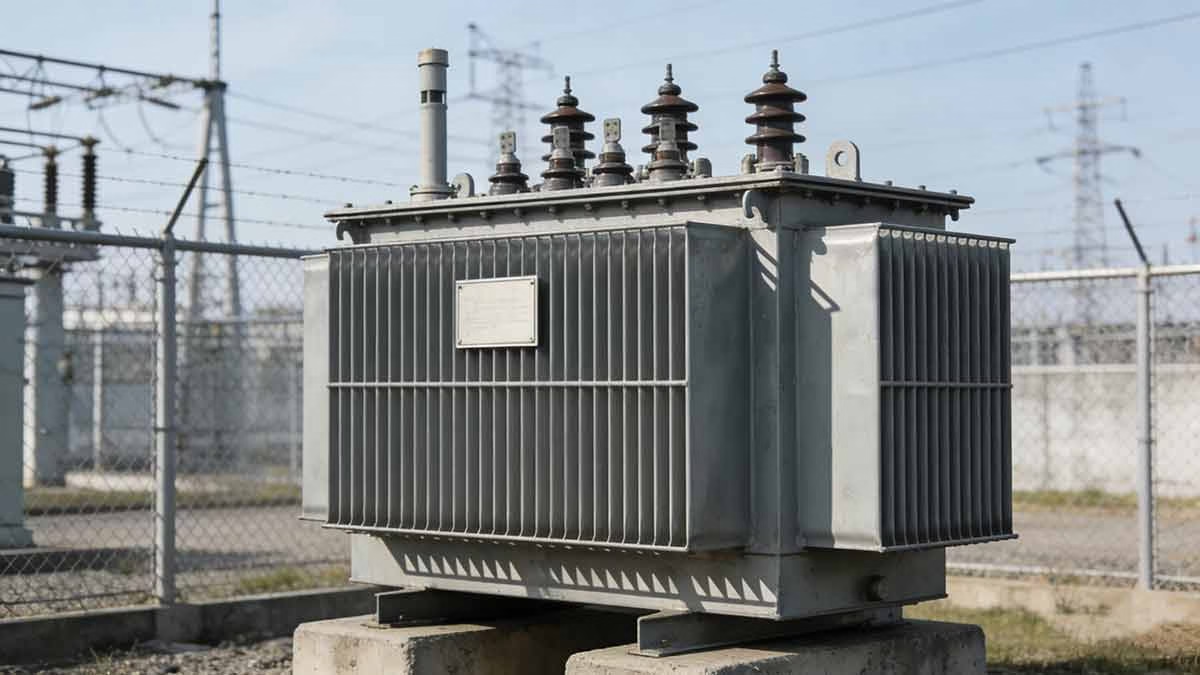
The efficiency of the transformer’s cooling system has a direct and immediate impact on loss levels. A poorly maintained cooling system cannot dissipate heat effectively, leading to higher operating temperatures, increased winding resistance, and elevated load losses. Proactive maintenance ensures that the cooling system operates at peak efficiency, keeping temperature rise within design limits and stabilizing loss levels.
Key cooling system maintenance tasks include:
- Regular cleaning of radiators and cooling fins: Dust, dirt, and debris can accumulate on the surface of radiators and cooling fins, reducing their heat dissipation capacity. Regular cleaning—either through air blowing, water washing, or chemical cleaning—removes these contaminants and restores cooling efficiency. This is particularly important for transformers installed in industrial or dusty environments.
- Inspection and testing of cooling fans and pumps: Fans and pumps should be inspected regularly for wear and tear, and tested to ensure they operate at their rated speed and flow rate. Faulty fans or pumps can lead to inadequate cooling, causing hot spots and increased losses. Replacing worn bearings, cleaning impellers, and repairing electrical connections are critical maintenance tasks that keep cooling equipment in good working order.
- Verification of airflow and oil circulation: For air-cooled transformers, maintenance teams should verify that airflow is not restricted by obstructions such as vegetation or equipment. For oil-immersed transformers, oil flow rates should be measured to ensure that the cooling system is circulating oil effectively through the windings and radiators. Any restrictions in airflow or oil circulation should be addressed immediately to prevent overheating.
By maintaining cooling system efficiency, operators can keep winding temperatures low, preventing the increase in resistance that leads to higher load losses.
Maintaining Insulation Condition and Integrity
The health of the transformer’s insulation system is closely linked to its loss performance, especially dielectric losses. As insulation degrades, its dielectric properties deteriorate, leading to higher dielectric losses and increased risk of partial discharge. Proactive maintenance helps preserve insulation integrity, minimizing dielectric losses and preventing the localized heating that contributes to overall loss escalation.
Key insulation maintenance activities include:
- Monitoring moisture content in insulation materials: Moisture is one of the most damaging contaminants for transformer insulation, as it reduces dielectric strength and increases dielectric losses. For oil-immersed transformers, regular oil sampling and testing can detect moisture ingress at an early stage. For dry-type transformers, humidity sensors can monitor the moisture content of the insulation and trigger maintenance actions if levels exceed safe limits.
- Preventing contamination by dust, acids, and sludge: Insulation contamination can occur due to environmental factors or internal degradation processes. For example, oil-immersed transformers can develop sludge as the oil ages, which can coat windings and reduce heat dissipation. Regular oil filtration and purification can remove sludge and contaminants, preserving insulation performance. For dry-type transformers, enclosures should be inspected to ensure they are preventing dust and moisture from entering the unit.
- Early detection of partial discharge and insulation degradation: Partial discharge is a sign of insulation degradation and can lead to increased dielectric losses and eventual insulation breakdown. Modern diagnostic tools such as partial discharge detectors and dielectric loss testers can identify these issues at an early stage, allowing maintenance teams to take corrective action before losses escalate.
By preserving insulation condition, proactive maintenance minimizes dielectric losses and prevents the development of conditions that lead to increased heat generation and loss escalation.
Preventing Oil Degradation and Contamination (Oil-Immersed Transformers)
For oil-immersed distribution transformers, the condition of the insulating oil is critical to both loss control and equipment reliability. The oil serves two primary functions: it provides electrical insulation between components, and it acts as a heat transfer medium to dissipate losses. As the oil degrades, its dielectric and thermal properties deteriorate, leading to higher losses and increased risk of failure.
Proper oil maintenance practices include:
- Regular oil sampling and testing: Oil samples should be taken at scheduled intervals and tested for key parameters such as dielectric strength, dissipation factor, moisture content, and acidity. These tests provide valuable insights into the condition of the oil and can detect degradation or contamination at an early stage.
- Oil filtration and purification: Over time, oil can become contaminated with sludge, moisture, and dissolved gases, which reduce its heat transfer efficiency and increase dielectric losses. Oil filtration systems can remove these contaminants, restoring the oil’s performance and extending its service life. In some cases, oil reclamation processes can be used to restore degraded oil to its original specifications.
- Oil replacement when necessary: If oil degradation is too severe to be reversed by filtration or purification, the oil should be replaced with new, high-quality insulating oil. This is a more costly maintenance task, but it is essential for preventing loss escalation and ensuring the transformer’s continued reliable operation.
By maintaining the quality of the insulating oil, operators can ensure efficient heat dissipation and low dielectric losses, keeping the transformer operating at its designed efficiency level.
Ensuring Low-Resistance Electrical Connections
Loose or corroded electrical connections are a common source of additional losses in distribution transformers. Even small increases in contact resistance can lead to significant localized heating and energy loss, which can contribute to overall loss escalation over time. Proactive maintenance helps identify and address connection issues before they become a major problem.
Key maintenance tasks for electrical connections include:
- Regular retightening of bolted joints and terminals: Vibrations from transformer operation can cause bolted connections to loosen over time, increasing contact resistance. Maintenance teams should retighten all bolted joints and terminals according to manufacturer specifications to ensure low-resistance connections. Torque wrenches should be used to ensure that connections are tightened to the correct level, as over-tightening can damage conductors or insulation.
- Thermal inspection for hot spots: Infrared thermal imaging is a valuable tool for identifying hot spots at electrical connections. Hot spots indicate high contact resistance and energy loss, and they can be detected even before visible signs of damage appear. Regular thermal inspections can help identify connection issues early, allowing for corrective action to be taken before losses escalate.
- Prevention of oxidation and contact degradation: Electrical connections can oxidize over time, especially in humid or corrosive environments, leading to increased resistance. Applying anti-oxidant compounds to connections can prevent oxidation and maintain low contact resistance. Additionally, ensuring that connections are properly sealed can protect them from environmental contaminants that cause corrosion.
By maintaining low-resistance electrical connections, operators can eliminate a significant source of unnecessary losses, improving the transformer’s overall efficiency.
Reducing Stray and Mechanical Losses
Mechanical issues in transformers can indirectly contribute to increased loss levels by disrupting the magnetic circuit and causing additional stray magnetic losses. Loose core clamping, for example, can lead to vibration and movement of core laminations, which increases air gaps and magnetic leakage, resulting in higher core and stray losses. Proactive maintenance helps maintain the mechanical integrity of the transformer, minimizing these types of losses.
Key maintenance tasks for reducing mechanical losses include:
- Inspection and tightening of core clamping structures: The core clamping bolts and structures should be inspected regularly for tightness and damage. Loose clamping can lead to core vibration and increased losses, while over-tightening can damage core laminations. Maintenance teams should ensure that clamping structures are properly adjusted to maintain the core’s mechanical stability without causing damage.
- Prevention of lamination movement and vibration: Core laminations can shift or vibrate if clamping is inadequate, leading to increased air gaps and magnetic leakage. In addition to tightening clamping structures, maintenance teams should inspect for signs of lamination movement, such as audible buzzing or humming, and take corrective action if necessary.
- Inspection of structural components for magnetic flux concentration: Structural components such as tank walls, bolts, and brackets can become sources of stray losses if they are positioned in areas of high magnetic flux. Maintenance teams should inspect these components for signs of localized heating, which indicates stray loss generation. In some cases, adding magnetic shields or modifying component positions can reduce stray losses.
By maintaining the mechanical integrity of the transformer, operators can minimize stray and mechanical losses, ensuring that the unit operates as close to its design specifications as possible.
Supporting Accurate Monitoring and Load Control
Proactive maintenance is not just about maintaining the transformer itself; it is also about ensuring that the monitoring systems used to track loss performance are accurate and reliable. Faulty sensors or monitoring equipment can provide incorrect data, leading to poor load management decisions and loss escalation.
Key maintenance tasks for monitoring systems include:
- Calibration of temperature and load sensors: Temperature sensors (such as RTDs or thermocouples) and current/voltage sensors should be calibrated regularly to ensure accurate measurements. Incorrect temperature readings can lead to poor cooling system control, while incorrect load data can result in suboptimal load management decisions.
- Inspection of monitoring system wiring and connections: Wiring and connections for monitoring systems can degrade over time, leading to signal loss or incorrect data. Maintenance teams should inspect wiring for signs of damage or corrosion and repair or replace it as needed. Additionally, ensuring that connections are properly sealed can protect them from environmental contaminants.
- Testing of data acquisition and analysis systems: The software and hardware used to collect and analyze monitoring data should be tested regularly to ensure that they are functioning correctly. This includes verifying that data is being recorded accurately and that alarm systems are working properly to alert operators of abnormal conditions.
By maintaining accurate monitoring systems, operators can make informed decisions about load management and maintenance scheduling, preventing loss escalation and optimizing the transformer’s efficiency over time.
Extending Efficient Service Life Through Maintenance
As transformers age, their loss levels tend to increase due to component degradation and insulation breakdown. However, a program of proactive maintenance can slow this aging process significantly, allowing the transformer to maintain its efficient performance for many years beyond its initial expected lifespan.
By addressing issues such as cooling system inefficiency, insulation degradation, and loose connections before they escalate, maintenance helps preserve the transformer’s original loss characteristics. This not only reduces energy waste and operational costs but also delays the need for costly transformer replacement, maximizing the return on investment for the asset.
How Can Real-Time Monitoring and Modern Technologies Reduce Long-Term Losses?
In traditional power distribution systems, transformer losses were often viewed as fixed and unavoidable, with performance evaluations limited to factory testing or periodic offline inspections. This reactive approach meant that loss escalation due to component degradation or operational issues often went undetected until it led to a significant efficiency drop or equipment failure. Today, this mindset has shifted dramatically. With distribution transformers operating continuously for 30–40 years on average, even small, incremental increases in losses can result in massive cumulative energy waste, elevated operational costs, and accelerated equipment aging. Modern monitoring technologies and digital solutions now play a decisive role in identifying, controlling, and reducing long-term transformer losses before they become irreversible.
Real-time monitoring and modern technologies reduce long-term distribution transformer losses by providing continuous visibility into load conditions, temperature profiles, insulation health, and operational parameters. This visibility enables proactive load control, optimized maintenance scheduling, and early intervention to address issues that cause loss escalation, ensuring that the transformer operates at peak efficiency throughout its service life.
Continuous monitoring is a key enabler of loss reduction because it allows operators to detect abnormal operating conditions at an early stage. Early detection provides the opportunity to take corrective action before overheating, insulation degradation, or resistance increases cause permanent damage and irreversible loss of growth.
Real-Time Load and Temperature Monitoring
Load and temperature are the two most critical factors that influence transformer loss levels, making their real-time monitoring a cornerstone of loss reduction strategies. Modern monitoring systems provide continuous data on current, voltage, load profile, and temperature, allowing operators to keep the transformer operating within its optimal efficiency range.
Key features of real-time load and temperature monitoring systems include:
- Continuous tracking of current, voltage, and load factor: Monitoring systems measure the transformer’s input and output current and voltage, calculating the load factor and efficiency in real time. This data allows operators to identify periods of overloading or light loading, which can be addressed through load management strategies to minimize losses.
- Winding and hot-spot temperature measurement: Advanced temperature sensors, such as fiber optic sensors embedded directly in the windings, provide accurate measurements of winding and hot-spot temperatures. This data is critical for preventing overheating, which increases winding resistance and load losses. Monitoring systems can trigger alarms if temperatures exceed safe limits, allowing operators to take immediate action to reduce load or increase cooling.
- Detection of unbalanced loading conditions: Unbalanced three-phase loads can lead to increased losses and thermal stress, as the transformer’s magnetic circuit is designed for balanced operation. Real-time monitoring systems can detect load imbalances and alert operators, who can then redistribute the load to restore balance and reduce losses.
By using real-time load and temperature data to optimize transformer operation, operators can minimize excessive winding losses and prevent thermal stress that leads to long-term loss escalation.
Early Detection of Insulation Degradation
Insulation degradation is a major contributor to increasing transformer losses over time, as degraded insulation exhibits higher dielectric losses and is more prone to moisture ingress and partial discharge. Modern diagnostic technologies enable the early detection of insulation issues, allowing maintenance teams to take corrective action before losses escalate significantly.
Key technologies for insulation condition monitoring include:
- Continuous partial discharge (PD) monitoring: Partial discharge is a precursor to insulation breakdown and is associated with increased dielectric losses. Modern PD monitoring systems use sensors to detect the electromagnetic signals generated by partial discharge activity, providing real-time data on insulation health. By detecting PD early, operators can schedule maintenance to address the issue before it leads to loss escalation or equipment failure.
- Dielectric loss tangent (tan δ) monitoring: The dielectric loss tangent is a measure of the energy dissipated in the insulation system under alternating electric fields. An increase in tan δ indicates insulation degradation and higher dielectric losses. Real-time tan δ monitoring systems can track this parameter over time, alerting operators to changes that indicate insulation issues.
- Moisture ingress detection: Moisture is a major cause of insulation degradation and increased dielectric losses. For oil-immersed transformers, online moisture sensors can continuously monitor the moisture content of the insulating oil, triggering alarms if levels exceed safe limits. For dry-type transformers, humidity sensors can detect moisture ingress into the unit, allowing for timely maintenance.
By detecting insulation degradation early, operators can take proactive measures to preserve insulation integrity, minimizing dielectric losses and extending the transformer’s efficient service life.
Oil Condition and Dissolved Gas Monitoring (Oil-Immersed Transformers)
For oil-immersed distribution transformers, the condition of the insulating oil is closely linked to loss performance and equipment reliability. Dissolved gas analysis (DGA) is a proven technology for monitoring oil condition and detecting early signs of overheating or insulation degradation, which are major causes of loss escalation.
Key features of online oil condition monitoring systems include:
- Continuous dissolved gas analysis: When transformers experience overheating or insulation degradation, gases such as hydrogen, methane, and ethylene are produced and dissolved in the insulating oil. Online DGA systems continuously monitor the concentration of these gases, providing real-time data on the transformer’s internal condition. Abnormal gas concentrations indicate overheating or insulation issues, allowing operators to take corrective action before losses escalate.
- Oil temperature and quality monitoring: Online sensors can monitor the temperature, viscosity, and acidity of the insulating oil in real time. Changes in these parameters indicate oil degradation, which reduces heat transfer efficiency and increases dielectric losses. Monitoring systems can trigger alarms if oil quality deteriorates, prompting maintenance actions such as filtration or replacement.
- Cooling system efficiency monitoring: Online flow meters can monitor the rate of oil circulation in the cooling system, ensuring that the system is operating at its designed efficiency. Reduced oil flow rates indicate cooling system issues, which can lead to overheating and increased losses.
By maintaining the quality of the insulating oil and ensuring efficient cooling, operators can prevent loss escalation and ensure the transformer’s continued efficient operation.
Smart Cooling Control and Energy Optimization
Modern transformers are equipped with intelligent cooling control systems that optimize the operation of fans and pumps based on real-time load and temperature data. These systems reduce auxiliary losses by ensuring that cooling equipment operates only when needed, rather than running continuously at maximum capacity.
Key features of smart cooling control systems include:
- Load-dependent cooling operation: Smart controllers adjust the number of active fans or pumps based on the transformer’s load level and temperature. At light load, when losses and heat generation are low, only a fraction of the cooling equipment is operated, reducing auxiliary losses. At high load, additional cooling equipment is activated to prevent overheating.
- Predictive cooling control: Advanced control systems use predictive algorithms to anticipate temperature changes based on load forecasts, adjusting cooling equipment operation in advance to prevent overheating. This proactive approach reduces the need for emergency cooling, minimizing auxiliary energy consumption.
- Energy efficiency optimization: Smart cooling systems track the energy consumption of cooling equipment and optimize its operation to minimize total system losses (transformer losses plus auxiliary losses). This ensures that the transformer system operates at its overall optimal efficiency point, rather than just minimizing transformer losses alone.
By optimizing cooling system operation, smart control systems reduce auxiliary losses and improve the overall energy efficiency of the transformer system.
Digital Twins and Predictive Analytics
Digital twin technology is a game-changer for transformer loss reduction, providing a virtual replica of the physical transformer that can be used to simulate performance under different operating conditions and predict loss trends over time. When combined with predictive analytics, digital twins enable operators to make data-driven decisions that minimize long-term losses.
Key capabilities of digital twin and predictive analytics platforms include:
- Real-time performance modeling: Digital twins use real-time data from the physical transformer to create an accurate model of its loss characteristics. This model can be used to calculate efficiency and loss levels under current operating conditions, providing operators with a clear picture of the transformer’s performance.
- Loss trend prediction: Predictive analytics algorithms analyze historical and real-time data to predict how loss levels will change over time under different load and maintenance scenarios. This allows operators to identify potential loss escalation issues before they occur, taking proactive measures to prevent them.
- Scenario simulation: Digital twins can simulate the impact of different load management strategies, maintenance schedules, and upgrade options on loss levels. This allows operators to evaluate the effectiveness of different loss reduction strategies before implementing them, ensuring that they select the most cost-effective option.
By using digital twins and predictive analytics, operators can optimize transformer operation and maintenance to minimize long-term losses, maximizing energy efficiency and reducing operational costs.
Improved Asset Management and Load Planning
Real-time monitoring data provides valuable insights that can be used to improve overall asset management and load planning, leading to long-term loss reduction across the entire power distribution network.
Key asset management benefits of monitoring data include:
- Load balancing across parallel transformers: Monitoring data allows operators to balance the load evenly across multiple transformers operating in parallel, ensuring that no single unit is overloaded while others operate at light load. This maximizes the overall efficiency of the transformer bank and reduces total losses.
- Data-driven upgrade and replacement planning: Monitoring data provides a clear picture of each transformer’s loss performance and health, allowing operators to prioritize upgrades or replacements based on actual performance rather than arbitrary age-based schedules. This ensures that resources are allocated to the transformers that will deliver the greatest loss reduction benefits.
- Avoidance of chronic overloading or underutilization: By tracking load profiles over time, operators can identify transformers that are chronically overloaded or underutilized, taking corrective action such as load redistribution or transformer resizing to minimize losses.
By using monitoring data to improve asset management and load planning, operators can achieve system-wide loss reduction, improving the efficiency and sustainability of the entire power distribution network.
Extending Efficient Service Life Through Technology
Losses tend to increase as transformers age, but modern monitoring and digital technologies can slow this process by enabling condition-based maintenance and optimized operation. By controlling thermal and electrical stress through real-time monitoring and smart control, operators can preserve the transformer’s original loss characteristics for a longer period, extending its efficient service life and delaying the need for costly replacement.
This not only reduces energy waste and operational costs but also minimizes the environmental impact associated with manufacturing and disposing of new transformers, contributing to the overall sustainability of the power distribution system.
Conclusion
Reducing distribution transformer losses over the long term requires a holistic, multi-faceted approach that combines precise equipment sizing, strategic load management, advanced materials and design, proactive maintenance, and modern monitoring technologies. No single strategy can deliver optimal loss reduction on its own; instead, these strategies must work in tandem to address the various factors that contribute to loss generation and escalation throughout the transformer’s service life.
By understanding the different types of losses that occur in distribution transformers and how they are influenced by operating conditions, material properties, and maintenance practices, power utilities and industrial users can make informed decisions that maximize efficiency, reduce operational costs, and extend the service life of transformer assets. The benefits of loss reduction extend beyond immediate cost savings; they also include improved power quality, enhanced system reliability, and reduced carbon emissions, contributing to the overall sustainability of the power distribution network.
As power systems continue to evolve toward higher efficiency and sustainability standards, the importance of minimizing distribution transformer losses will only grow. By adopting the strategies outlined in this article, operators can ensure that their transformer assets deliver reliable, efficient performance for decades to come, supporting the transition to a more sustainable energy future.
Frequently Asked Questions About Distribution Transformer Losses
Q1: What primary categories of losses do distribution transformers experience over their service lifespans?
Distribution transformers experience four main categories of losses: no-load core losses (caused by hysteresis and eddy currents in the core), load-dependent winding losses (caused by electrical resistance in the windings), stray magnetic losses (caused by leakage flux in structural components), and dielectric insulation losses (caused by energy dissipation in insulation materials). Additionally, auxiliary losses from cooling fans and pumps contribute to the total energy consumption of the transformer system. Over time, these losses can increase due to component degradation, poor maintenance, and improper operating conditions.
Q2: How can no-load core losses be minimized over a transformer’s lifetime?
Core losses can be minimized through a combination of design choices and operational practices. At the design stage, using advanced core materials such as high-permeability grain-oriented silicon steel or amorphous metal cores can significantly reduce hysteresis and eddy current losses. Optimized core geometry, such as step-lap joints and precision lamination stacking, further enhances core efficiency. During operation, maintaining the transformer’s rated voltage and avoiding sustained overvoltage conditions helps prevent magnetic saturation and additional core losses. Regular maintenance to ensure tight core clamping and prevent lamination movement also preserves core efficiency over time.
Q3: What steps can be taken to reduce load-dependent winding losses during long-term operation?
Winding losses can be reduced by keeping the transformer operating within its optimal load range (typically 60–80% of rated capacity), avoiding chronic overloading that leads to excessive current and heat generation. Ensuring effective cooling to keep winding temperatures low is also critical, as higher temperatures increase conductor resistance and losses. Proactive maintenance, such as tightening electrical connections to eliminate contact resistance and inspecting windings for damage, helps maintain low winding resistance over time. Additionally, selecting transformers with high-conductivity winding materials (such as high-purity copper) and optimized conductor cross-sections can minimize winding losses from the outset.
Q4: How do cooling and maintenance practices impact long-term transformer loss levels?
Efficient cooling systems are essential for keeping transformer operating temperatures low, which prevents the increase in winding resistance that leads to higher load losses. Regular maintenance of cooling systems—including cleaning radiators, testing fans and pumps, and verifying oil circulation (for oil-immersed units)—ensures that heat is dissipated effectively. Maintenance also plays a key role in preserving insulation integrity, which minimizes dielectric losses, and maintaining low-resistance electrical connections, which eliminates unnecessary energy waste. By preventing overheating and component degradation, proactive cooling and maintenance practices help stabilize loss levels and extend the transformer’s efficient service life.
Q5: Can load management strategies really reduce transformer losses over the long run?
Yes, strategic load management is one of the most cost-effective ways to reduce long-term transformer losses. By keeping the transformer operating near its optimal efficiency point, avoiding peak overloads, and balancing load across parallel transformers, operators can minimize the combined impact of core and winding losses. Load management also reduces thermal stress on the transformer, slowing down component aging and preventing loss escalation over time. Additionally, demand response programs that shift non-critical loads away from peak periods can further reduce peak current levels, leading to significant long-term energy savings.
Q6: How do modern monitoring technologies contribute to loss reduction in distribution transformers?
Modern monitoring technologies provide real-time visibility into the transformer’s load, temperature, insulation health, and oil condition (for oil-immersed units), enabling operators to detect issues that cause loss escalation at an early stage. Real-time load and temperature data allow for optimized operation and cooling control, minimizing excessive load losses. Insulation and oil condition monitoring technologies detect degradation early, allowing for proactive maintenance that preserves insulation integrity and minimizes dielectric losses. Predictive analytics and digital twin technologies further enhance loss reduction efforts by enabling data-driven decision-making for maintenance scheduling and load planning.
Q7: Is it worth upgrading older transformers to reduce long-term losses?
Upgrading older transformers to modern, low-loss models can deliver significant long-term benefits, especially if the existing units are inefficient, chronically overloaded, or nearing the end of their service life. Modern transformers with advanced core materials, optimized winding designs, and efficient cooling systems can reduce losses by 30–70% compared to older units, leading to substantial energy savings over their service life. While upgrades require an upfront capital investment, the long-term reduction in operational costs often justifies the expense. Additionally, retrofitting older transformers with advanced monitoring or cooling systems can be a cost-effective alternative to full replacement, delivering meaningful loss reduction benefits at a lower cost.
Q8: Why is minimizing distribution transformer losses so important for sustainability?
Minimizing transformer losses reduces the amount of energy wasted in the power distribution network, which in turn reduces the demand for electricity generation. This leads to lower greenhouse gas emissions from fossil fuel-fired power plants, contributing to global efforts to combat climate change. Additionally, reducing losses extends the service life of transformer assets, minimizing the environmental impact associated with manufacturing new transformers and disposing of old ones. By improving the efficiency of power distribution systems, loss reduction plays a critical role in building a more sustainable and resilient energy future.