
Have you ever stopped to think about the unsung hero that keeps the wheels of modern industry turning, the lights on in our cities, and our advanced technologies operational? It’s the power transformer—a device that goes far beyond simple voltage conversion to become the backbone of efficient energy utilization. For industry professionals, facility managers, and anyone seeking to understand the core of electrical infrastructure, grasping the full scope of applications of power transformer is non-negotiable. How do these devices adapt to the unique demands of diverse sectors? What role do they play in driving sustainability and technological progress? Let’s dive into a conversational exploration of the multifaceted applications of power transformer, drawing on practical insights to answer these critical questions.
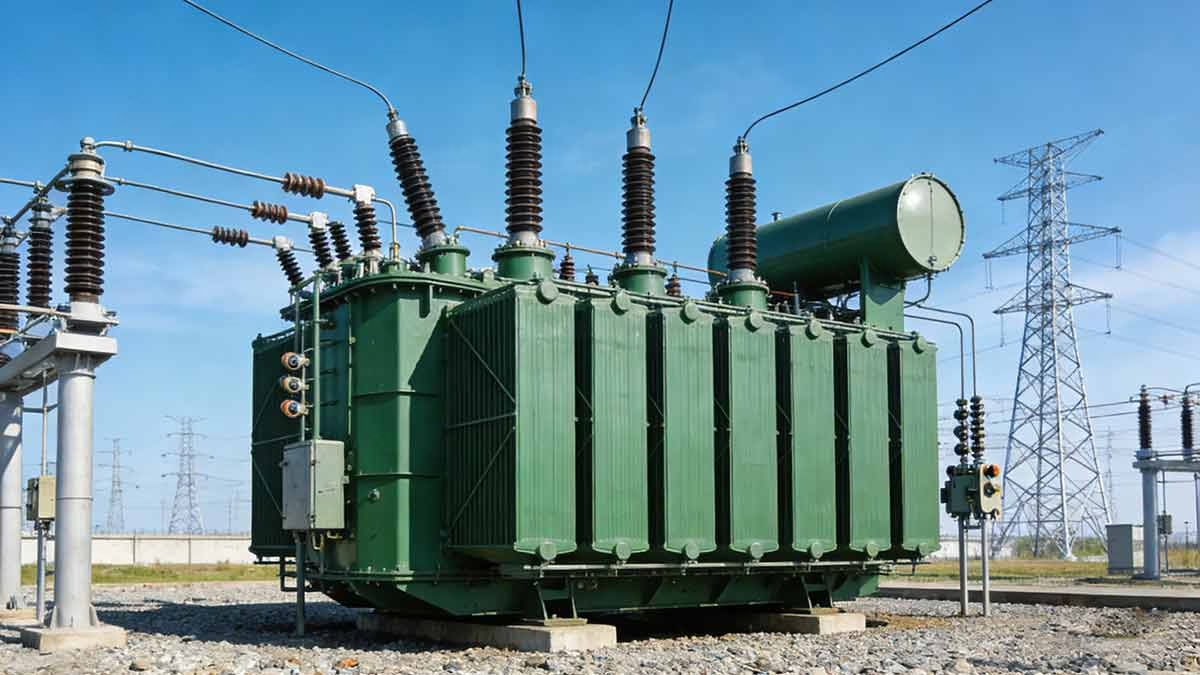
Power transformers, through their ability to modify voltage magnitudes and ensure steady power delivery, enable the seamless flow of electricity from generation sources to end-users. Unlike ordinary electrical components, they are engineered to withstand fluctuating load conditions, harsh environments, and the evolving needs of modern industry. From continent-spanning power grids to precision aerospace manufacturing equipment, the applications of power transformer are as diverse as they are vital. Let’s unpack how these devices power progress across key industrial sectors, exploring their specific functionalities, design adaptations, and the value they bring to each field.
Contents
hide
How Do Applications of Power Transformer Sustain Electricity Generation and Grid Distribution?
Have you ever wondered how electricity generated from remote power plants travels hundreds of miles to light up your home or power your business? The answer lies in the critical applications of power transformer in electricity generation and grid distribution networks. These devices are the quiet enablers of long-distance energy transmission, ensuring power is delivered efficiently, safely, and at the correct voltage levels for end-use.
In the realm of power generation, transformers fulfill two pivotal roles: boosting voltage for transmission and powering the plant’s internal systems. Generator step-up transformers are designed to convert the relatively low voltage (typically 15-25kV) produced by generators to high transmission voltages (ranging from 230kV to 765kV). This voltage elevation is essential because higher voltages minimize energy losses during long-distance travel—a fundamental principle of electrical engineering that directly impacts the cost-effectiveness of power distribution. Complementing these are auxiliary transformers, which supply dedicated power to the plant’s critical systems, such as cooling mechanisms, control panels, and safety equipment, ensuring uninterrupted operation even during peak generation periods.
As electricity enters the transmission network, the applications of power transformer extend to maintaining grid stability and connectivity. Substation transformers further amplify voltage for ultra-long-distance transmission, while phase-shifting transformers regulate power flow between different grid segments. This flow control is crucial for preventing overloads and ensuring even power distribution across the network, especially during times of high demand—such as extreme weather conditions when heating or cooling needs surge.
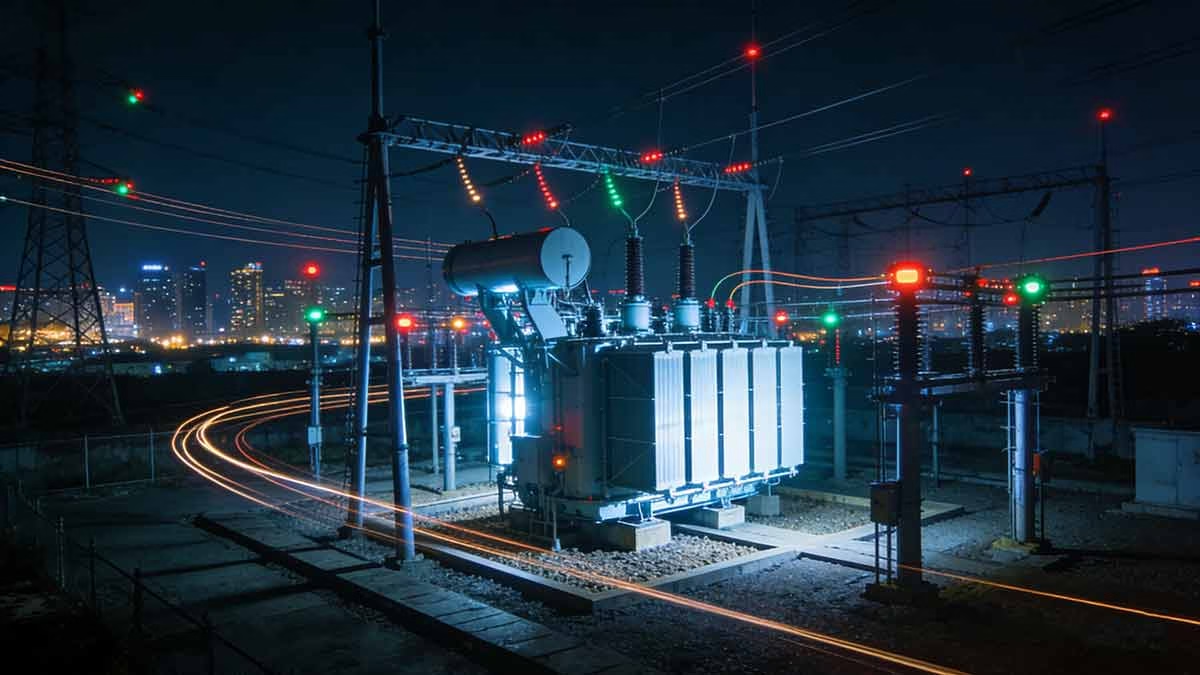
When electricity reaches local areas, distribution transformers take over the final stage of voltage adjustment. Primary distribution transformers reduce transmission voltages (often 69kV or higher) to medium distribution levels (4-34.5kV), feeding power to local networks. Secondary distribution transformers then lower this voltage to end-user specifications—120V/240V for residential buildings and 480V for commercial and light industrial facilities. These secondary transformers are commonly found as pole-mounted or pad-mounted units in neighborhoods, quietly converting power to a usable form for everyday applications.
Transformer Type | Standard Voltage Spectrum | Power Handling Capacity | Distinctive Attributes |
Generator Step-Up | 15-25kV to 230-765kV | 100-1500 MVA | High impedance design, surge protection mechanisms |
Transmission Transformer | 230kV to 765kV | 100-1000 MVA | Extra high voltage insulation, grid interconnection capabilities |
Substation Transformer | 765kV to 69kV | 10-300 MVA | On-load tap changers for voltage adjustment |
Distribution Transformer | 69kV to 120/240V | 5-50 MVA | Overload tolerance, compact form factor |
A real-world example highlights the impact of these transformers: During a major substation upgrade project, replacing an aging 500MVA transformer with a modern, high-efficiency model yielded immediate benefits. The new unit, weighing over 400 tons, required meticulous logistics planning, but once operational, its advanced features—including real-time load monitoring and dynamic voltage regulation—significantly reduced power fluctuations in the region. This upgrade not only enhanced grid stability but also improved energy efficiency by 15%, underscoring how applications of power transformer are evolving to meet the demands of modern energy systems.
In What Ways Do Applications of Power Transformer Support Heavy Manufacturing and Process Industries?
Have you ever marveled at how massive steel mills or chemical plants operate with such high energy demands? The secret lies in specialized power transformers tailored for heavy industry. Applications of power transformer in these sectors are engineered to handle high voltages, variable loads, and harsh operating conditions—making them indispensable for maintaining productivity and efficiency. Without these specialized devices, large-scale production of metals, chemicals, and other industrial materials would be unfeasible.
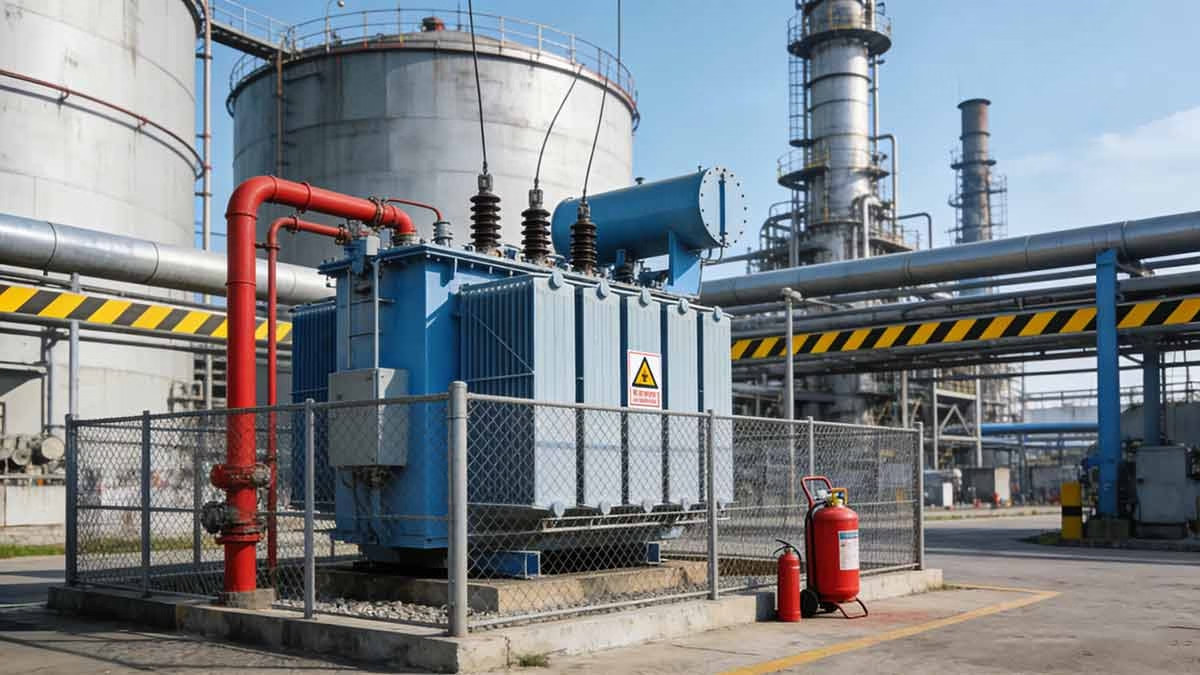
In manufacturing facilities, transformers are specifically designed to power heavy machinery. Arc furnace transformers, for instance, supply high current at low voltage to melt steel—a process that demands extreme power and precise control. These transformers are built to withstand the rapid load fluctuations inherent in steel melting, ensuring stable operation even when the furnace cycles between heating and cooling. Similarly, rolling mill transformers power the large motors used in steel and aluminum production, featuring high overload capacity to handle the sudden power surges that occur during metal shaping.
Process industries rely on transformers to support continuous operations. Rectifier transformers, a key component in electrolysis processes, convert alternating current (AC) to direct current (DC) for applications like aluminum smelting and chlorine production. These transformers must handle high harmonic content—an electrical phenomenon common in rectification—requiring specialized design features to minimize power quality issues. Variable Frequency Drive (VFD) transformers, meanwhile, power speed control systems for pumps, compressors, and other process equipment. By enabling precise speed adjustment, these transformers help reduce energy consumption and improve process efficiency.
Transformer Type | Typical Power Range | Specialized Features | Common Industrial Uses |
Arc Furnace Transformer | 50-150 MVA | High short-circuit strength, robust insulation | Steel manufacturing, ferrous metal melting |
Rolling Mill Transformer | 10-50 MVA | High overload capacity, voltage stability controls | Steel rolling, aluminum processing |
Rectifier Transformer | 20-100 MVA | Harmonic mitigation technologies, DC output regulation | Aluminum smelting, chlorine production, electrolytic refining |
VFD Transformer | 5-30 MVA | K-factor rated, noise suppression | Oil & gas processing, mining equipment, industrial pumps |
A project involving a large aluminum smelter illustrates the importance of these transformers. Upgrading to a new 80MVA rectifier transformer designed for the smelter’s harsh, corrosive environment resulted in a 3% improvement in energy efficiency. While this percentage may seem modest, in an industry where energy costs constitute 40-50% of operational expenses, it translated to millions in annual savings. The transformer’s ability to handle enormous currents and resist corrosion also reduced unplanned downtime by 20%, further enhancing productivity.
How Do Applications of Power Transformer Facilitate Renewable Energy Integration?
As the world shifts toward renewable energy sources like wind, solar, and hydropower to combat climate change, integrating these variable energy sources into the existing power grid poses unique challenges. Applications of power transformer are central to overcoming these hurdles, enabling the conversion, transmission, and distribution of renewable energy while ensuring grid compatibility and reliability. Without these transformers, the full potential of renewable energy cannot be realized.
In solar energy systems, transformers play multiple key roles. Inverter transformers convert the direct current (DC) generated by solar panels to alternating current (AC)—the standard form of electricity used in homes and businesses. Additionally, they boost the voltage from inverter levels to distribution or transmission voltages, enabling efficient energy transport. Collection substation transformers aggregate power from multiple solar arrays, further increasing voltage for long-distance transmission from large-scale solar farms. These transformers are designed to handle the variable output of solar energy, which fluctuates with sunlight intensity and weather conditions.
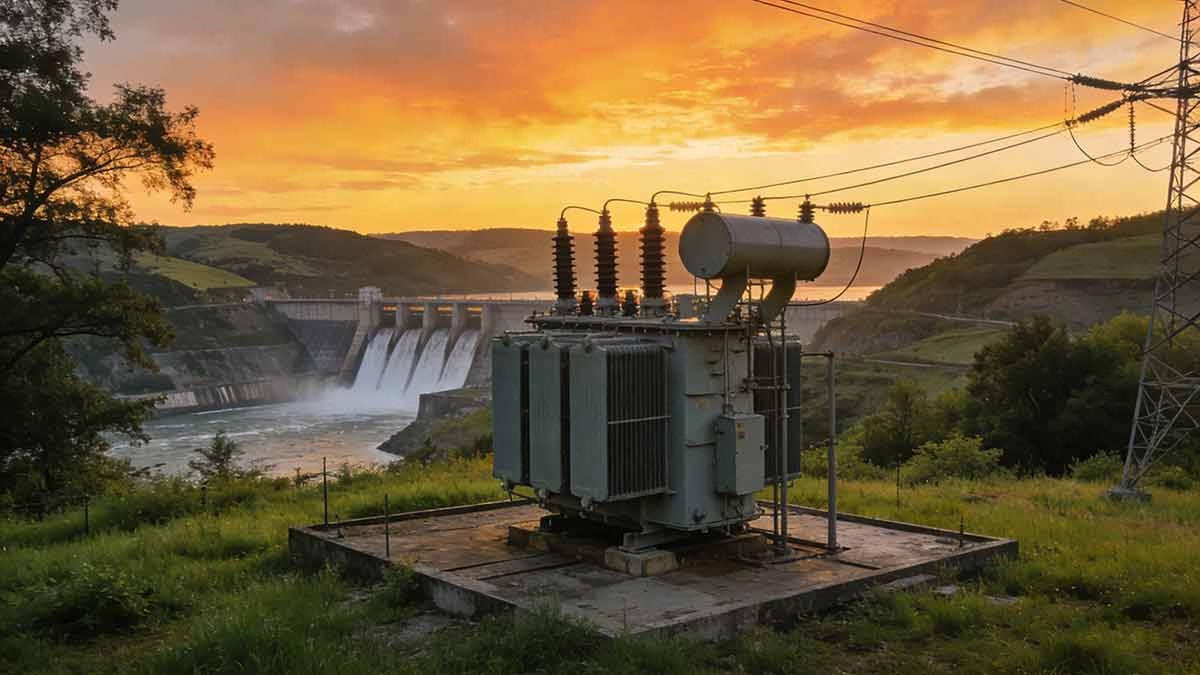
Wind energy systems also rely heavily on transformers. Turbine transformers, often located in the base or nacelle of wind turbines, step up the low voltage (typically 690V) generated by the turbine to the higher voltage (33kV-66kV) used in the wind farm’s collection system. Substation transformers then further increase this voltage to transmission levels, allowing the energy to be transported efficiently from remote wind farm locations to population centers. Like solar-focused transformers, wind energy transformers must accommodate the variable nature of wind power, which depends on wind speed and direction.
Renewable Application | Typical Power Range | Input Voltage | Output Voltage | Specialized Features |
Solar Inverter | 1-5 MVA | 600-1500V DC | 33kV AC | Harmonic mitigation, DC-AC conversion support |
Solar Farm Substation | 50-500 MVA | 33kV | 230kV+ | Tap changers for voltage control, power aggregation |
Wind Turbine | 2-10 MVA | 690V | 33-66kV | Compact design for nacelle mounting, vibration resistance |
Wind Farm Substation | 100-500 MVA | 33-66kV | 230kV+ | Reactive power compensation, variable load handling |
A project involving the connection of a large offshore wind farm to the grid highlights the complexity of these applications. The challenge was to step up the voltage from 66kV (generated by the wind turbines) to 400kV for long-distance transmission, while also accounting for the harsh marine environment and variable wind power output. The solution involved a combination of onshore and offshore transformers equipped with advanced monitoring and control systems. The result was a system that could supply clean power to over 500,000 homes, with transformers ensuring the energy was usable and reliable.
What Role Do Applications of Power Transformer Play in Transportation Electrification?
The electrification of transportation—including electric vehicles (EVs) and electric railways—is a key component of global efforts to reduce carbon emissions and transition to sustainable mobility. This shift relies heavily on applications of power transformer, which provide the necessary power conversion, distribution, and control to support electric transportation infrastructure. From powering electric trains to enabling fast EV charging, transformers are essential for making electrified transportation reliable and efficient.
In railway electrification, transformers play a central role in delivering power to trains and supporting systems. Traction substations convert high-voltage grid power to the voltage levels suitable for trains—typically 25kV AC or 3kV DC. These substations are strategically spaced along railway lines to ensure continuous power supply, even for long-distance routes. Trackside transformers further step down voltage for signaling systems, communication equipment, and other auxiliary services, ensuring the safe and reliable operation of railway networks.
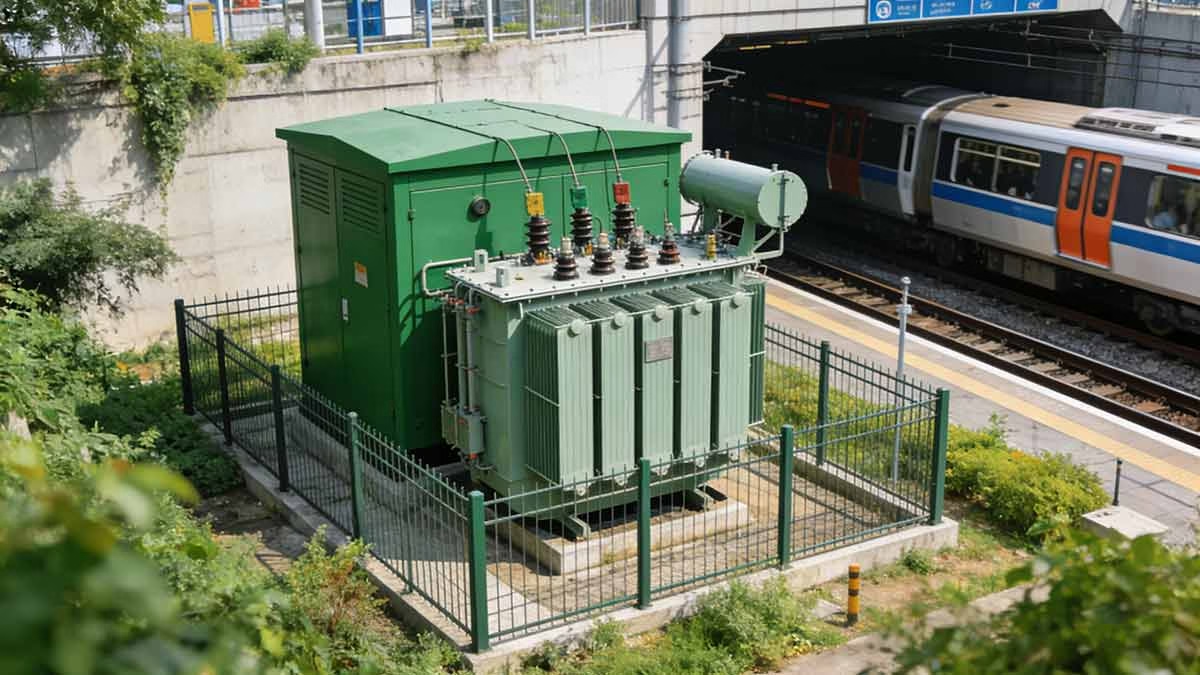
The rapidly growing EV sector also depends on specialized transformer applications. Fast charging stations require transformers to step down medium voltage from the grid to the levels needed for DC fast chargers. These transformers must handle high power demands—often for multiple vehicles charging simultaneously—and accommodate rapid load changes as vehicles connect and disconnect from the charger. Additionally, transformers play a role in grid integration, managing the impact of large-scale EV charging on local power networks. Some charging infrastructure includes energy storage systems paired with transformers for load balancing, reducing strain on the grid during peak charging times.
Transportation Application | Typical Power Range | Input Voltage | Output Voltage | Specialized Features |
Railway Traction | 5-60 MVA | 110kV+ | 25kV AC or 3kV DC | Phase conversion, harmonic management, continuous operation |
Subway System | 1-5 MVA | 33kV | 750V DC | Compact design for underground installation, low noise |
EV Fast Charging | 0.5-5 MVA | 33kV | 400V AC | Rapid load change handling, smart grid integration |
EV Charging Hub | 5-20 MVA | 110kV | 33kV/400V | Load balancing, energy storage integration, multiple output channels |
A project to upgrade a major city’s subway network demonstrates the impact of transformer technology in transportation. Replacing old rectifier transformers with new, efficient models equipped with advanced harmonic mitigation resulted in a 20% improvement in energy efficiency. The new transformers also generated less heat—a critical advantage in the confined underground spaces of subway systems. Most importantly, the upgrade was completed without disrupting subway service, highlighting the reliability and flexibility of modern transformer designs.
How Do Applications of Power Transformer Support Smart Cities and Urban Development?
The development of smart cities—urban areas that leverage technology to improve efficiency, sustainability, and quality of life—relies heavily on advanced electrical infrastructure. Applications of power transformer are integral to this infrastructure, enabling efficient power distribution, integrating renewable energy, and supporting the complex energy needs of modern urban environments. From powering skyscrapers to enabling smart grid technologies, transformers are the backbone of smart city energy systems.
In high-rise buildings and commercial complexes, transformers play a vital role in power distribution. Main step-down transformers reduce incoming high voltage (typically 33kV) to medium voltage (11kV) for distribution within the building, often located in basement electrical rooms or dedicated transformer vaults. Floor-level distribution transformers further step down voltage to 400V, supplying power to individual floors or building zones. These transformers are designed to be compact and efficient, with low noise levels and fire-resistant features suitable for dense urban environments.
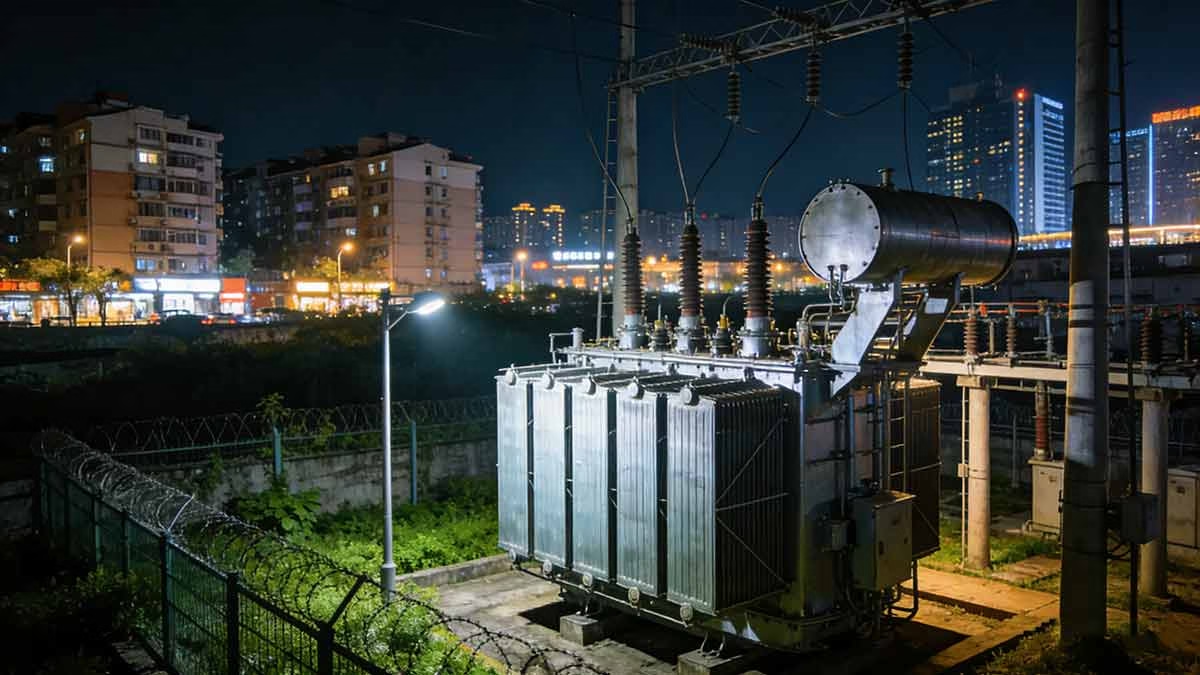
Smart grid integration is another key application of power transformer in urban development. Modern transformers enable bidirectional power flow, allowing buildings to both consume grid power and feed excess energy—generated from rooftop solar panels or other distributed sources—back into the grid. This two-way flow is essential for net-zero energy buildings and community energy systems. Transformers also support advanced metering infrastructure (AMI), enabling real-time energy monitoring and facilitating demand response programs that help balance grid load during peak hours.
Urban Application | Typical Power Range | Input Voltage | Output Voltage | Specialized Features |
High-Rise Main Transformer | 2-10 MVA | 33kV | 11kV | Compact dry-type design, low noise |
Floor Distribution Transformer | 500kVA – 2MVA | 11kV | 400V | Fire-resistant, modular design |
Smart Grid Node Transformer | 1-5 MVA | 33kV | 11kV/400V | Communication interfaces, real-time monitoring |
Urban Substation Transformer | 20-100 MVA | 110kV | 33kV/11kV | Underground installation, low environmental impact |
A project to upgrade a new “smart” office complex illustrates the integration of transformer technology in smart cities. The complex implemented a network of intelligent transformers that not only distributed power but also collected real-time energy usage data. The system automatically adjusted power distribution based on demand, integrated rooftop solar panels, and communicated with the city’s smart grid for demand response events. This integration transformed the transformers into the “nervous system” of the building’s energy management, enabling unprecedented efficiency and flexibility.
What Applications of Power Transformer Enable Mining and Mineral Extraction?
Mining and mineral extraction operations are among the most energy-intensive industrial activities, requiring massive amounts of power to operate heavy machinery, process ore, and support remote operations. Applications of power transformer in this sector are specialized to handle harsh environments, variable loads, and continuous operation, making them essential for maintaining productivity and safety. From powering excavators to supporting mineral processing plants, transformers are critical to the success of mining operations.
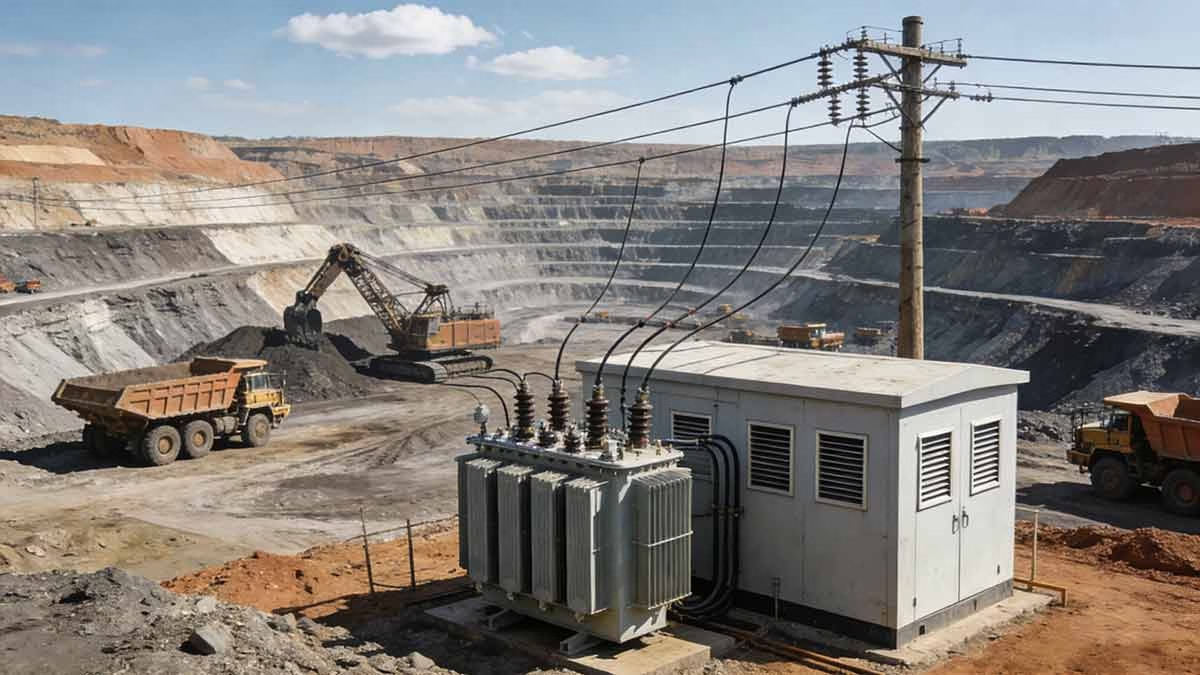
In open-pit and underground mines, transformers supply power to a range of heavy machinery. Excavator and dragline transformers provide the high power needed for massive earth-moving equipment, often featuring mobile or semi-mobile designs to follow mining operations as the ore face advances. Conveyor system transformers power the long belts used to transport ore from the mine to processing facilities, with distributed transformers along the conveyor route ensuring efficient power delivery and reducing energy losses.
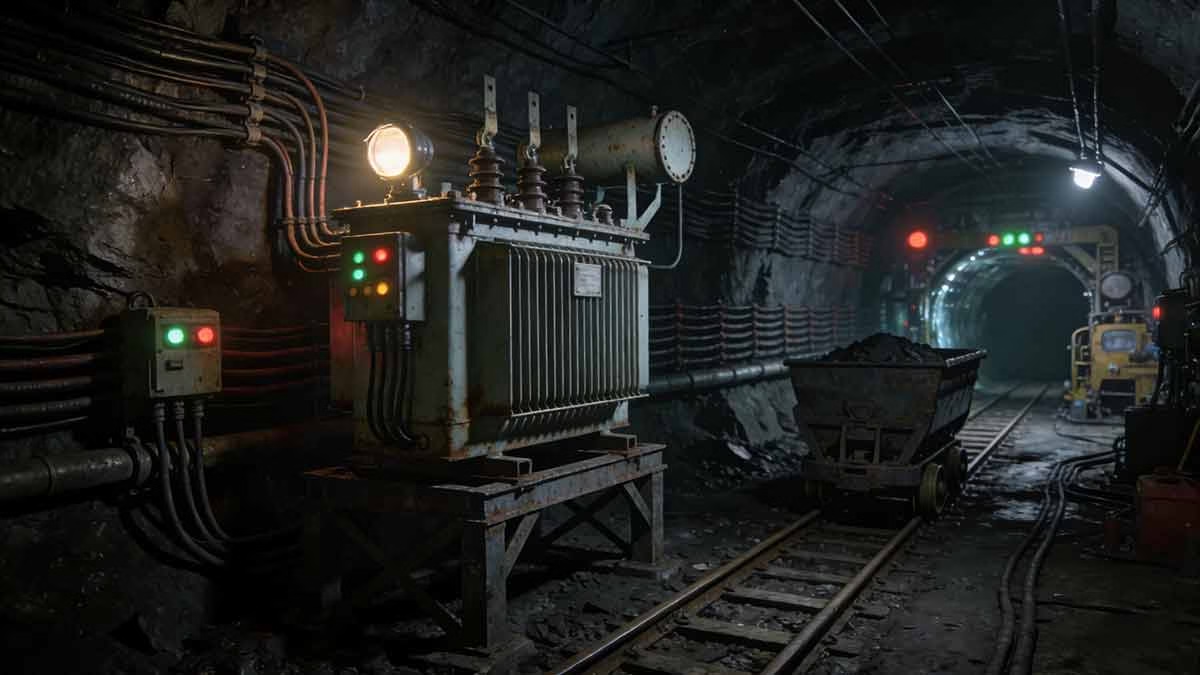
Mineral processing plants rely on transformers to power energy-intensive equipment. Crusher and mill transformers supply power to crushing and grinding machinery, which breaks down ore into smaller particles for processing. These transformers must handle high starting currents and variable loads, requiring robust designs with high overload capacity. Electrolysis transformers provide DC power for electrowinning processes in metal refineries, designed to deliver high current at low voltage for efficient metal extraction.
Mining Application | Typical Power Range | Input Voltage | Output Voltage | Specialized Features |
Dragline Transformer | 5-15 MVA | 33kV | 6.6kV | Mobile design, shock-resistant, dust protection |
Conveyor System Transformer | 1-5 MVA | 33kV | 690V | Distributed design, dust-proof enclosure |
Ore Crusher Transformer | 2-10 MVA | 33kV | 11kV | High overload capacity, robust insulation |
Electrowinning Transformer | 10-50 MVA | 110kV | 600V DC | Integrated rectifier, high current handling |
A project to upgrade the power system of a large copper mine in a remote desert location highlights the challenges and benefits of mining transformer applications. The project replaced aging transformers with new, ruggedized models designed to withstand extreme heat, dust, and corrosive conditions. The new transformers featured advanced cooling and filtering systems, resulting in a 15% improvement in energy efficiency and a significant reduction in unplanned downtime. This upgrade was critical in a location where downtime could cost millions in lost production.
How Do Applications of Power Transformer Sustain Data Center Operations?
Data centers—the backbone of the digital age—require continuous, reliable, and high-quality power to support servers, cooling systems, and network equipment. Applications of power transformer in data centers are specialized to meet these demanding requirements, ensuring uninterrupted operation, managing high-density power loads, and supporting redundancy systems critical for data integrity. Without these transformers, the 24/7 operation of cloud computing, online services, and data storage facilities would be impossible.
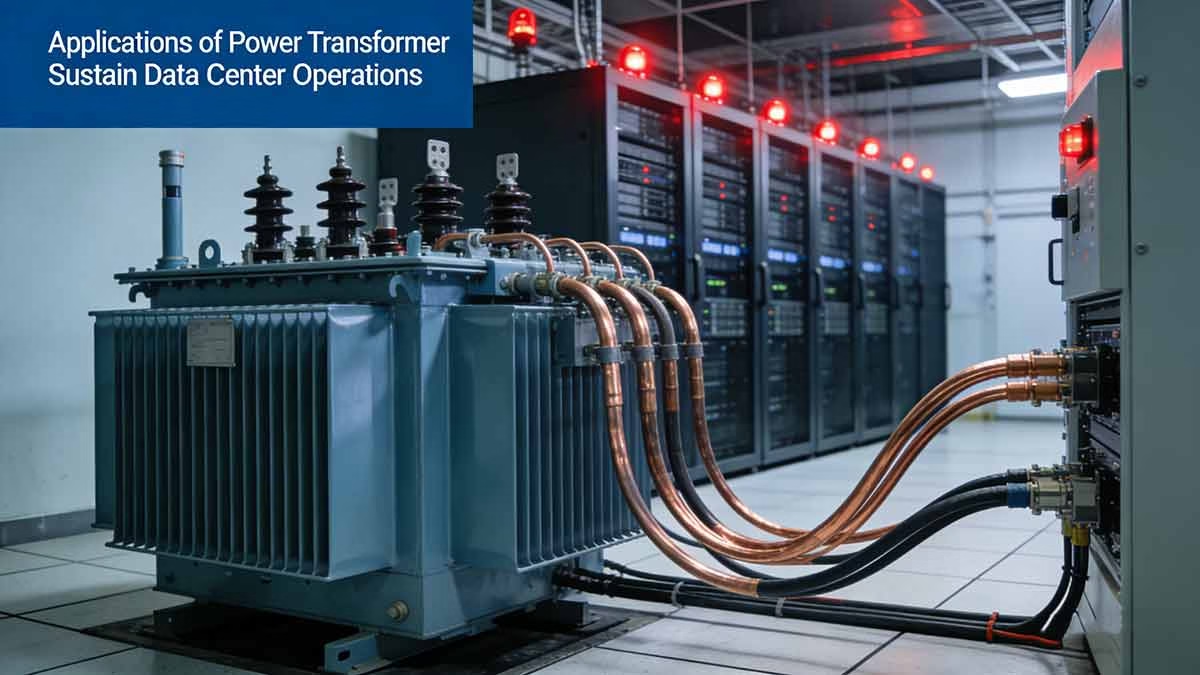
At the facility level, utility interface transformers step down incoming high voltage to medium voltage for distribution throughout the data center. These transformers often include power quality management features to filter out electrical noise and ensure stable power delivery. Uninterruptible Power Supply (UPS) systems rely on input/output transformers to interface with utility power, providing isolation and voltage matching to ensure seamless operation during power outages. These transformers are critical for maintaining power continuity, protecting sensitive equipment from voltage fluctuations and outages.
Within server rooms, Power Distribution Unit (PDU) transformers step down voltage from 400V to 208V (or other appropriate levels) for server racks. These transformers provide clean, stable power to sensitive IT equipment, with low impedance designs to handle rapid load changes. Isolation transformers further enhance power quality by reducing electrical noise and providing galvanic isolation, critical for maintaining data integrity in high-precision computing environments.
Data Center Application | Typical Power Range | Input Voltage | Output Voltage | Specialized Features |
Main Facility Transformer | 10-50 MVA | 110kV | 11kV/400V | Redundant design, on-load tap changers |
UPS System Transformer | 1-5 MVA | 11kV | 400V | K-rated for harmonic loads, fast transfer capabilities |
PDU Transformer | 50-500 kVA | 400V | 208V | Low impedance, multiple output channels |
Isolation Transformer | 10-100 kVA | 400V | 400V | High isolation, low noise, surge protection |
A project to upgrade a major cloud computing provider’s data center demonstrates the importance of transformer technology in this sector. The goal was to increase power capacity and efficiency without downtime—a critical requirement for a facility operating 24/7. The solution involved implementing a new transformer system with N+1 redundancy, advanced monitoring, and seamless switching between power sources. Smart PDU transformers were integrated to dynamically allocate power based on real-time server demands, resulting in a 20% increase in power capacity, a 15% improvement in energy efficiency, and zero unplanned downtime.
What Applications of Power Transformer Ensure Healthcare Facility Reliability?
Hospitals and medical research centers require the highest level of power reliability and quality to support life-saving equipment, sensitive diagnostics, and critical patient care. Applications of power transformer in healthcare facilities are specialized to provide clean, stable, and uninterrupted power, with redundant systems to ensure operation even during power outages. From powering MRI machines to supporting emergency rooms, transformers are essential for maintaining the safety and effectiveness of healthcare services.
In critical care areas—such as intensive care units (ICUs), operating rooms, and emergency departments—emergency power transformers play a vital role. These transformers interface between backup generators and critical systems, ensuring rapid, seamless power transition during outages. Isolation transformers provide clean, noise-free power to sensitive medical equipment, such as patient monitors, infusion pumps, and life-support systems. This isolation is critical for preventing electrical interference that could compromise equipment performance and patient safety.
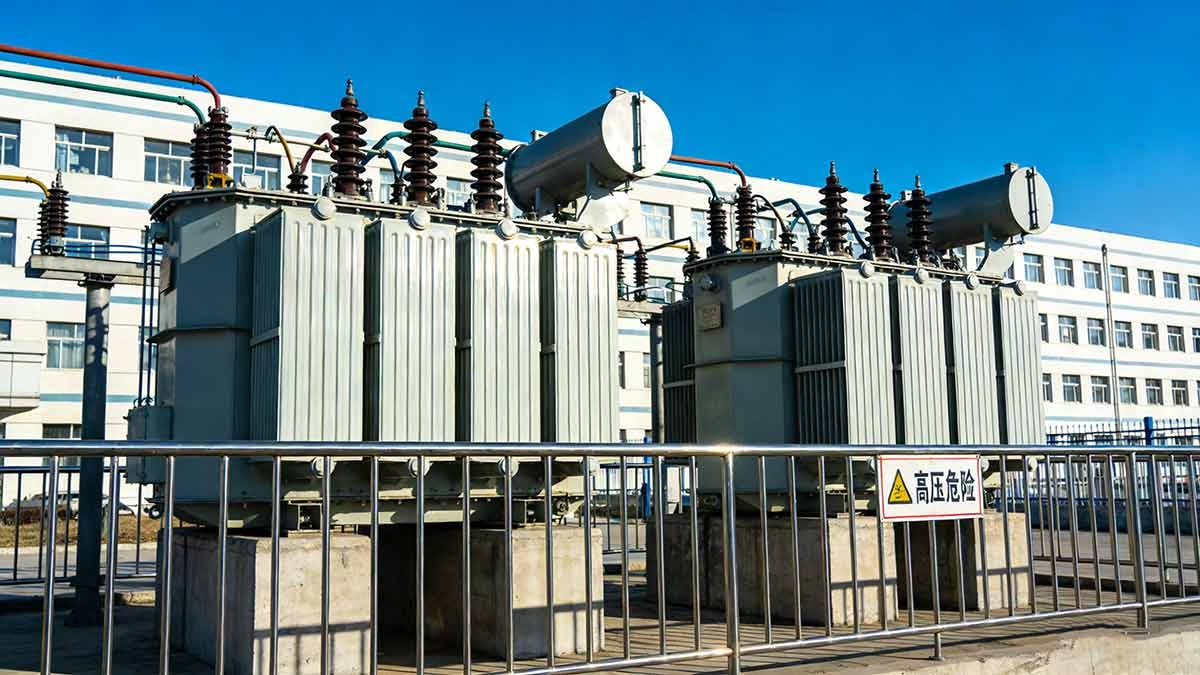
Medical imaging equipment—including MRI, CT, and X-ray machines—relies on specialized transformer applications. MRI system transformers supply stable power to superconducting magnets and cooling systems, often featuring advanced shielding to prevent electromagnetic interference (EMI) with other equipment. CT and X-ray transformers provide the high-voltage power needed for X-ray tube operation, handling the pulsed loads typical of imaging procedures. These transformers must maintain precise voltage regulation to ensure image quality and diagnostic accuracy.
Healthcare Application | Typical Power Range | Input Voltage | Output Voltage | Specialized Features |
Emergency Power Transformer | 500kVA – 2MVA | 11kV | 400V | Fast switching, redundant design, and emergency backup integration |
Isolation Transformer | 10-100kVA | 400V | 400V | Ultra-low noise, high isolation, leakage current control |
MRI System Transformer | 50-200kVA | 400V | Multiple outputs | EMI shielding, precise voltage regulation, and cooling system integration |
CT Scanner Transformer | 100-300kVA | 400V | High voltage DC | Pulsed load handling, high voltage stability |
A project to upgrade a major teaching hospital’s power system highlights the critical nature of healthcare transformer applications. The challenge was to increase power capacity and quality to support new, advanced medical equipment while ensuring no interruption to critical care services. The solution involved a redundant transformer system with multiple isolation transformers and advanced power quality management, integrated with the hospital’s emergency power system. The upgrade resulted in improved power quality, reduced equipment malfunctions, and the ability to install new imaging systems without power-related concerns.
How Do Applications of Power Transformer Support Petrochemical Industry Operations?
The petrochemical industry—including oil refineries, gas processing plants, and chemical manufacturing facilities—operates in some of the harshest and most hazardous environments, requiring reliable, high-capacity power for processing equipment, pumps, and control systems. Applications of power transformer in this sector are specialized to handle high power demands, explosive atmospheres, and corrosive conditions, making them essential for maintaining safe and efficient operations. From powering distillation columns to supporting emergency shutdown systems, transformers are critical to the petrochemical industry’s success.
In refineries and gas processing plants, process power transformers supply power to key equipment. Distillation column transformers power heating elements, and pumps, operating in high-temperature, corrosive environments. These transformers feature robust designs with corrosion-resistant materials and enhanced cooling systems to withstand extreme conditions. Compressor and pump transformers power large motors for fluid movement and gas compression, often compatible with variable frequency drives (VFDs) to improve energy efficiency and process control.
Control and safety systems in petrochemical facilities rely on specialized transformers. Instrumentation transformers provide clean, stable power to control systems and sensors, with high levels of electrical noise suppression to ensure accurate measurements. Emergency shutdown transformers ensure power to critical safety systems—such as fire suppression and process isolation—during emergencies, designed for high reliability and rapid response. These transformers are critical for preventing accidents and minimizing damage in hazardous environments.
Petrochemical Application | Typical Power Range | Input Voltage | Output Voltage | Specialized Features |
Process Power Transformer | 5-50 MVA | 110kV | 11kV/6.6kV | Explosion-proof design, corrosion-resistant materials |
Compressor Drive Transformer | 10-100 MVA | 110kV | 11kV | VFD compatible, high starting current handling |
Instrumentation Transformer | 100-500 kVA | 11kV | 400V/230V | High isolation, EMI shielding, noise suppression |
Emergency Systems Transformer | 1-5 MVA | 11kV | 400V | Rapid response, redundant design, safety system integration |
How Do Applications of Power Transformer Support Large-Scale Scientific Research Facilities?
Large-scale scientific research facilities, such as particle accelerators, nuclear fusion experimental devices, and synchrotron radiation light sources, rely on ultra-stable, high-precision, and high-capacity power supply to achieve breakthroughs in basic science and advanced technology. Applications of power transformer in these fields are customized to meet extreme technical requirements—including minimal voltage fluctuation, strong electromagnetic interference (EMI) resistance, and long-term continuous operation—making them an indispensable core component for cutting-edge scientific research. Without these specialized transformers, it would be impossible to generate the extreme physical conditions required for experiments, such as ultra-high energy particle collisions or controlled nuclear fusion.
In particle accelerators (e.g., cyclotrons and linear accelerators), transformers play a critical role in powering acceleration systems and auxiliary equipment. Accelerator main transformers convert grid power to the high-voltage, low-ripple AC power needed to drive radio frequency (RF) cavities, which accelerate charged particles to near-light speeds. These transformers feature ultra-precise voltage regulation (with fluctuation margins below 0.1%) to ensure stable particle acceleration trajectories. Additionally, pulse transformers are used in pulsed accelerators to generate short-duration, high-amplitude voltage pulses, enabling rapid energy accumulation in particles. These pulse transformers must withstand extreme voltage gradients and rapid load changes without insulation breakdown.
For nuclear fusion experimental devices (e.g., tokamaks and stellarators), transformers are essential for powering magnetic confinement systems and plasma heating equipment. Toroidal field (TF) coil transformers supply large currents to superconducting coils, generating the strong magnetic fields needed to confine high-temperature plasma (over 100 million °C). These transformers are designed with ultra-low impedance to deliver large instantaneous currents, and integrated cooling systems to handle the significant heat generated during operation. Moreover, auxiliary transformers power plasma heating systems (e.g., electron cyclotron resonance heating) and diagnostic equipment, requiring high electromagnetic compatibility to avoid interfering with plasma measurement signals.
Research Facility Application | Typical Power Range | Input Voltage | Output Voltage | Specialized Features |
Particle Accelerator Main Transformer | 50-500 MVA | 110kV/220kV | 10-50kV AC (low ripple) | Ultra-precise voltage regulation, EMI shielding, high insulation strength |
Accelerator Pulse Transformer | 10-100 MVA (pulsed) | 33kV/110kV | 100-500kV (pulse duration: μs-ms) | Fast pulse response, high voltage withstand, low energy loss |
Fusion TF Coil Transformer | 100-1000 MVA | 220kV/500kV | Low voltage (kV level) + high current (kA level) | Ultra-low impedance, integrated cooling, superconducting coil compatibility |
Synchrotron Radiation Light Source Transformer | 20-200 MVA | 110kV/220kV | Multiple levels (10kV/400V) | Low noise, stable current output, diagnostic system isolation |
A typical case is the upgrade of a national synchrotron radiation laboratory. The laboratory replaced its aging main transformers with new specialized models to support the operation of a new generation of high-brightness light sources. The new transformers achieved voltage fluctuation control within 0.05%, significantly reducing the noise in the light source beam and improving the resolution of experimental measurements. Additionally, the transformers’ enhanced EMI shielding prevented interference between the power system and the laboratory’s ultra-sensitive detectors. This upgrade enabled the laboratory to carry out high-precision experiments in materials science, life sciences, and quantum physics, advancing multiple research fields.
To sum up, applications of power transformer are the unsung heroes across modern industries, enabling everything from basic electricity supply to