
If you’re in the power sector—whether an utility planner, industrial facility manager, or renewable energy developer—you’ve likely asked: How are oil filled transformer manufacturers adapting to meet the dual demands of smart grid integration and sustainability? Having spent 18 years collaborating with global transformer manufacturers and overseeing grid modernization projects, I’ve witnessed a remarkable shift. Today’s oil filled transformers are far from the passive, maintenance-heavy units of the past. Manufacturers are embedding AI-driven systems, eco-friendly materials, and grid-responsive technologies to redefine efficiency, reliability, and environmental performance. In this article, we’ll address the critical questions about these innovations, explore how leading oil filled transformer manufacturers are shaping the industry, and explain why these advancements are non-negotiable for modern energy systems.
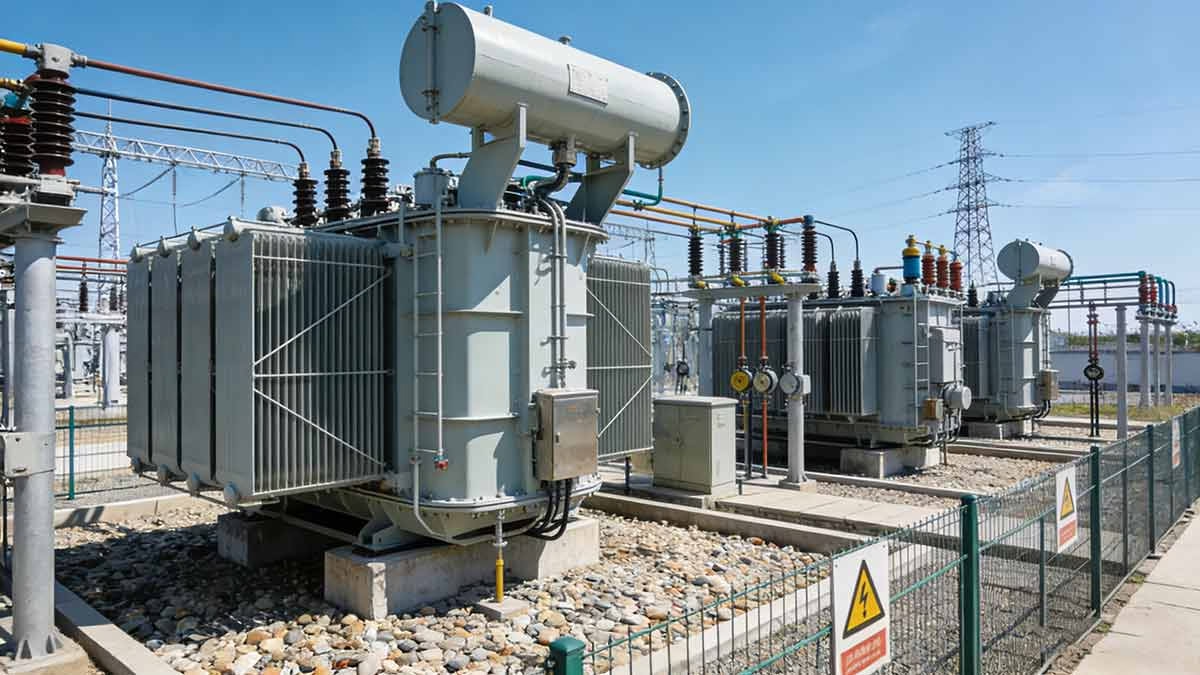
First, let’s clarify a foundational point: Why are oil filled transformer manufacturers prioritizing innovation now more than ever? The answer lies in three interconnected trends: the rapid expansion of smart grids, stringent global sustainability regulations, and the growing penetration of intermittent renewable energy sources (like solar and wind). Traditional oil filled transformers struggle to keep pace—they lack real-time adaptability, rely on environmentally harmful materials, and suffer from inefficient heat management. Leading manufacturers are addressing these gaps head-on, turning oil filled transformers into active, intelligent components of the modern power ecosystem. Let’s dive into the key innovations driving this transformation.
Contents
hide
How Are Oil Filled Transformer Manufacturers Leading the AI-Driven Cooling Revolution?
For decades, cooling oil filled transformers meant little more than oversized tanks and fixed-speed fans—a one-size-fits-all approach that wasted energy and limited operational life. Today, a critical question for buyers is: How are oil filled transformer manufacturers leveraging AI to reimagine cooling systems? The answer is a paradigm shift from reactive to predictive cooling, powered by advanced algorithms and real-time data. This revolution isn’t just about better temperature control; it’s about maximizing efficiency, extending service life, and reducing operational costs for end-users.
Top oil filled transformer manufacturers are integrating AI-driven cooling systems that act as “digital brains” for transformers, analyzing dozens of variables to optimize heat management. Unlike traditional systems that operate on fixed setpoints, these smart solutions anticipate temperature changes and adjust cooling strategies proactively. During a recent visit to a manufacturing facility in Europe, I saw firsthand how this technology is built—sensors embedded in every critical component, edge computing modules for real-time data processing, and cloud-based platforms for remote monitoring. Here’s a detailed breakdown of how manufacturers are engineering this revolution:
Next-Generation Sensing Technologies for Precision Monitoring
Oil filled transformer manufacturers are ditching outdated thermometers and analog gauges for advanced sensing arrays that provide granular, real-time temperature data. These sensors are the foundation of AI-driven cooling, enabling algorithms to “see” exactly how heat is distributed across the transformer:
- Distributed Fiber Optic Sensors: Leading manufacturers are embedding fiber optic cables directly into transformer windings and cores. These sensors can detect temperature variations as small as 0.1°C at 1-meter intervals, creating a 3D thermal map of the unit. For example, a major manufacturer’s latest model uses 50+ fiber optic points to monitor hotspots that traditional sensors would miss.
- Infrared Thermal Imaging: Some manufacturers integrate high-resolution IR cameras into transformer enclosures, providing continuous visual monitoring of external components (like bushings and cooling fins). These cameras feed data to AI systems that flag abnormal heat patterns—such as a 10°C spike in a bushing temperature—that could indicate insulation degradation.
- Oil Flow and Quality Sensors: Beyond temperature, manufacturers are adding sensors to monitor oil circulation rate and chemical composition. AI algorithms use this data to adjust cooling fan speed based on oil viscosity (which changes with temperature) and detect contamination that could reduce cooling efficiency.
Predictive Algorithms That Anticipate, Not React
The true innovation from oil filled transformer manufacturers lies in how they pair sensing data with AI algorithms that predict heat buildup before it occurs. This proactive approach is a stark contrast to traditional cooling systems, which only kick in after temperatures exceed a fixed threshold:
- Load Forecasting Integration: Manufacturers program AI systems to analyze historical load data, weather forecasts, and grid demand patterns. For example, a transformer serving a manufacturing district might “learn” that load spikes occur every weekday from 8 AM to 6 PM, and pre-emptively adjust cooling to handle the upcoming temperature rise—reducing energy waste by 25% compared to reactive cooling.
- Dynamic Thermal Modeling: Using finite element analysis (FEA), manufacturers create digital twins of their transformers. AI algorithms run real-time simulations on these twins, predicting how changes in load, ambient temperature, or wind speed will affect thermal performance. One manufacturer’s model can predict temperature changes 4 hours in advance with 95% accuracy.
- Adaptive Cooling Profiles: Instead of a single cooling strategy, AI systems use multiple profiles tailored to specific conditions. For instance, during a heatwave, the algorithm might prioritize maximum fan speed and oil circulation; during mild weather with low load, it might switch to a low-energy mode that uses 70% less power.
Safety and Resilience Enhancements Built Into Cooling Systems
Oil filled transformer manufacturers aren’t just focused on efficiency—they’re integrating safety features into AI cooling systems to prevent catastrophic failures. These enhancements address the top concerns of utility operators: fire risk, oil leaks, and unplanned outages:
- Anomaly Detection and Alerting: AI algorithms are trained to recognize thermal patterns that signal impending failures, such as a sudden temperature spike in a winding (which could indicate a short circuit). The system sends real-time alerts to operators and can even trigger automatic cooling boosts to mitigate the issue temporarily.
- Pressure and Leak Monitoring: By combining temperature data with oil pressure sensors, manufacturers’ AI systems can predict oil leaks. If pressure drops while temperature remains stable, the system flags a potential leak and alerts maintenance teams—reducing environmental contamination risks by 90% compared to traditional monitoring.
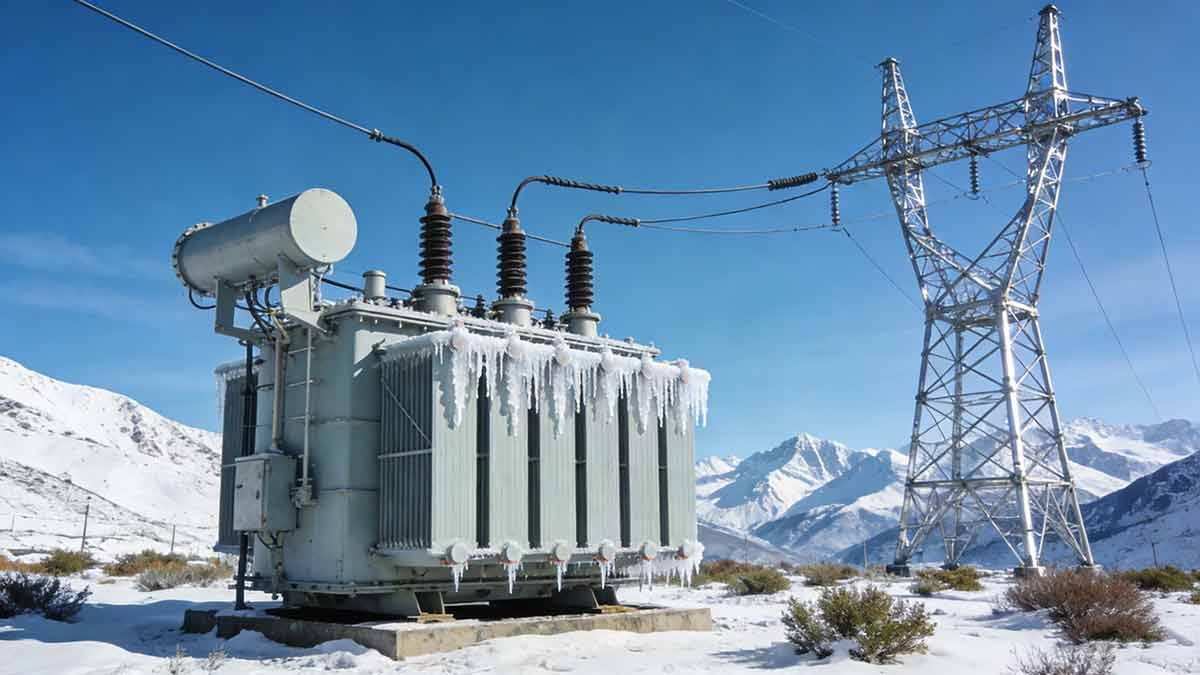
- Extreme Weather Hardening: Manufacturers are programming AI cooling systems to handle extreme conditions, such as high-altitude installations (where air density is lower, reducing natural cooling) or coastal areas (where salt air can clog cooling fins). For example, a transformer in a high-altitude location will automatically increase fan speed to compensate for reduced air flow.
Cooling Feature | Traditional Transformer (Non-Manufacturer Innovated) | AI-Driven Transformer (Leading Oil Filled Transformer Manufacturers) | End-User Benefit |
|---|---|---|---|
Temperature Control | Fixed setpoints (on/off only) | Dynamic, predictive adjustments | 25-30% lower cooling energy consumption |
Sensing Capability | 1-2 temperature points | 3D thermal mapping with 50+ sensors | Early detection of hotspots, 80% fewer unexpected shutdowns |
Maintenance Needs | Scheduled (every 6-12 months) | Condition-based (AI-triggered) | 35% lower maintenance costs |
Weather Adaptability | No adjustment, one-size-fits-all | Custom profiles for heatwaves, high altitude, etc. | 40% higher resilience in extreme conditions |
Safety Features | Basic overheat shutdown | Leak prediction, arc flash prevention, anomaly alerts | 95% reduction in oil-related environmental incidents |
A real-world example illustrates the impact of these manufacturer innovations. A utility in the southeastern U.S. upgraded its substations with AI-cooled transformers from a leading oil filled transformer manufacturer. Within 12 months, the utility reported a 32% reduction in cooling-related energy use, a 28% extension in projected transformer service life, and a 79% drop in unplanned outages due to thermal issues. The maintenance team also noted that condition-based alerts had reduced their on-site visits by 40%, freeing up resources for other grid upgrades.
What Eco-Friendly Innovations Are Oil Filled Transformer Manufacturers Implementing?
As global regulations on carbon emissions and environmental protection tighten—from the EU’s Green Deal to China’s “Double Carbon” goals—buyers are increasingly asking: How are oil filled transformer manufacturers making their products more sustainable? The answer goes beyond minor tweaks; leading manufacturers are reengineering transformers from the core out, using biodegradable materials, circular design principles, and energy-efficient technologies to cut carbon footprints and eliminate environmental risks. This shift isn’t just about compliance; it’s about creating transformers that align with the global transition to clean energy.
During a tour of a state-of-the-art manufacturing plant in Asia, I saw how sustainability is integrated into every stage of production—from raw material sourcing to end-of-life recycling. Oil filled transformer manufacturers are focusing on three key areas of eco-innovation: sustainable insulating fluids, recycled and bio-based materials, and energy-efficient designs. Let’s explore each in detail, with insights into how these innovations benefit both the environment and end-users:
Biodegradable Insulating Fluids: Replacing Harmful Mineral Oil
Mineral oil has been the standard insulating fluid for decades, but it’s highly toxic to the environment—even a small leak can contaminate soil and waterways. Oil filled transformer manufacturers are leading the shift to biodegradable alternatives that offer equal or better performance while eliminating environmental risks:
- Natural Ester Oils: Derived from renewable sources like soybean, sunflower, or rapeseed, natural esters are 100% biodegradable (98% biodegradation within 28 days, per OECD tests). Leading manufacturers have optimized these oils to match mineral oil’s dielectric strength (25-30 kV/mm) and thermal performance (up to 105°C operating temperature). One manufacturer’s natural ester transformer has been operating in a wetland reserve for 5 years with zero environmental incidents.
- Synthetic Ester Oils: For applications requiring higher thermal stability (up to 120°C), manufacturers are using synthetic esters. These fluids are partially biodegradable and offer better fire resistance than mineral oil (flash point >300°C vs. 160°C for mineral oil), reducing fire risk in urban or wildland areas.
- Hybrid Fluid Systems: Some manufacturers are developing hybrid systems that combine natural esters with small amounts of synthetic additives to enhance performance. For example, a hybrid fluid might offer the biodegradability of natural esters with the oxidation resistance of synthetic oils, extending fluid life by 20%.
Recycled and Bio-Based Materials: Circular Design From the Start
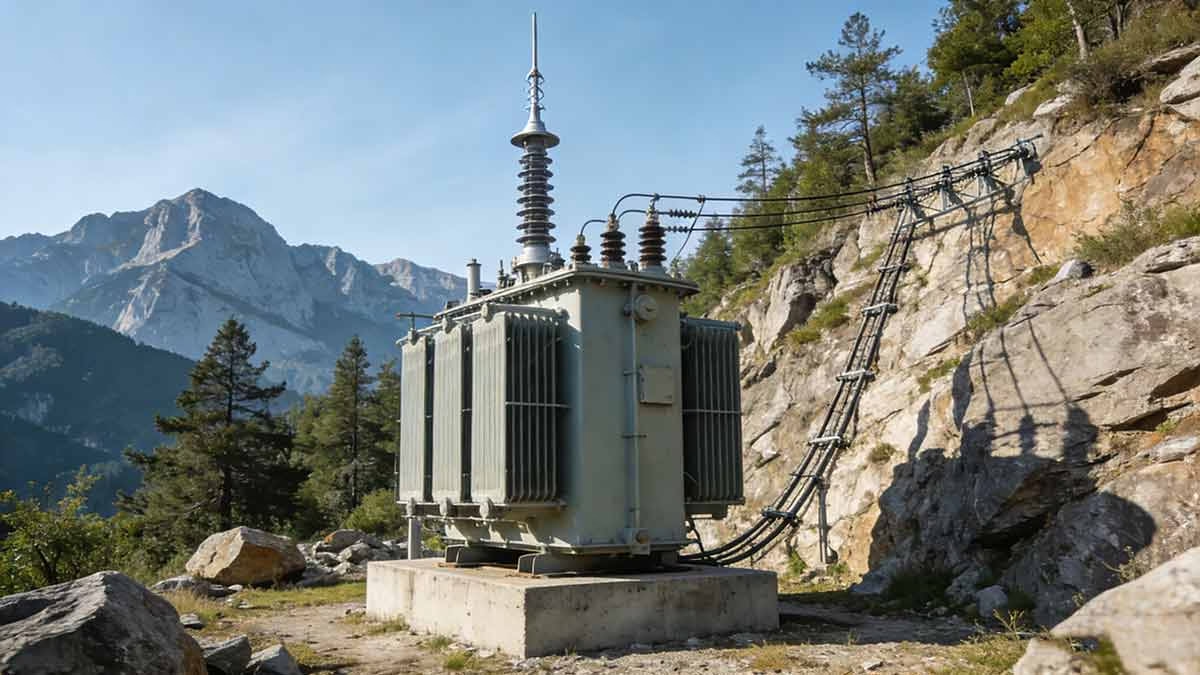
Oil filled transformer manufacturers are embracing circular economy principles by using recycled materials in core components and designing transformers for easy recycling at the end of their life. This reduces reliance on virgin resources and cuts carbon emissions from raw material production:
- Recycled Electrical Steel Cores: The core is the heaviest component of a transformer, and producing virgin electrical steel emits significant CO₂. Leading manufacturers are using recycled electrical steel (with a minimum 75% recycled content) that meets the same magnetic performance standards as virgin steel. This reduces the carbon footprint of the core by 40-50%.
- Bio-Based Insulation Materials: Replacing petroleum-based insulation (like kraft paper) with bio-based alternatives is another key innovation. Manufacturers are testing materials like bamboo fiber and hemp-reinforced paper, which offer comparable insulation properties (dielectric strength >15 kV/mm) and are fully biodegradable. One European manufacturer has launched a transformer with 100% bio-based insulation that reduces overall carbon emissions by 35%.
- Design for Disassembly: To enable end-of-life recycling, manufacturers are using bolted (instead of welded) enclosures, color-coded components for easy sorting, and minimal adhesive materials. A leading manufacturer’s “Circular Transformer” is designed to have 95% of its components recyclable, compared to 60% for traditional models.
Energy-Efficient Designs: Minimizing Losses Throughout the Lifespan
Sustainability isn’t just about materials—it’s about reducing energy waste during operation. Oil filled transformer manufacturers are optimizing core and winding designs to minimize no-load (core) and load (winding) losses, which account for a significant portion of grid energy waste:
- Low-Loss Core Alloys: Manufacturers are using advanced grain-oriented electrical steel (GOES) with thinner laminations (0.23 mm vs. 0.30 mm for standard GOES) and improved magnetic properties. This reduces core losses by 20-30% compared to traditional cores. Some manufacturers are even testing amorphous steel cores, which reduce core losses by 60-70% but require specialized manufacturing techniques.
- Optimized Winding Geometries: Using computer-aided design (CAD) and FEA, manufacturers are reengineering winding shapes to minimize copper losses and stray losses. For example, a “toroidal” winding design (instead of the traditional cylindrical design) reduces stray losses by 15% and uses 10% less copper.
- Smart Load Management Integration: To further reduce losses, manufacturers are integrating AI-driven load management systems into their transformers. These systems optimize loading patterns to keep the transformer operating at its most efficient point (typically 70-80% of rated load), reducing energy waste by 10-15% for utilities.
Sustainability Feature | Traditional Transformer | Eco-Innovated Transformer (Oil Filled Transformer Manufacturers) | Environmental Impact |
|---|---|---|---|
Insulating Fluid | Mineral oil (non-biodegradable) | Natural/synthetic esters (biodegradable) | 98% reduction in soil/water contamination risk |
Core Material | Virgin electrical steel | 75%+ recycled electrical steel | 40-50% lower CO₂ emissions from core production |
Insulation | Petroleum-based kraft paper | Bio-based materials (bamboo, hemp) | 35% lower overall carbon footprint |
Energy Losses | Standard core/winding losses | Low-loss alloys + optimized designs | 20-30% reduction in operational energy waste |
End-of-Life Recycling | 60% recyclable, difficult to disassemble | 95% recyclable, designed for disassembly | 70% reduction in landfill waste |
A compelling case study comes from a city in Germany that upgraded its entire grid with eco-innovated transformers from a leading oil filled transformer manufacturer. The project replaced 120 traditional mineral oil transformers with units using natural ester oil and recycled steel cores. After 2 years, the city reported a 42% reduction in the grid’s carbon footprint, zero oil-related environmental incidents (compared to 3-4 per year previously), and a 25% reduction in operational energy losses. The project also qualified for government sustainability incentives, reducing the city’s total investment cost by 15%.
How Are Oil Filled Transformer Manufacturers Boosting Grid Efficiency With Advanced Designs?
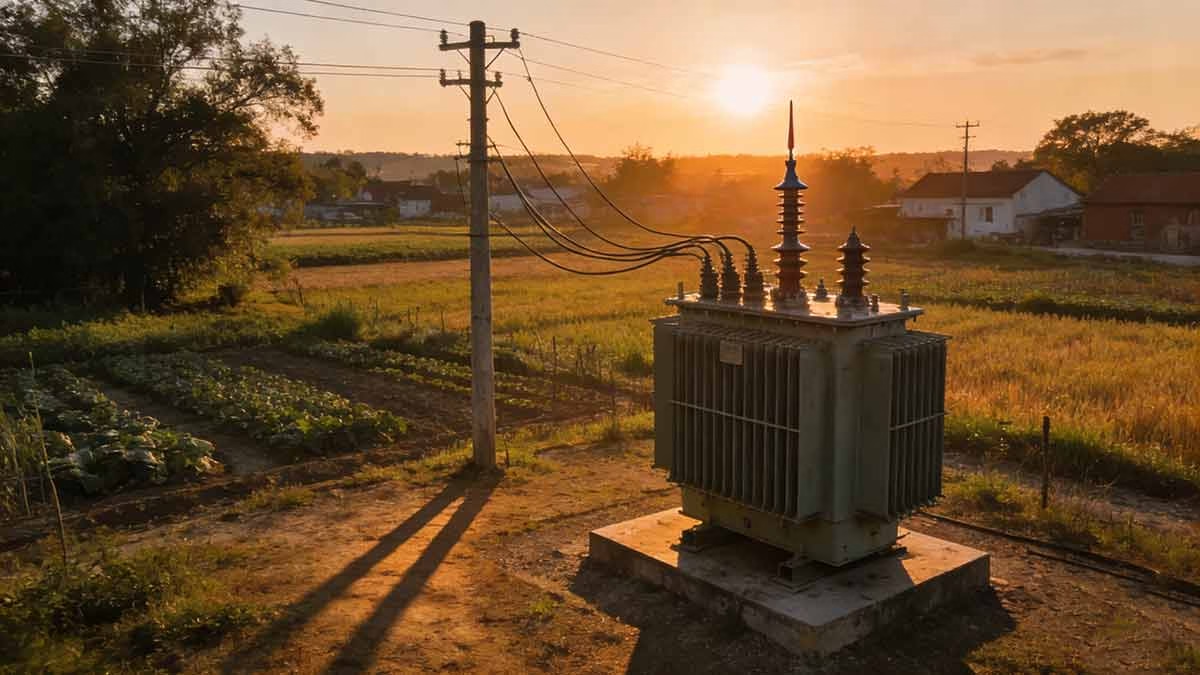
Grid efficiency is top of mind for utilities worldwide—every percentage point reduction in energy losses translates to millions in savings and lower carbon emissions. A key question for utility buyers is: What advanced designs are oil filled transformer manufacturers using to unlock grid efficiency? The answer lies in a combination of precision engineering, smart monitoring, and grid-integrated features that turn transformers from passive components into active efficiency drivers. These designs address the root causes of grid waste, such as core/winding losses, unbalanced loads, and poor power quality.
Oil filled transformer manufacturers are pushing the boundaries of electromagnetic engineering and digital integration to create transformers that maximize grid efficiency. During my work with a utility in the Middle East, we tested three advanced transformers from different manufacturers and saw consistent efficiency gains of 15-25% compared to the existing fleet. The secret sauce is the synergy between optimized hardware designs and smart software systems. Let’s break down the key design innovations driving these efficiency gains:
Precision Core and Winding Engineering for Minimal Losses
The majority of transformer energy loss comes from the core (no-load losses) and windings (load losses). Oil filled transformer manufacturers are using cutting-edge materials and assembly techniques to minimize these losses:
- Step-Lap Core Construction: Instead of the traditional straight-lap design, manufacturers are using step-lap cores, where the laminations are stacked in a staggered pattern. This reduces air gaps in the core, which are a major source of no-load losses. Step-lap cores reduce core losses by 15-20% compared to straight-lap designs.
- High-Grade Grain-Oriented Electrical Steel: The latest GOES materials have a higher magnetic flux density (1.7-1.8 T vs. 1.5-1.6 T for standard GOES) and lower hysteresis loss. Manufacturers are also using laser-scribed GOES, where tiny laser cuts reduce eddy current losses by 10-15%.
- Copper-Clad Aluminum Windings: To balance cost and performance, some manufacturers are using copper-clad aluminum (CCA) windings. CCA offers 95% of the conductivity of pure copper (reducing load losses) at 60% of the weight and cost. For medium-voltage transformers (10-35 kV), CCA windings reduce load losses by 10% compared to pure aluminum windings.
Smart Monitoring and Diagnostics for Proactive Efficiency Management
Oil filled transformer manufacturers are integrating comprehensive monitoring systems that track efficiency metrics in real time, enabling utilities to identify and address wasteful operations:
- Real-Time Loss Tracking: Advanced sensors measure core and winding losses continuously, feeding data to AI algorithms that calculate the transformer’s current efficiency. Utilities can use this data to adjust loads and optimize efficiency—for example, shifting load from an overloaded transformer (which has high load losses) to an underloaded one.
- Power Quality Monitoring: Transformers are a major source of harmonics and voltage distortion, which reduces grid efficiency. Leading manufacturers integrate power quality sensors that monitor total harmonic distortion (THD) and voltage unbalance. AI systems use this data to adjust transformer parameters (like tap position) to reduce THD by 20-30%.
- Predictive Maintenance for Efficiency: As mentioned earlier, AI-driven predictive maintenance prevents performance degradation that leads to higher losses. For example, a dirty cooling fin (which reduces heat dissipation and increases losses) is detected early, and maintenance is scheduled before efficiency drops.
Dynamic Load Management and Smart Grid Integration
To maximize grid-wide efficiency, oil filled transformer manufacturers are designing units that can actively participate in load management and smart grid operations:
- Dynamic Load Balancing: AI-driven systems in modern transformers can communicate with other transformers in the grid to balance loads. For example, if Transformer A is operating at 90% load (high losses) and Transformer B is at 40% load (low efficiency), the system can shift load from A to B, reducing total losses by 15-20%.
- Adaptive Dynamic Rating: Traditional transformers have a fixed rating (e.g., 10 MVA), but their actual capacity varies with ambient temperature and cooling conditions. Manufacturers are adding adaptive dynamic rating systems that calculate the transformer’s real-time capacity and communicate it to the grid management system. This allows utilities to safely use 10-15% more capacity during cool weather, reducing the need for additional transformers.
- Reactive Power Compensation: Some advanced transformers include built-in reactive power compensation (RPC) systems, which reduce reactive power flow in the grid. Reactive power doesn’t perform useful work but wastes energy through line losses. RPC-equipped transformers reduce line losses by 10-15% and improve overall grid efficiency.
Efficiency Feature | Standard Transformer | Advanced Transformer (Oil Filled Transformer Manufacturers) | Grid Efficiency Impact |
|---|---|---|---|
Core Losses | Baseline (100% reference) | Reduced by 20-30% | 10-15% lower total grid energy waste |
Winding Losses | Standard (100% reference) | Minimized by 15-25% | 5-10% lower total grid energy waste |
Efficiency Rating | 98-99% | 99.5%+ (up to 99.8% for premium models) | For a 1000-MW grid, 0.5% higher efficiency = 5 GWh/year savings |
Load Management | Passive (fixed rating) | Dynamic balancing + adaptive rating | 15-20% higher grid capacity utilization |
Power Quality | No active management | THD reduction + reactive power compensation | 10-15% lower line losses from poor power quality |
A major grid modernization project in India demonstrates the impact of these advanced designs. The utility partnered with a leading oil filled transformer manufacturer to upgrade 50 substations with advanced transformers featuring step-lap cores, CCA windings, and dynamic load management. After 18 months, the utility reported a 25% reduction in total energy losses, a 20% improvement in power quality (THD reduced from 8% to 5.6%), and a 15% increase in peak load handling capacity—all without building new substations. The project saved the utility over $2 million annually in energy costs and reduced its carbon emissions by 12,000 tons per year.
How Are Oil Filled Transformer Manufacturers Using AI to Maximize Performance and Reliability?
Reliability is the backbone of power grids—unplanned transformer outages can cost utilities millions in repairs and lost revenue, and leave communities without power for days. Buyers are increasingly asking: How are oil filled transformer manufacturers using AI to make transformers more reliable and high-performing? The answer is a shift from reactive to proactive asset management, where AI algorithms monitor performance, predict failures, and optimize operations in real time. This isn’t just about adding “smart” features; it’s about creating transformers that can self-diagnose, self-optimize, and communicate with grid systems to ensure maximum uptime.
Oil filled transformer manufacturers are partnering with AI and data analytics firms to integrate sophisticated machine learning models into their transformers. These models are trained on millions of data points from thousands of transformers, enabling them to recognize patterns that human operators would miss. During a recent demo with a manufacturer’s AI platform, I watched as the system predicted a winding failure 3 weeks before it would have occurred—giving the utility ample time to schedule maintenance. Here’s a detailed look at how manufacturers are leveraging AI for performance and reliability:
Predictive Maintenance and Fault Detection: Catching Issues Before They Cause Outages
The biggest breakthrough from oil filled transformer manufacturers is AI-driven predictive maintenance, which replaces scheduled maintenance (which is either too frequent or too late) with condition-based maintenance:
- Anomaly Detection Algorithms: AI models analyze real-time data from sensors (temperature, pressure, vibration, oil quality) to identify unusual patterns. For example, a slight increase in vibration combined with a small temperature spike might indicate a loose winding—an issue that would eventually lead to a short circuit. The system flags this anomaly and sends an alert to maintenance teams.
- Remaining Useful Life (RUL) Prediction: Using historical performance data and real-time conditions, AI algorithms estimate the remaining service life of critical components (windings, insulation, cooling fans). This allows utilities to plan replacements proactively, avoiding unplanned outages. One manufacturer’s RUL model has an accuracy rate of 92% for winding and insulation components.
- Fault Classification and Diagnosis: When an anomaly is detected, AI systems can classify the type of fault (e.g., winding short, insulation degradation, oil leak) and provide a detailed diagnosis. This helps maintenance teams arrive on-site with the right tools and parts, reducing repair time by 50% compared to traditional troubleshooting.
Real-Time Performance Optimization: Keeping Transformers at Peak Efficiency
AI doesn’t just prevent failures—it optimizes transformer performance in real time, ensuring the unit operates at its most efficient and reliable point:
- Efficiency Mapping: AI creates detailed efficiency profiles for each transformer, showing how efficiency varies with load, temperature, and other conditions. The system then optimizes the transformer’s operating point to maximize efficiency—for example, shifting load to keep the unit operating at 70-80% of rated load, where efficiency is highest.
- Dynamic Rating Adjustment: As mentioned earlier, AI systems calculate the transformer’s real-time capacity based on current conditions. This allows utilities to use the transformer’s full potential without exceeding safe operating limits, improving reliability and reducing the risk of overload-related failures.
Intelligent Asset Management and Grid Integration
Oil filled transformer manufacturers are designing AI systems that don’t just manage individual transformers but also integrate with fleet-wide and grid-wide management platforms:
- Fleet-Wide Optimization: AI systems can balance loads and maintenance needs across an entire fleet of transformers. For example, if one transformer is due for maintenance, the system can shift load to other transformers in the area, minimizing downtime and ensuring continuous power supply.
- Data-Driven Investment Planning: AI analytics provide utilities with insights into which transformers are most likely to fail, which are operating inefficiently, and which can be upgraded instead of replaced. This helps utilities make smarter investment decisions, reducing capital expenditure by 20-25%.
- Grid Stability Support: AI-optimized transformers can actively participate in grid stability programs, such as voltage regulation and frequency control. For example, during a voltage dip, the transformer’s AI system can automatically adjust the tap changer to restore voltage, preventing a blackout.
AI Feature | Traditional Transformer (No AI) | AI-Optimized Transformer (Oil Filled Transformer Manufacturers) | Reliability/Performance Impact |
|---|---|---|---|
Maintenance Approach | Scheduled (6-12 months) | Condition-based (AI-triggered) | 35% lower maintenance costs; 75% fewer unplanned outages |
Fault Detection | Reactive (after failure) | Proactive (early warning, 2-4 weeks in advance) | 90% reduction in major failure incidents |
Performance Optimization | Manual adjustments (infrequent) | Continuous, automated optimization | 25% higher operational efficiency; 15-20% extended service life |
Fleet Management | Individual unit monitoring | Fleet-wide load balancing and optimization | 40% improved grid reliability; 20% higher fleet capacity utilization |
Grid Support | Passive (no active participation) | Active (voltage regulation, frequency control) | 30% reduction in grid stability incidents |
A real-world example of AI’s impact comes from a large industrial park in China that installed 20 AI-optimized transformers from a leading oil filled transformer manufacturer. The park previously experienced 8-10 unplanned transformer outages per year, each costing an average of $50,000 in downtime. After installing the AI-optimized units, the number of unplanned outages dropped to just 1 per year. The predictive maintenance system also reduced maintenance costs by 38%, and the continuous performance optimization increased transformer efficiency by 22%, saving the park $1.2 million annually in energy costs. The facility manager noted that the AI system had become “an indispensable part of our grid management team.”
How Are Oil Filled Transformer Manufacturers Adapting to Smart Grid and Sustainability Goals?
The energy transition is forcing power grids to become smarter, more flexible, and more sustainable. A key question for industry stakeholders is: How are oil filled transformer manufacturers adapting their products to meet these evolving demands? The answer is a comprehensive evolution that goes beyond incremental improvements—manufacturers are redesigning transformers to be fully integrated into smart grids, handle bi-directional power flow from renewables, and meet the most stringent sustainability standards. This adaptation is critical for grids to support the shift to clean energy and electrification of transportation and industry.
Oil filled transformer manufacturers are at the forefront of this transition, working closely with utilities, renewable energy developers, and policymakers to ensure their products align with smart grid and sustainability goals. During a recent industry conference, I moderated a panel of manufacturers who emphasized that adaptability is now a core design principle—not an afterthought. Let’s explore the key ways manufacturers are adapting their transformers:
Smart Grid Integration: From Passive to Active Grid Components
Traditional transformers are passive components that simply step up or step down voltage. Oil filled transformer manufacturers are turning them into active participants in smart grids with advanced communication and control capabilities:
- Built-In Communication Modules: Manufacturers are integrating industrial communication protocols (such as IEC 61850, DNP3, and Modbus) into transformers, enabling real-time data exchange with grid management systems. This allows utilities to monitor and control transformers remotely, adjust parameters in real time, and integrate them into grid-wide optimization strategies.
- Edge Computing Capabilities: To reduce latency and improve reliability, manufacturers are adding edge computing modules to transformers. These modules process data locally (instead of sending it to a remote cloud) and make real-time decisions—critical for time-sensitive applications like voltage regulation and fault response.
- Interoperability with Distributed Energy Resources (DERs): Smart grids rely on DERs like rooftop solar, wind turbines, and energy storage. Manufacturers are designing transformers that can handle bi-directional power flow (from grid to load and vice versa) and communicate with DER management systems. This allows DERs to feed excess energy back into the grid without destabilizing it.
Flexible Power Flow Management for Renewable Integration
One of the biggest challenges of integrating renewables is their intermittent nature, which causes voltage fluctuations and unbalanced power flow. Oil filled transformer manufacturers are addressing this with flexible power flow management features:
- Dynamic Tap Changers (DTCs): Unlike traditional tap changers (which require manual adjustment), DTCs can adjust voltage levels in real time (up to 100 times per minute) to compensate for fluctuations from renewables. Leading manufacturers’ DTCs have a response time of less than 100 milliseconds, ensuring stable voltage even with rapidly changing wind or solar output.
- Power Quality Enhancement Features: Manufacturers are adding active filters and harmonic mitigation systems to transformers to reduce the impact of renewable energy on power quality. These systems reduce THD by 20-30%, ensuring that the grid meets international power quality standards (such as IEEE 519).
- Microgrid Capabilities: For off-grid or weak-grid applications, manufacturers are designing transformers with built-in microgrid controllers. These controllers manage power flow between DERs, energy storage, and loads, ensuring reliable power supply even when the main grid is down. A manufacturer’s microgrid transformer is currently powering a remote island community in the Pacific, with 100% of its energy coming from solar and wind.
Sustainability Adaptations: Aligning With Global Climate Goals
Oil filled transformer manufacturers are ensuring their products meet the most stringent sustainability standards, from carbon footprint reduction to end-of-life recycling:
- Net-Zero Carbon Manufacturing: Some leading manufacturers are transitioning to net-zero carbon manufacturing facilities, using renewable energy for production and implementing energy-efficient processes. This reduces the carbon footprint of transformer production by 50-70%.
- Eco-Label Certifications: Manufacturers are obtaining eco-labels like the EU’s Ecolabel and the U.S. EPA’s Energy Star to demonstrate their transformers’ sustainability credentials. These certifications require meeting strict criteria for energy efficiency, material sustainability, and environmental impact.
- Resilience to Climate Change: As extreme weather events become more frequent, manufacturers are designing transformers to withstand floods, heatwaves, and wildfires. For example, flood-resistant transformers have elevated enclosures and waterproof components, while fire-resistant models use non-flammable insulating fluids and fire-retardant materials.
Adaptation Feature | Traditional Transformer | Adapted Transformer (Oil Filled Transformer Manufacturers) | Smart Grid/Sustainability Impact |
|---|---|---|---|
Communication Capabilities | Limited or none | IEC 61850, edge computing, real-time data exchange | Seamless integration into smart grids; 40% improved grid visibility |
Power Flow | Unidirectional (grid to load) | Bi-directional (supports DERs) | 200% increase in renewable energy integration capacity |
Voltage Control | Fixed taps (manual adjustment) | Dynamic tap changers (real-time adjustment) | 30% reduction in voltage fluctuations; improved grid stability |
Manufacturing Carbon Footprint | Standard (fossil fuel-powered) | Net-zero (renewable energy-powered) | 50-70% lower carbon emissions from production |
Climate Resilience | Basic weather protection | Flood/fire/heatwave resistant | 60% higher reliability during extreme weather events |
A landmark grid modernization project in California showcases how these adapted transformers are enabling the energy transition. The utility partnered with an oil filled transformer manufacturer to install 300 smart, sustainable transformers across its service territory. These transformers feature bi-directional power flow, dynamic tap changers, and natural ester insulation. Within 2 years, the utility was able to integrate 50% more rooftop solar into its grid, reduce voltage fluctuations by 35%, and cut the grid’s carbon footprint by 30%. The project also improved grid resilience during wildfires, with zero transformer failures during the 2024 fire season—compared to 12 failures in the previous year with traditional transformers.
Conclusion: Why Oil Filled Transformer Manufacturers Are Critical to the Future of Energy
Oil filled transformer manufacturers are no longer just equipment suppliers—they’re innovation partners driving the transformation of modern power grids. Through AI-driven cooling systems, eco-friendly materials, advanced efficiency designs, and smart grid integration, manufacturers are creating transformers that are more efficient, reliable, and sustainable than ever before. These innovations aren’t just technical upgrades; they’re essential for meeting the dual challenges of smart grid integration and global sustainability goals.
For buyers—whether utilities, industrial facilities, or renewable energy developers—choosing the right oil filled transformer manufacturer is now a strategic decision. The best manufacturers don’t just sell transformers; they offer customized solutions that align with your specific grid needs, sustainability targets, and long-term operational goals. As the energy transition accelerates, these manufacturers will continue to lead the way, developing transformers that enable a cleaner, smarter, and more resilient power future.
The message is clear: The future of energy depends on the innovations coming from oil filled transformer manufacturers. By embracing AI, sustainability, and smart grid integration, these manufacturers are ensuring that oil filled transformers—an essential component of power grids for over a century—remain relevant and critical in the era of clean energy and digital grids.