
Are you navigating the complex world of electrical transformers and wondering, “What is an oil immersed transformer?” You’re not alone. For businesses, engineers, and facility managers involved in power distribution, understanding this critical component is essential to ensuring reliable, efficient, and safe energy transfer. Oil immersed transformers are the workhorses of modern power systems, powering everything from residential neighborhoods to large industrial complexes and utility grids.
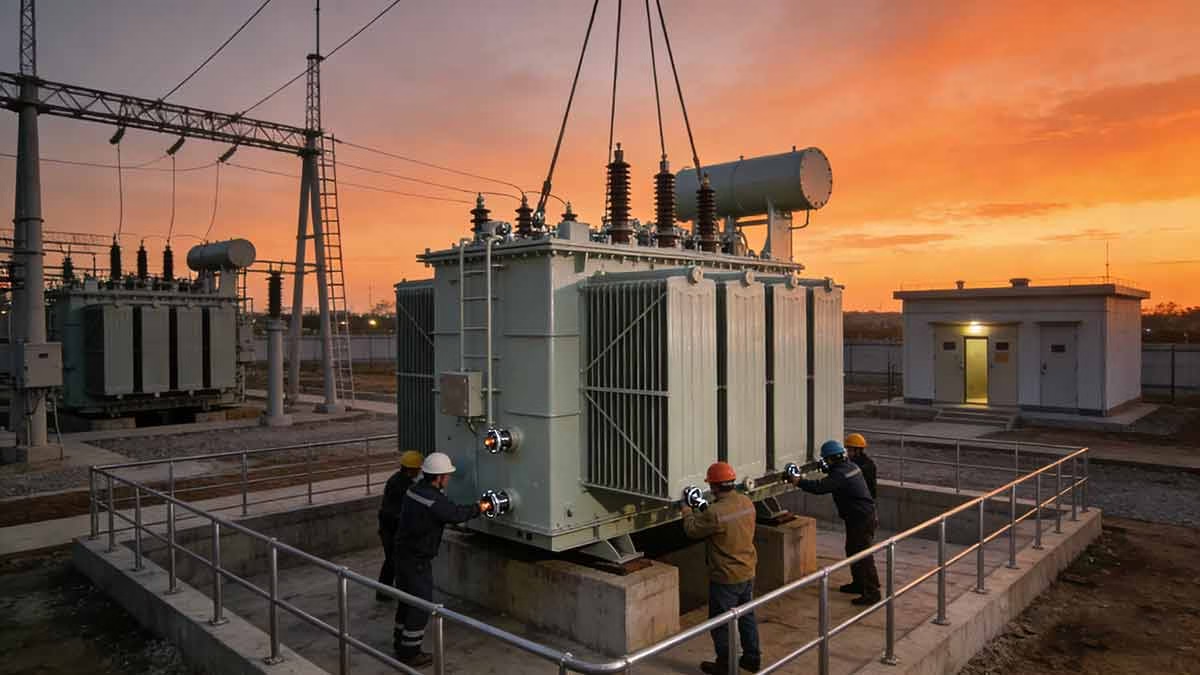
In this comprehensive guide, we’ll answer the core question “what is an oil immersed transformer” and dive deep into every aspect that matters for your decision-making and operational needs. Drawing on industry expertise and practical insights, we’ll break down their working principles, key components, different types, maintenance protocols, safety standards, and real-world applications. By the end, you’ll have a clear, authoritative understanding of why oil immersed transformers are indispensable, how to choose the right one, and how to keep it running optimally for years to come.
Contents
hide
What Exactly Is an Oil Immersed Transformer?
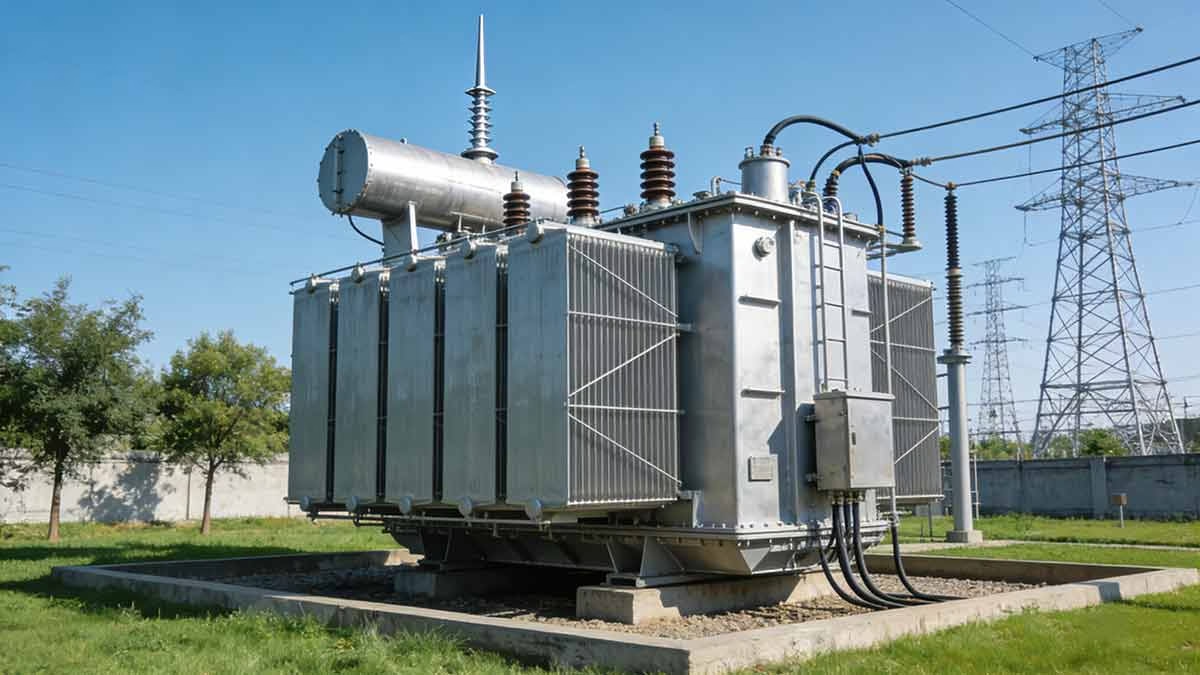
To start with the basics: an oil immersed transformer (also known as an oil-filled transformer) is a type of electrical transformer where the core and windings— the heart of the transformer’s voltage conversion function—are fully immersed in a special insulating oil. Unlike dry-type transformers that rely on air for cooling and insulation, oil immersed transformers leverage the unique properties of transformer oil to achieve two critical goals: efficient heat dissipation and superior electrical insulation.
But why oil? Transformer oil (typically mineral oil, though synthetic and biodegradable alternatives are growing in use) has a high dielectric strength, meaning it can withstand high electrical voltages without breaking down and causing short circuits. Additionally, it has excellent thermal conductivity, allowing it to absorb heat generated by the transformer’s core and windings during operation and transfer that heat away from critical components. This combination of insulation and cooling capabilities is what makes oil immersed transformers ideal for high-voltage, high-power applications—scenarios where dry-type transformers would struggle with heat buildup and insulation failure.
Another key characteristic of oil immersed transformers is their robustness and longevity. When properly maintained, these transformers can operate reliably for 25-40 years, making them a cost-effective investment for long-term power infrastructure. They’re designed to handle the rigors of continuous operation, voltage fluctuations, and harsh environmental conditions (when properly housed), which is why they’re the preferred choice for utility substations, industrial plants, and large commercial facilities worldwide.
What Is the Working Principle of an Oil Immersed Transformer?
At its core, an oil immersed transformer operates on the same fundamental principle as all electrical transformers: electromagnetic induction. But what sets it apart is how the oil integrates with this principle to enhance performance and safety. Let’s break down the working process step by step, from the basic induction mechanism to the critical role of the insulating oil.
The Foundation: Electromagnetic Induction
Electromagnetic induction is the phenomenon where a changing magnetic field induces an electric current in a conductor. For oil immersed transformers, this process unfolds as follows:
- When alternating current (AC) voltage is applied to the primary winding (the input coil), it creates a continuously changing magnetic field around the winding.
- This magnetic field passes through the transformer’s core, which is made of laminated silicon steel (chosen for its high magnetic permeability, which minimizes energy loss). The core acts as a pathway to concentrate the magnetic field.
- As the magnetic field fluctuates, it cuts through the secondary winding (the output coil), inducing an AC voltage in the secondary winding.
- The voltage ratio between the primary and secondary windings is determined by the number of turns in each coil. For example, if the primary winding has 1000 turns and the secondary has 100 turns, the transformer will step down the voltage by a factor of 10 (a 10:1 turns ratio).
This induction process is efficient, but it’s not without energy loss. Two primary losses occur: copper loss (heat generated by current flowing through the winding conductors) and iron loss (heat generated by magnetic hysteresis and eddy currents in the core). These losses are unavoidable, but the oil immersed design is specifically engineered to manage them—this is where the insulating oil comes into play.
The Critical Role of Insulating Oil
The oil in an oil immersed transformer is not an afterthought; it’s a vital component that enables the transformer to operate safely and efficiently. Its four key functions are:
- Cooling: As mentioned earlier, copper and iron losses generate heat. The oil absorbs this heat through direct contact with the core and windings. Through natural convection (warmer oil rises, cooler oil sinks), the heated oil circulates toward the tank walls or radiators, where the heat is transferred to the surrounding air. For larger transformers, forced cooling systems (like fans or oil pumps) enhance this process.
- Electrical Insulation: The oil’s high dielectric strength prevents electrical arcing (sparks) between the windings, between the windings and the core, and between the windings and the transformer tank. This insulation is critical—without it, short circuits would occur, damaging the transformer and potentially causing power outages or fires.
- Arc Suppression: In the event of a fault (e.g., a short circuit), electrical arcs can form. The oil acts to quench these arcs quickly, minimizing damage to the transformer’s components and reducing the risk of fire.
- Moisture Protection: Transformer oil is hydrophobic (repels water). Moisture is a major enemy of transformer insulation—even small amounts can degrade the insulation’s performance. The oil forms a barrier that prevents moisture from reaching the core and windings, preserving their integrity.
Key Components That Support the Working Principle
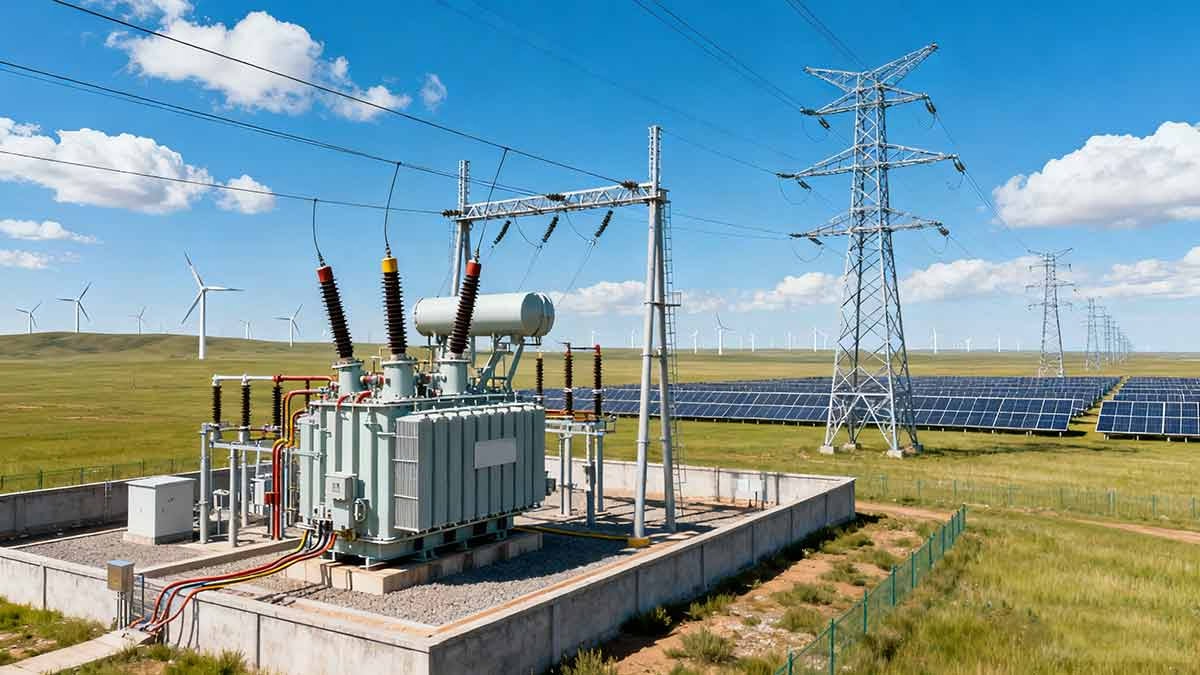
To fully understand how an oil immersed transformer works, it’s important to recognize the role of its core components, each of which contributes to the induction process and oil’s functionality:
- Core: Laminated silicon steel sheets are stacked to form the core. The laminations reduce eddy current loss (a type of iron loss) by limiting the flow of induced currents within the core.
- Windings: Typically made of high-conductivity copper (though aluminum is sometimes used for cost savings), the primary and secondary windings are wound around the core. The wire is insulated with a thin layer of enamel or paper to prevent short circuits between adjacent turns.
- Transformer Tank: A steel enclosure that houses the core, windings, and oil. It’s designed to withstand the pressure of heated oil and protect internal components from environmental factors like dust, rain, and debris.
- Bushings: Insulated devices that extend through the tank wall, allowing electrical connections between the windings and external power lines. Bushings are critical for maintaining insulation between the high-voltage windings and the grounded tank.
- Cooling System: For small to medium transformers, the tank’s outer surface (often with fins) provides sufficient cooling. Larger transformers use radiators (attached to the tank) or forced cooling systems (fans for air, pumps for oil) to enhance heat dissipation.
- Conservator Tank: A small tank mounted on top of the main transformer tank. It accommodates the expansion and contraction of the oil as it heats up and cools down, preventing pressure buildup in the main tank.
- Breather: Connected to the conservator tank, the breather contains a desiccant (like silica gel) that removes moisture from the air entering the tank as the oil contracts. This prevents moisture from contaminating the oil.
What Are the Different Types of Oil Immersed Transformers?
Not all oil immersed transformers are the same. They’re categorized based on their application, voltage rating, power capacity, and cooling method—each type designed to meet specific operational needs. Understanding these types will help you answer the question: “Which oil immersed transformer is right for my application?” Let’s explore the most common categories.
By Application: Distribution vs. Power vs. Specialty Transformers
The primary way to classify oil immersed transformers is by their role in the power system. The three main types here are:
1. Oil Immersed Distribution Transformers
These are the “last mile” transformers in the power grid, responsible for stepping down high-voltage electricity from transmission lines to the low-voltage power used in homes, small businesses, and light industrial facilities. Key characteristics:
- Voltage Range: Primary voltage up to 34.5 kV; secondary voltage typically 120/240 V (residential) or 480 V (commercial).
- Power Rating: 10 kVA to 2500 kVA (most common ratings are 50-1000 kVA).
- Design Features: Compact, lightweight (compared to power transformers), and often designed for outdoor use. Common mounting options include pole-mounted (for residential areas) and pad-mounted (for commercial or industrial parks).
- Applications: Residential neighborhoods, small retail stores, office buildings, schools, and small manufacturing facilities.
A key advantage of distribution transformers is their reliability in harsh outdoor conditions. They’re built to withstand temperature extremes, humidity, and minor physical impacts, making them ideal for widespread deployment in the power grid.
2. Oil Immersed Power Transformers
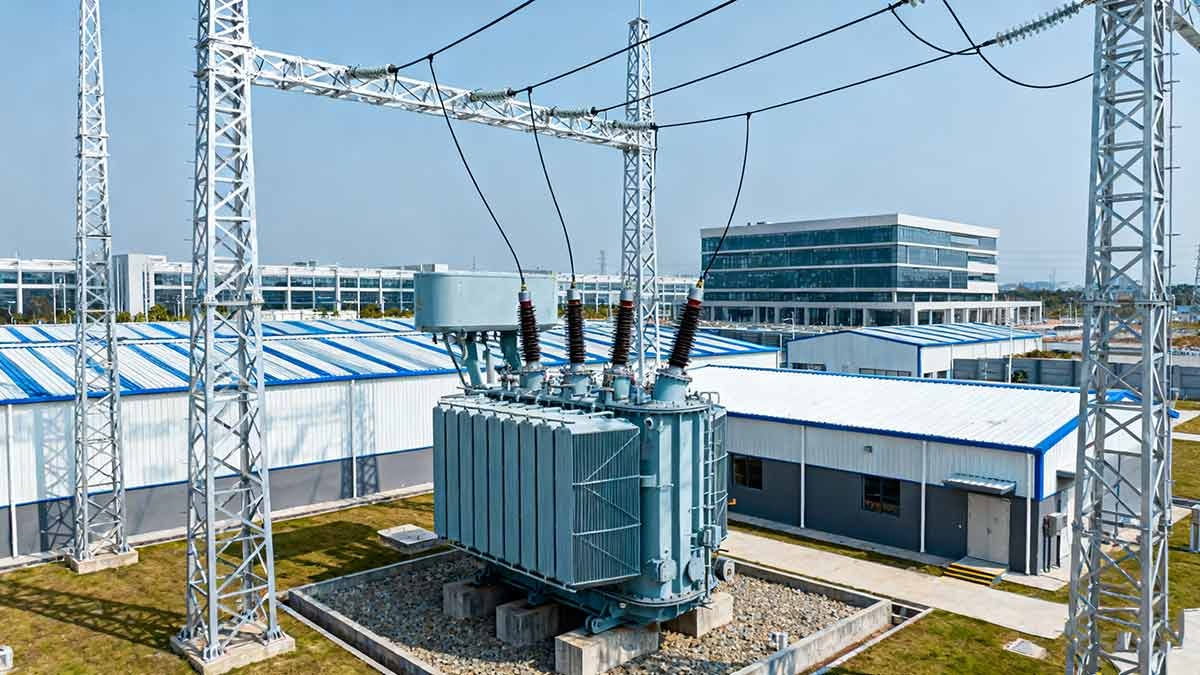
Power transformers are the heavyweights of the industry, handling high-voltage, high-power transmission between power plants and substations. They’re critical for efficiently transporting electricity over long distances (since high voltage reduces energy loss during transmission). Key characteristics:
- Voltage Range: Primary voltage from 69 kV to 765 kV or higher (ultra-high-voltage transformers can handle 1000 kV+).
- Power Rating: 10 MVA to 1000 MVA (some large utility transformers exceed 1000 MVA).
- Design Features: Large, heavy-duty construction with advanced cooling systems (since they generate significant heat). They’re often housed in indoor substations or large outdoor enclosures.
- Applications: Power plants (fossil fuel, nuclear, renewable energy), utility substations, and large industrial complexes (e.g., steel mills, refineries) that require high-voltage power.
Power transformers are engineered for maximum efficiency and durability. They undergo rigorous testing to ensure they can handle transient voltages (e.g., lightning strikes) and long-term continuous operation.
3. Specialty Oil Immersed Transformers
These transformers are designed for niche applications that require unique features or performance characteristics. Common types include:
Specialty Type | Primary Application | Key Features |
|---|---|---|
Furnace Transformers | Electric arc furnaces (steel production), induction furnaces (metal melting) | High current output (low voltage, high amperage), robust windings to withstand thermal stress, short-circuit resistance |
Rectifier Transformers | DC power supply systems (electroplating, battery charging, variable frequency drives) | Special winding configurations (e.g., delta-wye) to minimize harmonic distortion, integrated rectifier circuits |
Traction Transformers | Electric railways (trains, trams), subway systems | Compact design (to fit in train cars), vibration resistance, ability to handle frequent load changes |
Instrument Transformers | Power system monitoring and protection (current transformers for ammeters, voltage transformers for voltmeters) | High accuracy, low power loss, designed to isolate measurement equipment from high voltage |
Off-Shore Transformers | Offshore wind farms, oil and gas platforms | Corrosion resistance (saltwater environment), sealed design to prevent moisture ingress, compact footprint |
By Cooling Method: Oil Immersed Transformer Cooling Systems
Cooling is so critical to oil immersed transformer performance that many are classified by their cooling method. The four main cooling systems (designated by IEEE/ANSI standards) are:
- ONAN (Oil Natural, Air Natural): The simplest cooling method. Oil circulates naturally (convection) as it heats up, and heat is transferred to the air through the transformer tank’s fins or radiators (natural convection). Ideal for small transformers (up to ~5 MVA) with low heat generation.
- ONAF (Oil Natural, Air Forced): Oil circulates naturally, but fans are used to blow air over the radiators, enhancing heat transfer. This method doubles or triples the transformer’s power capacity compared to ONAN. Common in medium-sized transformers (5-50 MVA).
- OFAF (Oil Forced, Air Forced): Oil is circulated by pumps (forced convection), and fans blow air over the radiators. This method is used for large transformers (50-500 MVA) where natural oil circulation is insufficient. It provides consistent cooling even at high loads.
- ODAF (Oil Directed, Air Forced): An advanced cooling method where oil is directed (via pumps and nozzles) directly onto the windings for targeted cooling. Fans enhance air cooling of the radiators. Used for ultra-large transformers (500 MVA+) and high-voltage applications where precise temperature control is critical.
Choosing the right cooling method depends on the transformer’s power rating, operating environment (temperature, humidity), and load profile (continuous vs. intermittent operation).
What Are the Maintenance and Safety Considerations for Oil Immersed Transformers?
An oil immersed transformer is a long-term investment, but its reliability and lifespan depend entirely on proper maintenance and adherence to safety protocols. Neglecting maintenance can lead to oil degradation, insulation failure, and even catastrophic failures (e.g., fires, explosions) that result in costly downtime and safety hazards. Below is a comprehensive guide to maintenance and safety best practices.
Routine Maintenance Tasks for Oil Immersed Transformers
Routine maintenance is designed to catch small issues before they escalate. The frequency of these tasks varies based on the transformer’s size, age, and application, but the following are standard for most units:
1. Oil Quality Testing (Critical Priority)
Transformer oil is the lifeblood of the unit—its quality directly impacts insulation and cooling performance. Regular testing is non-negotiable. Key tests and their frequency include:
Test Name | Frequency | Purpose | Acceptable Standard |
|---|---|---|---|
Dielectric Strength (Breakdown Voltage) | Annually | Measures the oil’s ability to resist electrical breakdown | ≥ 30 kV (for mineral oil) |
Acidity (Total Acid Number, TAN) | Annually | Indicates oil degradation (oxidation) which can corrode components | ≤ 0.2 mg KOH/g (new oil); ≤ 0.5 mg KOH/g (in service) |
Moisture Content | Bi-annually | Moisture reduces insulation strength and accelerates oil degradation | ≤ 15 ppm (for transformers >69 kV); ≤ 30 ppm (≤69 kV) |
Interfacial Tension (IFT) | Annually | Measures the oil’s ability to separate from water (low IFT indicates contamination) | ≥ 22 mN/m (at 25°C) |
Dissolved Gas Analysis (DGA) | Annually (or quarterly for critical units) | Detects gases produced by internal faults (e.g., arcing, overheating) before they cause damage | No abnormal gas increases (per IEEE C57.104 standards) |
If oil test results fall outside acceptable limits, corrective action is required—this may include oil filtration (to remove moisture and contaminants), oil reclamation (to restore dielectric strength), or complete oil replacement.
2. Visual Inspections
Monthly visual inspections are quick but effective at identifying obvious issues. Key checkpoints include:
- Oil leaks: Check the tank, radiators, bushings, and valve connections for oil stains or puddles. Even small leaks can lead to oil loss and moisture ingress.
- Tank condition: Look for rust, corrosion, dents, or bulging (bulging indicates pressure buildup, which is a serious hazard).
- Bushings: Inspect for cracks, discoloration, or signs of arcing (e.g., black marks). Damaged bushings can cause short circuits.
- Conservator tank: Ensure the oil level is within the normal range (marked on the conservator). Low oil levels indicate leaks; high levels may indicate overheating.
- Breather: Check the desiccant (silica gel) color—blue indicates dry, pink/red indicates saturated (needs replacement).
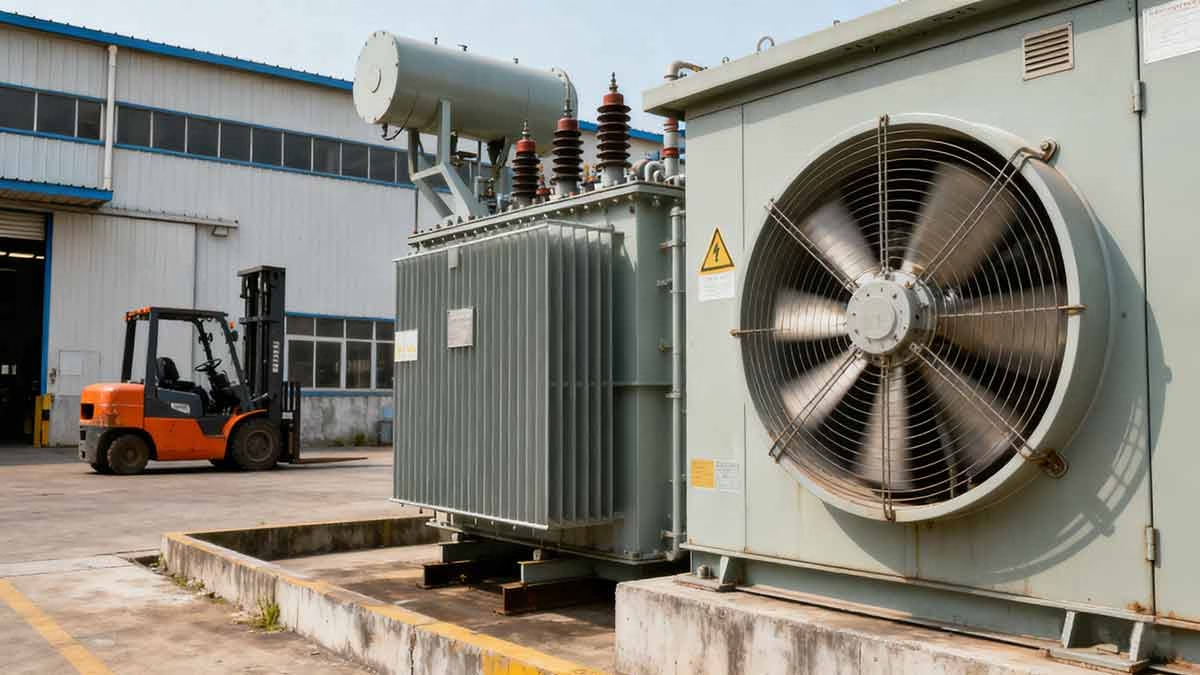
- Cooling system: For ONAN/ONAF units, check radiator fins for dirt, debris, or blockages. For OFAF/ODAF units, test fans and pumps to ensure they’re working properly.
3. Annual Comprehensive Inspections
Annual inspections are more thorough and may require shutting down the transformer (depending on the task). They include:
- Thermal imaging: Use an infrared camera to detect hot spots in the windings, core, or connections. Hot spots indicate poor contact or internal faults.
- Bushing maintenance: Clean bushings with a dry cloth (avoid water or harsh chemicals) and check their insulation resistance with a megohmmeter.
- Terminal connections: Tighten loose connections (which can cause arcing and overheating) and inspect for corrosion.
- Oil sampling for DGA: As noted earlier, DGA is a critical predictive maintenance tool for detecting internal faults.
- Grounding system: Ensure the transformer tank and core are properly grounded (poor grounding increases the risk of electric shock).
Safety Protocols for Oil Immersed Transformers
Oil immersed transformers operate at high voltages and contain flammable oil, so safety must be a top priority. Below are key safety guidelines for operation and maintenance:
1. Fire Prevention
- Install fire suppression systems: For indoor transformers, use sprinkler systems or foam suppression systems designed for oil fires. For outdoor units, ensure adequate spacing from flammable materials (minimum 10 feet).
- Use fire-resistant oil: For high-risk applications (e.g., indoor substations, hospitals), consider synthetic or biodegradable fire-resistant transformer oils (e.g., ester-based oils).
- Avoid overloading: Overloading the transformer increases heat generation, which can ignite the oil. Use load monitoring tools to ensure the transformer stays within its rated capacity.
2. Personal Protective Equipment (PPE)
All personnel working on or near oil immersed transformers must wear appropriate PPE, including:
- Insulated gloves and boots (to protect against electric shock).
- Safety glasses or face shield (to protect against oil splashes or debris).
- Flame-resistant clothing (when working with hot oil or during maintenance that involves opening the tank).
3. Spill Containment and Environmental Protection
- Install spill containment systems: Outdoor transformers should be placed on a concrete pad with a containment wall (to catch oil spills). Indoor units should have drip pans connected to a collection system.
- Proper oil disposal: Old or contaminated transformer oil is a hazardous waste. Dispose of it through a licensed waste management company or recycle it through an oil reclamation service.
- Use environmentally friendly oils: Ester-based oils are biodegradable and less toxic than traditional mineral oil, making them a better choice for sensitive environments (e.g., near water sources).
4. Emergency Procedures
Establish clear emergency protocols for common issues, including:
- Oil leaks: Shut down the transformer (if safe to do so), contain the spill, and contact maintenance personnel.
- Fire: Activate the fire suppression system, evacuate the area, and call emergency services. Do not use water to extinguish an oil fire (water will spread the fire).
- Electrical faults: Trip the circuit breaker to disconnect power, secure the area with warning signs, and contact a qualified electrician.
Predictive Maintenance: The Future of Oil Immersed Transformer Care
Advancements in technology have made predictive maintenance possible, allowing operators to monitor transformer health in real time and address issues before they cause failures. Key predictive maintenance tools include:
- Online monitoring systems: Sensors installed in the transformer measure key parameters (oil temperature, pressure, moisture, dissolved gases) and transmit data to a central dashboard. Alerts are triggered when parameters exceed safe limits.
- Trend analysis: By tracking oil quality and electrical parameters over time, operators can identify gradual degradation (e.g., increasing acidity, rising moisture) and schedule maintenance proactively.
- Acoustic monitoring: Ultrasonic sensors detect partial discharges (small electrical arcs) in the windings or insulation. Partial discharges are early indicators of insulation failure.
- Load analysis: Software tools analyze the transformer’s load profile to ensure it’s not being overloaded consistently. Overloading is a major cause of premature failure.
Based on industry data, predictive maintenance can reduce transformer downtime by up to 40% and extend lifespan by 15-20%, making it a worthwhile investment for critical power infrastructure.
Why Choose an Oil Immersed Transformer Over Other Types?
Now that you understand what an oil immersed transformer is, how it works, and how to maintain it, you may be wondering: “Is an oil immersed transformer the right choice for my application?” To help you decide, let’s compare it to the other main type of transformer: dry-type transformers.
Feature | Oil Immersed Transformer | Dry-Type Transformer |
|---|---|---|
Cooling/Insulation | Oil (superior heat dissipation, high dielectric strength) | Air or resin (lower heat dissipation, limited dielectric strength) |
Voltage/Power Capacity | High (up to 1000 kV+, 1000+ MVA) | Low to medium (up to 35 kV, 20 MVA) |
Lifespan | 25-40 years (with proper maintenance) | 15-25 years |
Environmental Suitability | Excellent for outdoor/harsh environments (sealed design) | Best for indoor/clean environments (susceptible to dust/moisture) |
Fire Risk | Moderate (flammable oil, but mitigated by safety systems) | Low (non-flammable resin/air insulation) |
Maintenance Requirements | Regular oil testing and inspections | Minimal (periodic cleaning) |
Cost | Higher upfront cost, lower long-term cost (long lifespan) | Lower upfront cost, higher long-term cost (shorter lifespan) |
In summary, oil immersed transformers are the best choice if you need:
- High voltage or high power capacity (e.g., utility substations, large industrial plants).
- Outdoor operation or exposure to harsh environments (temperature extremes, humidity, dust).
- A long lifespan and low long-term operational costs.
Dry-type transformers are better suited for small-scale indoor applications (e.g., office buildings, data centers) where fire risk is a major concern and maintenance resources are limited.
Conclusion: Key Takeaways About Oil Immersed Transformers
So, what is an oil immersed transformer? At its core, it’s a high-performance electrical transformer that uses insulating oil for cooling and insulation, making it ideal for high-voltage, high-power applications across the power grid and industrial sectors. From distribution transformers that power our homes to power transformers that transport electricity across countries, these units are indispensable to modern energy systems.
The key to maximizing the value of an oil immersed transformer lies in three critical areas: understanding its working principle and components, choosing the right type for your application (based on voltage, power, and cooling needs), and implementing a rigorous maintenance and safety program. By following the guidelines outlined in this guide, you can ensure your oil immersed transformer operates reliably, safely, and efficiently for decades.
Whether you’re a utility company, industrial facility manager, or engineer, investing in a high-quality oil immersed transformer and prioritizing its care will pay off in reduced downtime, lower maintenance costs, and a more resilient power system. If you have further questions about selecting, installing, or maintaining an oil immersed transformer, consult with a qualified transformer manufacturer or electrical engineer to get personalized advice for your specific needs.